
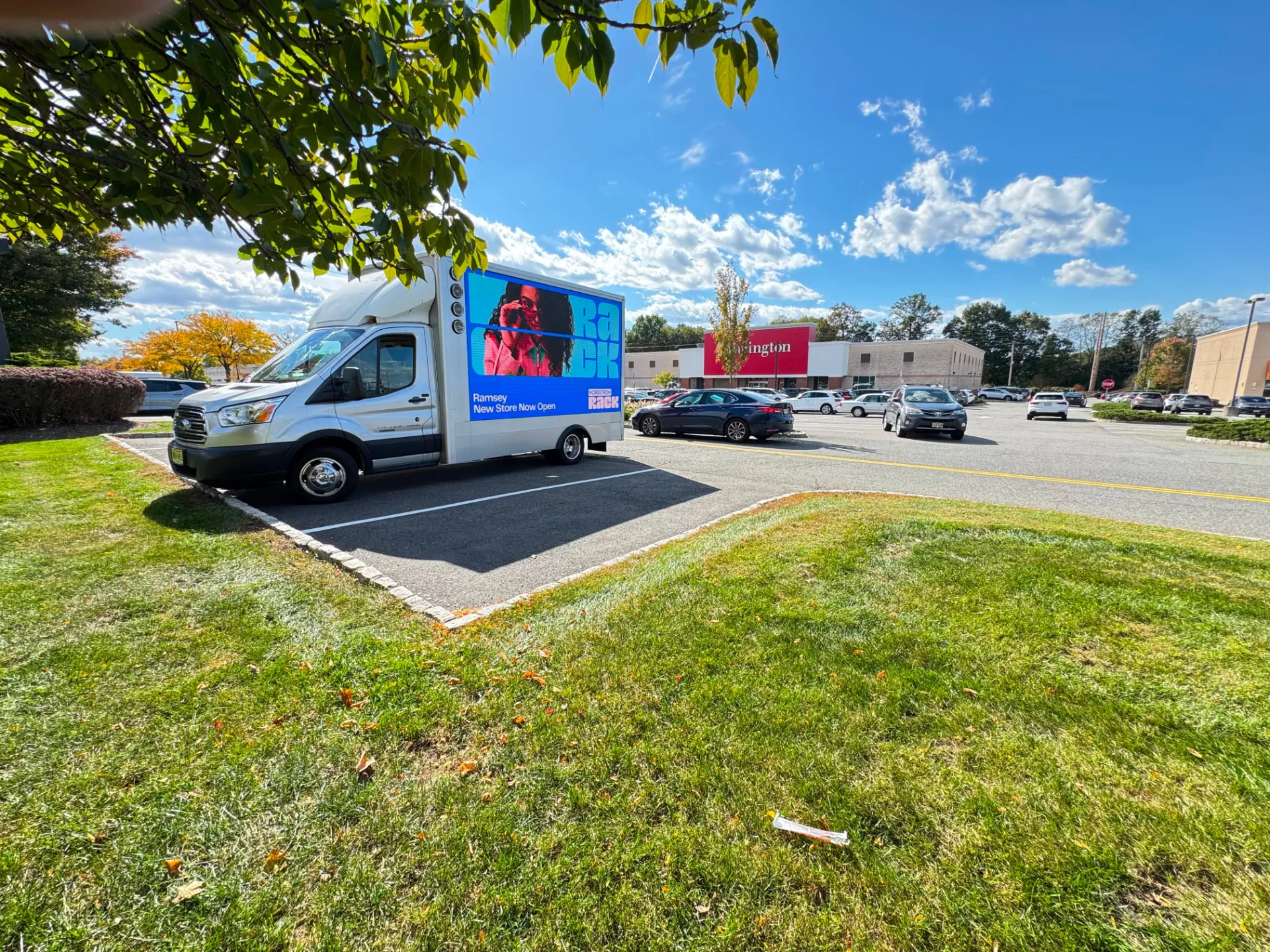
Retail & E-commerce LED Billboard Truck Advertising
Bring your brand into the shopper’s day.
Promote a new store, put a sale in front of nearby shoppers or introduce an online brand in a new market. Boost Outdoor Media plans mobile LED billboard campaigns around your audience, your offer and the destination you want customers to visit.
From the shopping district to the shopping cart.
Retailers need to give shoppers a reason to visit. E-commerce brands need to make their products recognizable beyond a phone screen. LED billboard trucks bring large-format product imagery, video and promotional messages into the places your audience spends time. We connect the route, timing and creative to a clear retail objective—whether that is awareness for a new location, an in-store event or an online launch.
Use Cases
How retailers and online brands use LED trucks
Grand openings & new locations
Introduce the store before opening day, support the celebration and keep the new location visible afterward. Lead with the opening date, store address and a compelling reason to visit; build routes around nearby shopping corridors and communities.
Sales & seasonal promotions
Support Black Friday, holiday shopping, clearance events or a weekend offer with a date-specific campaign. Show one strong promotion and where it applies. Align the truck schedule with the sale window and the shopping areas relevant to your store.
Product & collection launches
Give a new product or collection a street-level introduction. Use prominent product visuals and a short launch message, with the store or website as the next step. Reinforce the same creative shoppers see in your social and digital campaigns.
Pop-ups & experiential retail
Make a temporary location easier to discover. Feature the venue, dates and event hours, then plan routes around the surrounding area. Discuss a permitted stationary truck presence when the activation offers a suitable viewing opportunity.
Shopping centers & retail groups
Promote a center-wide event, new tenant or shared shopping occasion. Build the message around the property and participating retailers, connect nearby retail corridors and coordinate any on-property stops with the property team.
E-commerce & DTC market launches
Bring an online-first brand into a selected city or neighborhood without needing a permanent storefront. Feature a recognizable product, a clear reason to shop and a memorable web address. Use a dedicated campaign page to connect street-level awareness with the online experience.
Why Mobile
Why choose mobile LED billboards for retail?
Location-led planning
Shape a route around your store, activation or selected market instead of choosing one fixed billboard location. Prioritize areas that fit your audience and campaign goal.
Products at street scale
Use large-format LED screens to show product details, brand visuals or motion creative. Keep the message understandable during a brief viewing moment.
A schedule that fits the offer
Focus campaign hours on your launch, event or sale dates. Discuss return passes and opening-day presence as part of a coordinated retail plan.
A connected brand experience
Carry the same product, offer and visual identity across the truck, storefront and online campaign so the destination feels familiar when shoppers arrive.
Campaign strategy
Different shopping journeys. Different campaign plans.
For physical retailers: make the visit worthwhile.
Anchor the message to a location and a reason to go now. A new store needs an opening date and an address; an established store may need a timely offer or event. Choose surrounding shopping areas and approach corridors that make sense for that destination.
For a multi-location retailer, keep the featured store or participating locations clear. Avoid artwork crowded with addresses: a concise destination and supporting campaign page can carry the details.
For e-commerce: make an online brand tangible.
An online store can use out-of-home advertising to show up in the real world. Start with a market relevant to your customers, a distinctive product and a message that makes the brand easy to remember—not an entire catalog.
Match the truck creative to your product launch, social ads and campaign page. A short web address gives shoppers a destination they can revisit later. For permitted stationary activations, a QR code can offer pedestrians a direct link.
For omnichannel brands: connect the two.
Support the way customers already shop: discover a product outside, browse it online and visit a store. Retailers can highlight local pickup, an in-store collection launch or an offer available through a clearly defined channel.
Keep dates, product availability and offer terms consistent across the screens, store and website. Make the next step simple, whether it is visiting the location, shopping the collection or attending a pop-up.
Retail campaign example
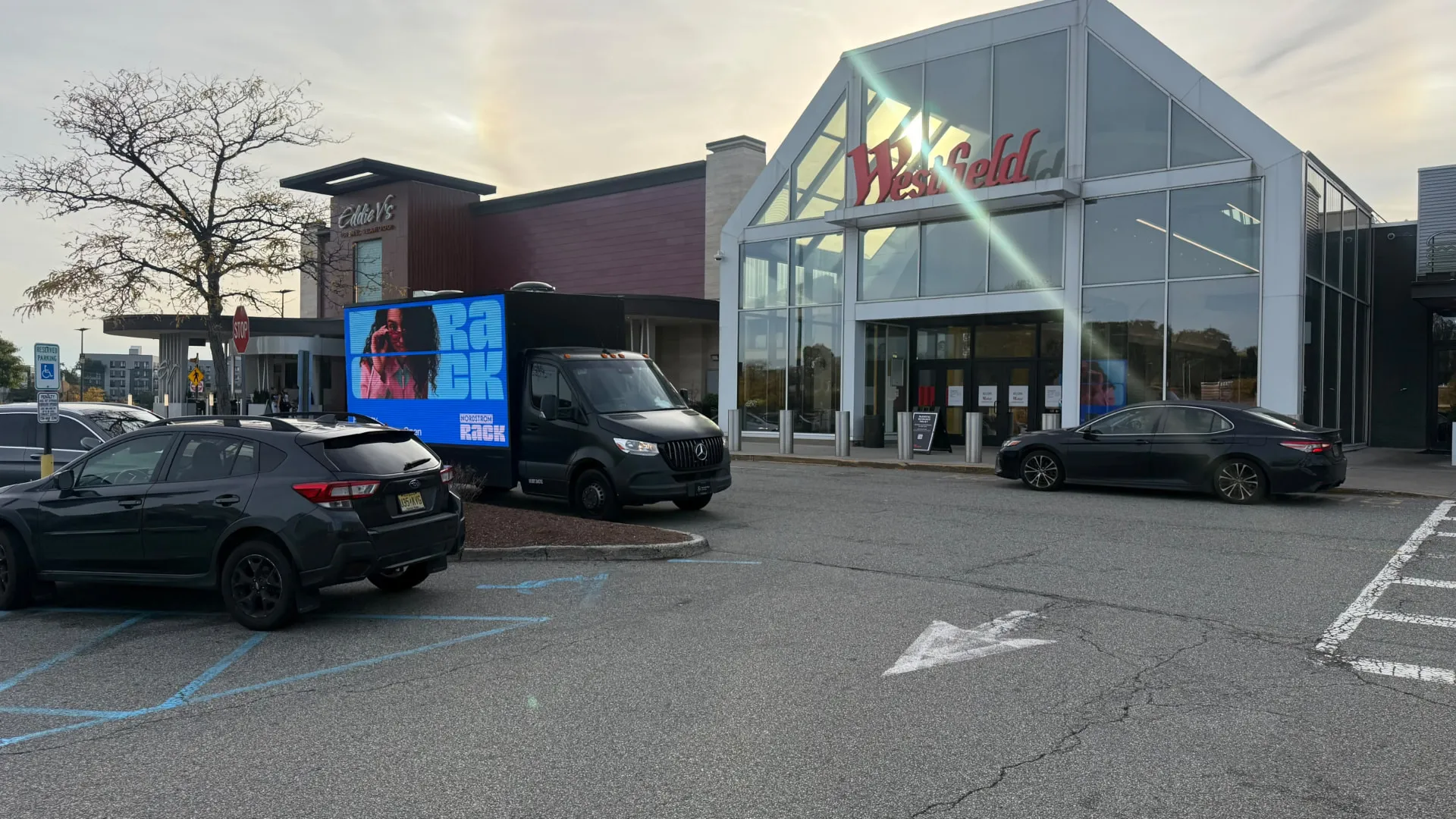
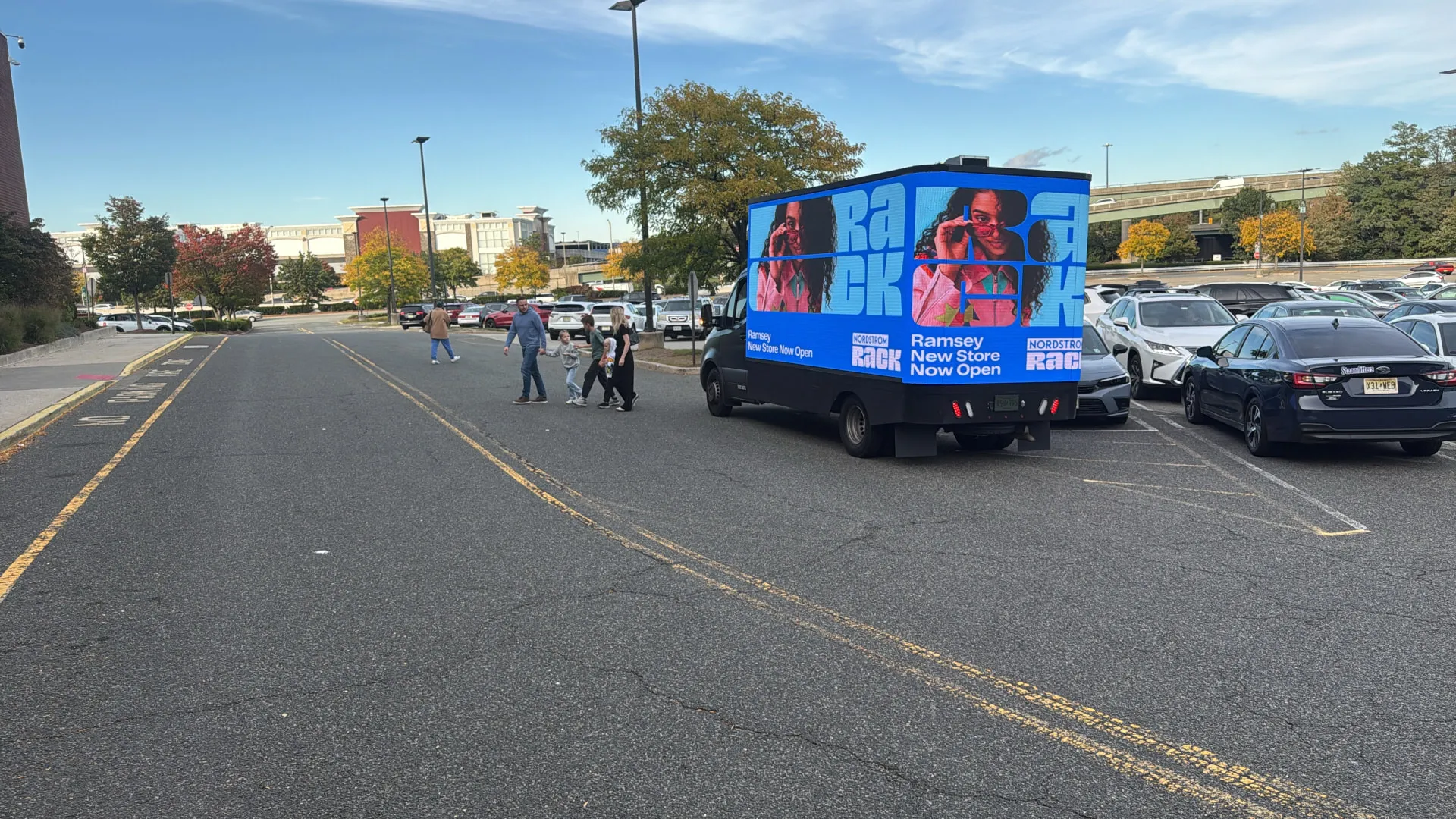
Nordstrom Rack’s Ramsey grand opening
Boost Outdoor Media ran this three-day campaign on October 8–10, 2026. Opening-morning presence at the Ramsey store was paired with a primary route plan centered on Route 17 and nearby retail areas in Ramsey, Mahwah, Suffern and Oakland. The approach: keep the new store and opening message at the center of the campaign.
Creative that reads quickly
One product. One offer. One next step.
Street-level advertising is not a product page. Lead with a recognizable brand or product image, large readable text and a short message. Keep the location or website visible rather than saving it for the end of a video.
- Store opening: brand, opening date and location.
- Retail sale: one main offer, destination and end date.
- Online launch: hero product, launch message and short URL.
- Pop-up: event identity, venue and dates.
Motion should reinforce the message, not make viewers wait for it. Keep essential offer terms legible and confirm product availability before launch.
Campaign evaluation
Define success before the truck rolls.
Separate campaign delivery from shopper response. Agree on the hours, route priorities and available reporting first. Then choose response measures that fit your objective.
- Store campaigns: offer redemptions, event attendance or store visits reviewed against a relevant baseline.
- E-commerce campaigns: dedicated page visits, tagged QR interactions or campaign-code use.
- Brand launches: market-level search and site trends alongside the rest of your media activity.
These signals help your team evaluate the campaign; they are not guaranteed results or automatic proof of attribution. Promotions, seasonality and other advertising can also affect response.
Explore campaign pricingHow It Works
From brief to on-street activation
Start with the shopper and objective
Share your store address or target market, campaign dates, audience and priority: store awareness, a promotion, an event or an online launch. Include your budget and desired daily hours so the proposal fits the brief.
Build the route and schedule
We discuss relevant shopping corridors, nearby communities and event locations. Set route priorities and timing, review any proposed stationary stops and leave room for traffic or access adjustments.
Align the creative and destination
Choose one primary message and next step. Send your artwork or video so we can confirm screen specifications and playback requirements. Make sure the store offer or campaign page is ready for the same dates.
Confirm delivery and review criteria
Agree on campaign hours, location arrangements and reporting expectations before launch. Decide which delivery records and customer-response measures your team will review afterward.
FAQ
Retail & E-commerce advertising questions, answered
Put your next retail campaign on the road.
Tell us your market, dates and what you want shoppers to do.