
Boston Billboards: The Complete Guide to Outdoor Advertising in Boston
Why Boston has so few billboards, and what works instead
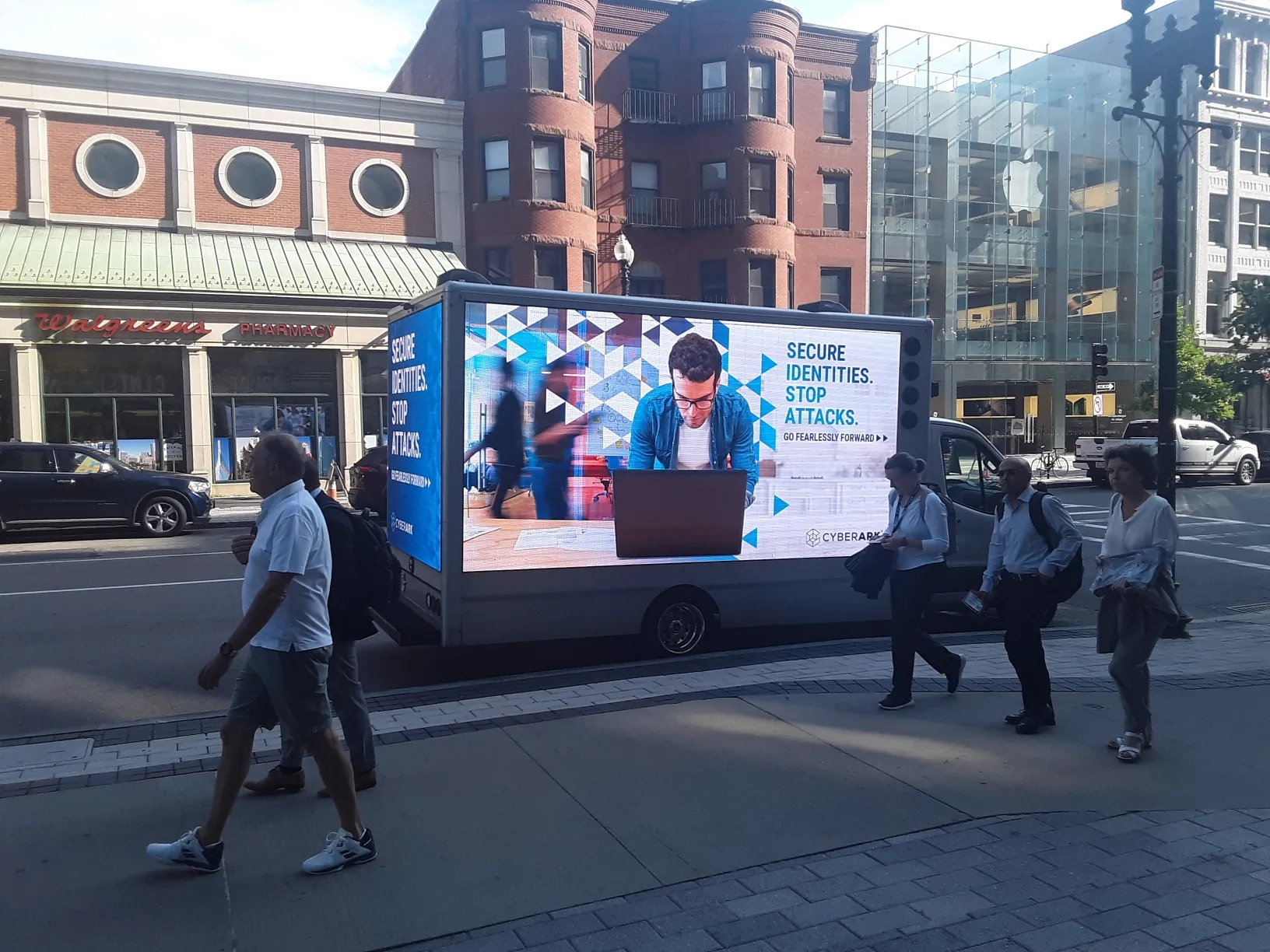
Boost Outdoor Media LED billboard truck advertising on Boylston Street in Boston Back Bay
Boston is one of the hardest major cities in the United States for fixed billboards. Boston’s zoning code allows electronic billboards in only three districts, and Massachusetts state law sharply restricts most other outdoor sign types. That scarcity is exactly why mobile LED billboard trucks have become the practical way to put a large digital advertisement in front of Boston audiences: a truck is a vehicle, not a structure, so it can route through the Seaport, Back Bay, Fenway, and downtown without a fixed-sign permit that may never be granted.
This guide covers the billboard rules that make Boston different, every outdoor advertising option available to a Boston marketer, real pricing, the neighborhoods and routes that perform, and how local businesses plan a campaign.
Why Boston Has So Few Billboards
Most big American cities are full of billboards. Boston is not, and the reason is legal, not cosmetic:
- State law restricts billboards on public ways. Massachusetts General Laws Chapter 93, Section 30 prohibits posting, erecting, or maintaining billboards on public ways and on private property visible from highways and parks unless the sign conforms to state outdoor advertising regulations — a framework dating back to 1920 that still governs new billboard permits today.
- Boston’s zoning code allows electronic billboards in only three districts. Under Boston Zoning Code Article 11, Section 11-7, electronic signs are conditional uses permitted only in the Theater District, the Lansdowne Street Entertainment District next to Fenway Park, and the Seaport Convention Center District — and forbidden everywhere else in the city. Approved screens must stay under 500 candela per square meter at night, operate only between 7:00 AM and 2:00 AM, and renew their permits every eight years.
- The result is scarce inventory. When marketers search “Boston billboards,” they mostly find inventory on highways outside the city core or a small number of permitted digital screens near Fenway Park, the Theatre District, and the South Boston Waterfront. Demand for those few faces drives premium pricing and long waits.
For advertisers, that turns Boston into a two-lane market: compete for a small number of fixed faces, or bring the screen to the street with a mobile LED billboard truck.
Your Outdoor Advertising Options in Boston
| Option | Where it reaches | What to know |
|---|---|---|
| Static billboards | Mostly on state highways and commuter corridors outside the downtown core | Permitted under the state outdoor advertising system; new city-center locations are rare |
| Fixed digital billboards | Theater District, Lansdowne Street, and Seaport Convention Center District only | Conditional-use permit, brightness and hour caps, eight-year permit term |
| Transit advertising (MBTA) | Subway cars, stations, and buses across Greater Boston | Strong reach, but riders see it along their own routes, not in the neighborhoods you choose |
| Mobile LED billboard trucks | Any street a vehicle can legally travel, on your schedule | The screen moves with foot traffic and event crowds; routes, hours, and creative can change daily |
Boost Outdoor Media runs the last option — LED billboard truck campaigns across Greater Boston and New England.
What Billboard Advertising Costs in Boston
Fixed billboard pricing in Boston is quoted case by case and varies widely by face and location; the handful of permitted digital screens near Fenway Park and the Seaport are among the most contested advertising real estate in New England. If you are pricing a fixed face, expect to request a custom quote and plan around the permit timeline.
Mobile billboard campaigns are simpler to budget. Boost Outdoor Media’s Boston pricing is:
- $1,200–$1,400 per day for a full LED billboard truck campaign day
- $5,000–$6,500 per week for recurring weekly coverage
- $16,000–$20,000 per month for an always-on presence
A detailed breakdown is in our mobile billboard advertising cost guide.
Where a Boston Billboard Truck Performs Best
Boston rewards trucks that follow the crowds. The routes we run most:
- Fenway Park and Lansdowne Street — Red Sox games and concert nights put tens of thousands of pedestrians on the same blocks
- The Seaport and Boston Convention & Exhibition Center — Summer Street and Seaport Boulevard during conference season
- Back Bay — Boylston Street, Copley Square, and the Newbury Street shopping district
- Downtown Crossing and Government Center — lunchtime commuter foot traffic
- TD Garden and North Station — Celtics and Bruins event nights
- Massachusetts Avenue through Cambridge — the MIT and Kendall Square side of the river
Both of our recent Boston convention campaigns followed exactly this logic. The CyberArk IMPACT campaign at the Hynes Convention Center circled Back Bay and Boylston Street, and the Amgen ENDO campaign at the Boston Convention & Exhibition Center worked the Seaport along Summer Street.
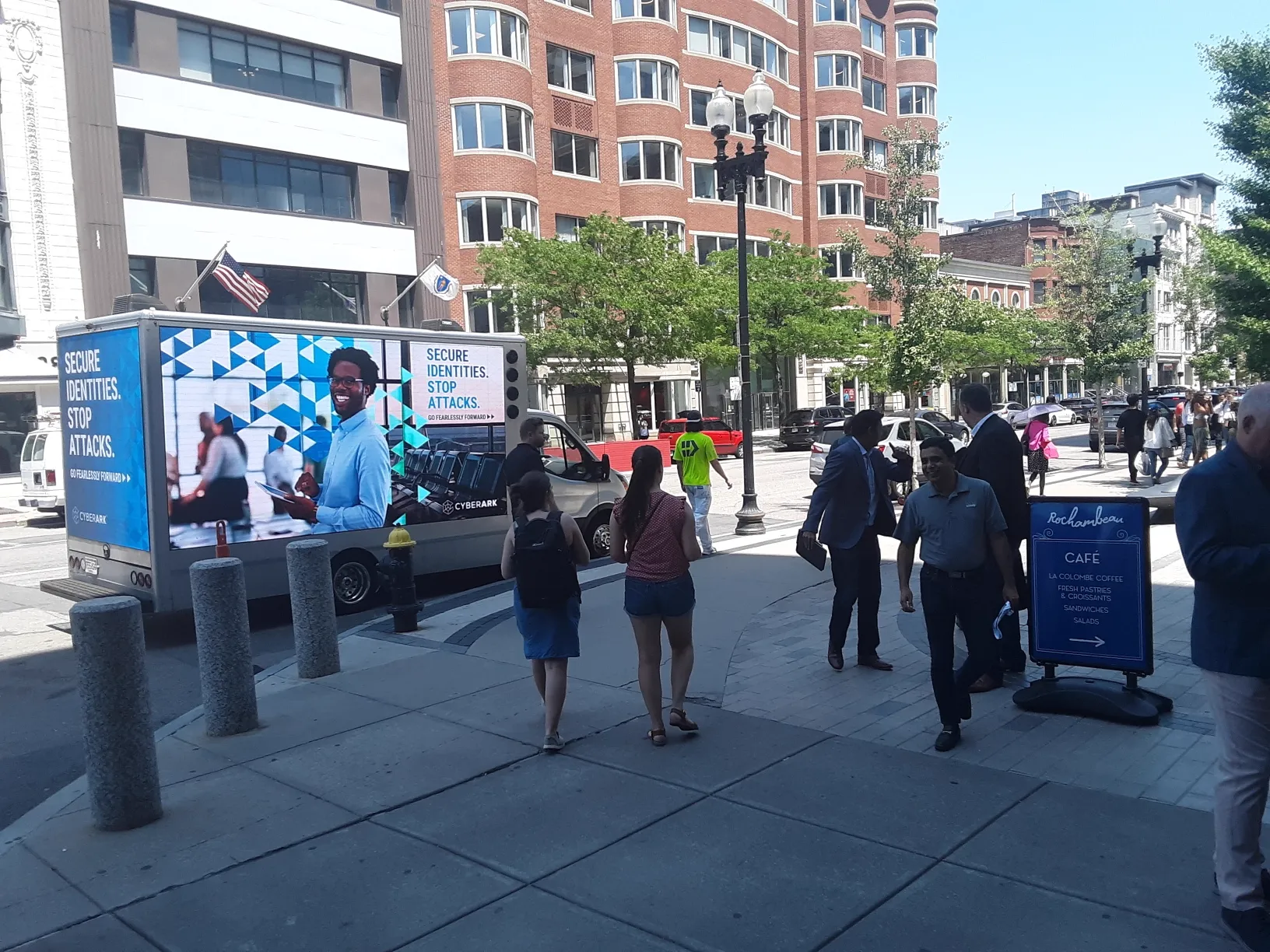
LED billboard truck running a mobile billboard campaign in Boston’s Back Bay during the CyberArk IMPACT convention.
How to Plan a Boston Mobile Billboard Campaign
- Pick the audience first. A restaurant wants dinner-hour traffic in its neighborhood; a pharma brand wants the convention crowd near its venue. The route follows the audience, not the other way around.
- Build routes around the events calendar. Check the Red Sox, Celtics, Bruins, and convention schedules before locking dates — event nights multiply foot traffic on the same blocks.
- Time your hours. Event foot traffic beats rush hour for impressions on most downtown routes; a 4-hour window near the end of a game often outperforms a full 8-hour day.
- Design for a moving screen. Short, high-contrast messages read in three seconds; details belong in a URL or on the landing page, not crammed on the screen.
- Measure results. Ask about tracking options for each campaign so you can connect impressions to calls and sales.
How Boost Outdoor Media Helps
Boost Outdoor Media is a New England mobile billboard company running LED billboard truck campaigns in Boston, its suburbs, and across Massachusetts. We handle route planning, scheduling, and creative on a screen large enough to read from the sidewalk. See our Boston mobile billboard market page for coverage details, or contact us to price a campaign — call 978-288-1616.
Frequently asked questions
Are billboards legal in Boston?
Static billboards are tightly restricted under Massachusetts state law, and Boston zoning allows electronic billboards only in the Theater District, the Lansdowne Street Entertainment District, and the Seaport Convention Center District. Mobile LED billboard trucks are not fixed signs, so they are the practical way to run a digital campaign in most of the city.
How much does billboard advertising cost in Boston?
Fixed billboards in Boston are quoted case by case because permitted faces are scarce. Mobile LED billboard truck campaigns from Boost Outdoor Media start at $1,200 to $1,400 per day, $5,000 to $6,500 per week, or $16,000 to $20,000 per month.
Can an LED billboard truck drive through downtown Boston?
Yes. A mobile billboard truck operates as a vehicle on public streets, so it can route through downtown Boston, Back Bay, the Seaport, and Fenway. Routes are planned around traffic patterns and event schedules for the best visibility.
What is OOH ad pricing in Boston?
Out-of-home (OOH) pricing in Boston depends on the format: transit ads, fixed billboards, and mobile trucks each have their own rate structures. Mobile billboard trucks are priced per day, week, or month, starting at $1,200 to $1,400 per day.
Where do mobile billboard trucks perform best in Boston?
Fenway Park on game and concert nights, the Seaport during conventions, Back Bay and Boylston Street for shopping traffic, and Downtown Crossing at lunchtime. The best route depends on the audience you want to reach.
How far in advance should I book a Boston mobile billboard campaign?
Two to four weeks is ideal for most campaigns, especially ones timed around Red Sox games, concerts, or conventions. Shorter lead times are often possible. Call Boost Outdoor Media at 978-288-1616 to check availability.