
2026 Midterm Advertising: Mobile Billboards for Battleground Campaigns
How campaigns in New Hampshire, Maine, Pennsylvania, and Georgia use LED billboard trucks to reach voters static media can't.
The 2026 midterm elections will be won or lost in a handful of battleground states — and the campaigns that win will be the ones that show up where voters actually are. Mobile LED billboard trucks let campaigns, PACs, and advocacy groups deliver video, issue messaging, and get-out-the-vote creative directly to specific neighborhoods, rallies, campuses, and early voting locations — without waiting weeks for a static billboard or paying broadcast TV rates.
At Boost Outdoor Media, we''ve run political and advocacy campaigns through multiple election cycles — from union advocacy trucks in Portland, Maine, to a presidential primary campaign in Manchester, New Hampshire. This guide breaks down how battleground campaigns should think about mobile billboard advertising for 2026.
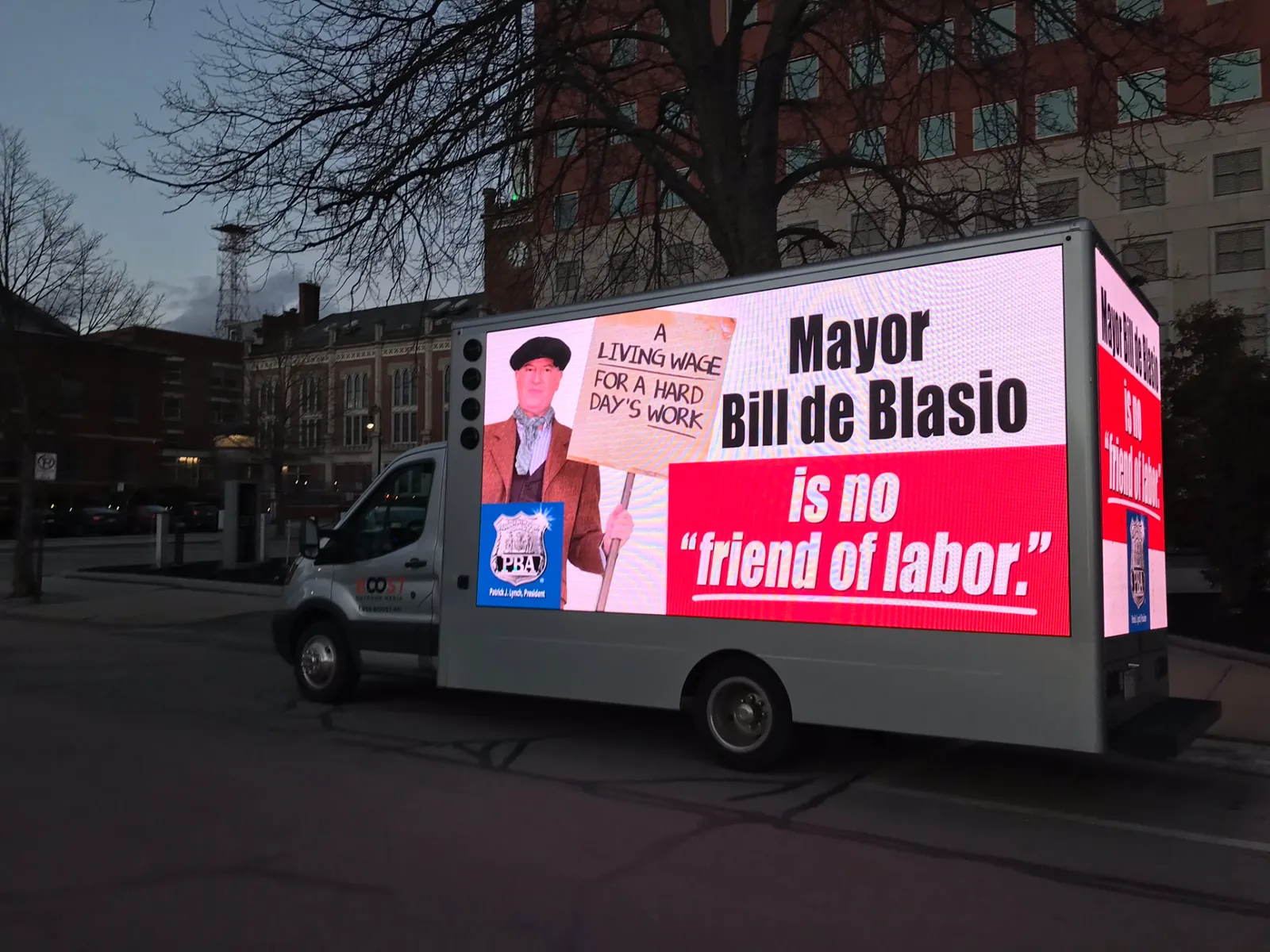
An LED billboard truck on the primary trail in Manchester, New Hampshire — mobile political advertising reaches voters and media where static billboards can''t.
Why Mobile Billboards Matter More in 2026
In short: traditional political media is getting more expensive and less precise, while mobile billboard trucks put your message on the exact streets your voters drive, walk, and wait in line on.
Three forces are converging for the 2026 cycle:
- Broadcast TV is saturated and pricey. In battleground markets, October TV inventory sells out early and rates spike. A 30-second spot in a top-20 market during the final weeks can cost more per day than a week of truck deployment.
- Static billboard inventory near high-value zones is limited. The boards near early voting sites, union halls, and college campuses are booked a year out — if they exist at all.
- Voters are harder to reach online. Ad blockers, streaming, and platform restrictions on political ads have shrunk digital reach. OOH (out-of-home) can''t be skipped, blocked, or scrolled past.
A mobile LED billboard truck solves all three: it goes to the audience, updates creative the same day, and delivers 40+ hours a week of impressions in the exact zip codes that decide close races.
The Battleground Playbook: Four States, Four Strategies
Every battleground state has a different media map. Here''s how we''d deploy LED billboard trucks in four states where Boost Outdoor Media already operates — with direct links to each state page.
New Hampshire: Retail Politics and the Ground Game
New Hampshire rewards candidates who show up — and mobile billboards let a campaign show up everywhere at once. We know this firsthand: we ran the NYC PBA''s "No Friend of Labor" primary campaign in Manchester, parking an LED truck at dusk on Elm Street where both voters and the national press corps could see it.
For 2026, the play in NH is high-frequency coverage of Manchester, Nashua, and Concord — diner stops, town halls, and polling places on Election Day. With no major TV market of its own (most NH voters watch Boston stations), mobile billboards deliver local presence without Boston media prices. See our full coverage on the New Hampshire LED billboard advertising page.
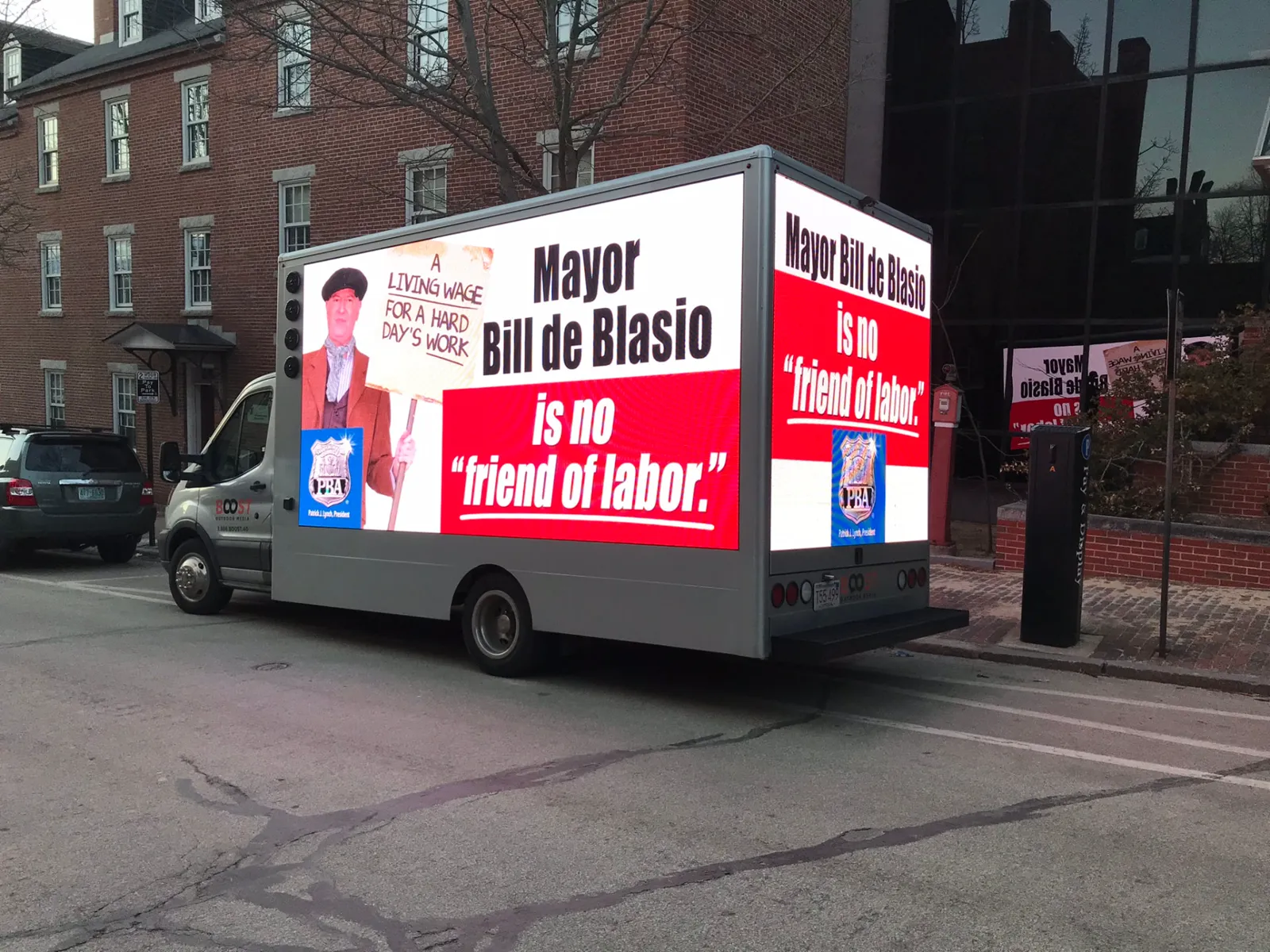
Daytime deployment in Manchester, NH — bright LED screens stay readable in full sun, making trucks effective from morning commute through evening events.
Maine: Two Districts, One Truck
Maine''s 2nd Congressional District is one of the most-watched swing seats in the country — and it''s geographically enormous. A truck can cover Bangor, Lewiston, and Augusta in a single week, something no static board buy can match. Meanwhile, CD-1 races and ballot initiatives concentrate in Portland, where we''ve run union advocacy campaigns down Congress Street.
Ballot-question campaigns in particular benefit: Maine''s referendum-heavy ballot means issue groups need flexible, explain-the-issue creative in front of voters for weeks. Details on coverage areas are on our Maine LED billboard advertising page.
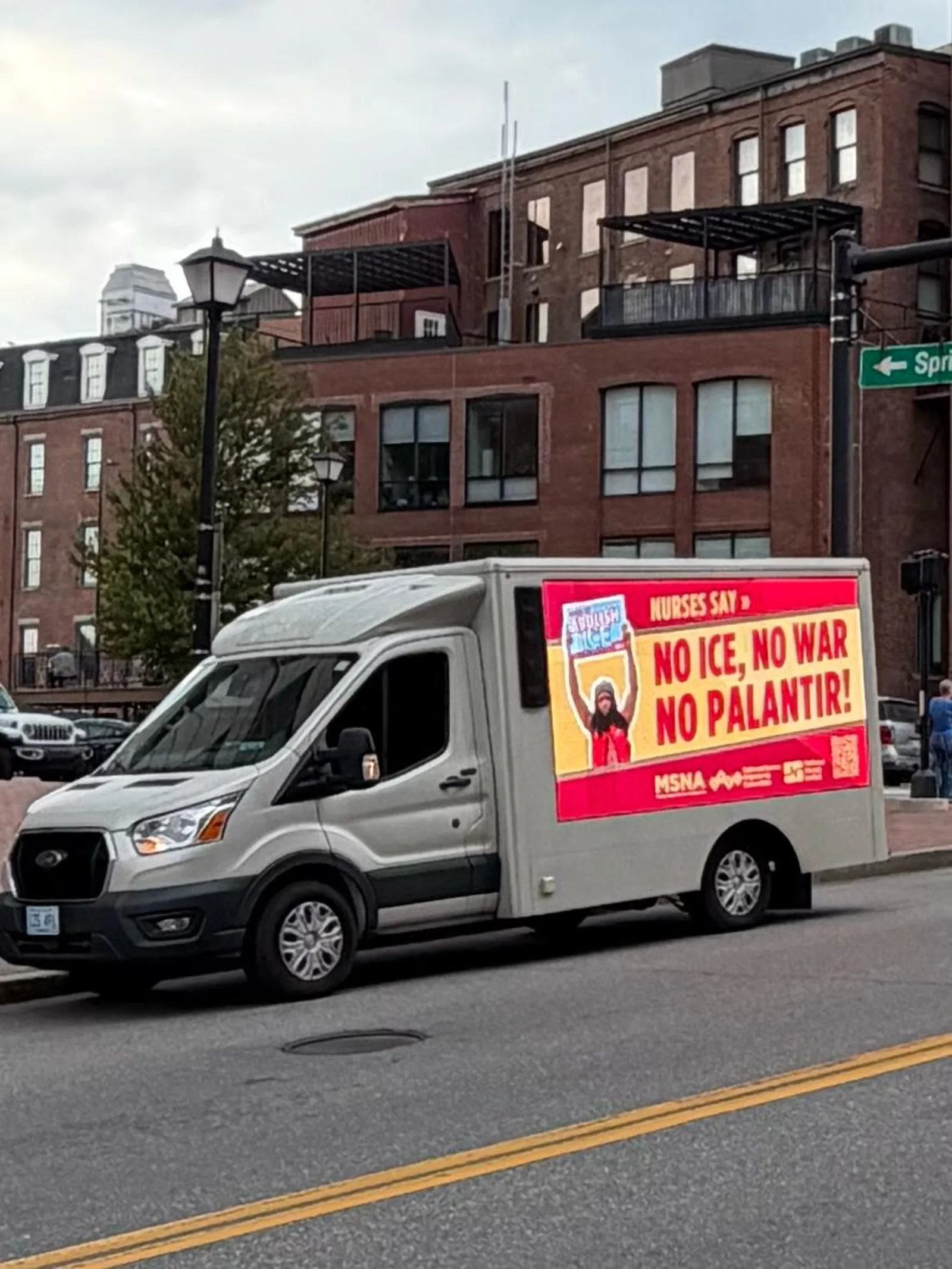
A nurses'' union advocacy campaign rolling through downtown Portland, Maine — issue messaging on the move in ME-01.
Pennsylvania: The Biggest Prize on the Map
Pennsylvania will again be a top-spend state in 2026 — governor''s race, competitive House seats, and state legislative battles. The media reality: Philadelphia and Pittsburgh TV are expensive, and the state''s mid-size markets (Scranton/Wilkes-Barre, Allentown, Erie, Harrisburg) are where persuadable voters actually live.
Mobile billboard trucks are built for exactly this: a campaign can run the collar counties around Philadelphia one week, then shift the same truck to the Lehigh Valley or Allegheny County suburbs the next. Early-vote and Election Day GOTV deployments around Philly, Pittsburgh, and the collar counties are our most-requested political use case. Full city coverage is listed on the Pennsylvania LED billboard advertising page.
Georgia: Turnout Is the Whole Ballgame
Georgia''s 2026 cycle — a marquee U.S. Senate race and a governor''s race — will be decided by turnout, not persuasion. That makes mobile billboards a GOTV weapon: trucks stationed near early voting locations in Fulton, DeKalb, Gwinnett, and Cobb counties, then re-deployed to Savannah, Augusta, Macon, and Columbus for runoff-style pushes.
Video creative matters here: countdown messaging ("3 days left to vote early"), polling-place directions, and same-day updates are things a static board simply cannot do. See coverage and markets on the Georgia LED billboard advertising page.
What a Midterm Truck Deployment Looks Like
A typical political deployment with Boost Outdoor Media runs 8–10 hours a day on a campaign-defined route, with creative scheduled by daypart. Here''s a realistic final-two-weeks schedule:
| Window | Truck Position | Creative |
|---|---|---|
| Morning commute (7–9am) | Parked on a major arterial or circling a transit hub | Name ID + top issue message |
| Midday (11am–2pm) | Early voting sites, senior centers, college campuses | "Vote early today" + location directions |
| Evening commute (4–7pm) | Suburban retail corridors and park-and-rides | Contrast/comparison message or endorsement |
| Events (as scheduled) | Rallies, debates, opponent events | Rapid-response video, updated same day |
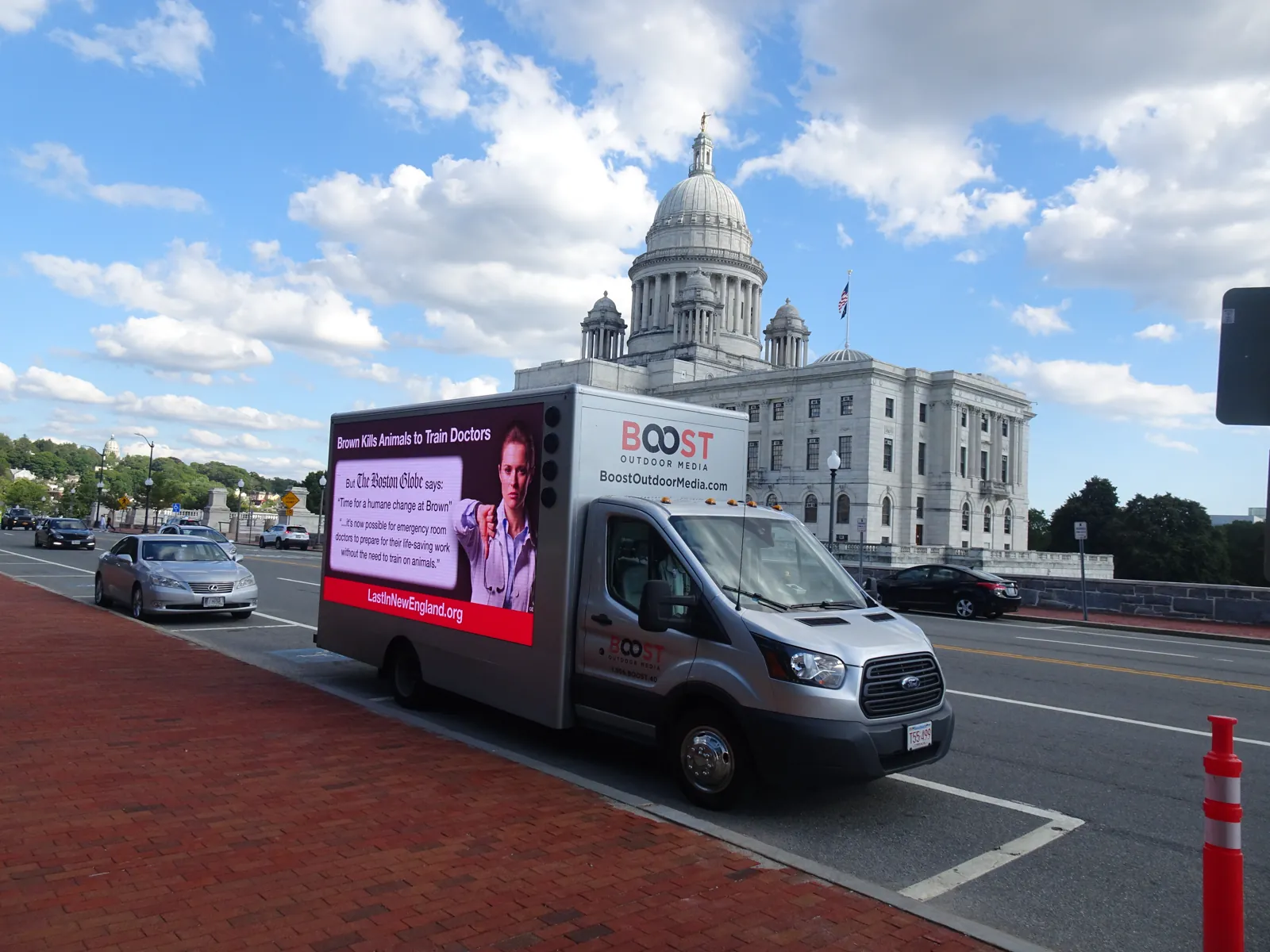
Advocacy advertising at a state capitol — mobile billboards are equally effective for issue campaigns, lobbying days, and legislative pressure between elections.
Creative Rules for Political Trucks
The campaigns that get the most from LED trucks follow the same creative discipline as our PBA primary campaign:
- Seven words or fewer on the main frame. "Mayor de Blasio is no friend of labor" worked because you could read it at 40 mph.
- High contrast, always. Dark background, bright text. It reads in sun, dusk, and rain.
- Rotate 3–5 messages, not one. Issue message, bio/name ID, endorsement, GOTV — dayparted to the audience.
- Use video for GOTV. A 10-second countdown loop ("Early voting ends Friday — 400 Main St") outperforms static frames near polling locations.
- Disclaimers stay legible. "Paid for by..." lines must be readable at speed — we size them to FEC and state rules.
Legal and Timing Notes for 2026
Mobile billboard advertising is legal for political campaigns in all 50 states, but campaigns should plan around a few practical rules:
- Electioneering buffer zones: Most states restrict campaign activity within a set distance of polling places (commonly 100–150 feet). Trucks can typically operate on public roads outside the buffer, but we plan routes with the campaign''s compliance team.
- Disclaimer requirements: Federal and most state rules require "paid for by" disclaimers on OOH political ads — we build them into every creative rotation.
- Book early for October: The final four weeks before November 3, 2026 will sell out in battleground markets. Campaigns that reserve trucks by late summer lock in availability and better rates.
Get Your 2026 Campaign on the Road
The bottom line: mobile LED billboard trucks give 2026 campaigns something no other medium can — the ability to put video-grade political advertising on a specific street corner, on a specific day, in a race that may be decided by a few thousand votes.
Boost Outdoor Media runs political and advocacy campaigns across the Northeast, Mid-Atlantic, and Southeast, including full coverage in New Hampshire, Maine, Pennsylvania, and Georgia. Learn more about our political advertising services, see typical budgets in our mobile billboard cost guide, or request a quote to reserve your truck for the 2026 cycle.
Frequently asked questions
Are mobile billboard trucks effective for political campaigns?
Yes. Mobile LED billboard trucks deliver 40+ hours per week of unskippable impressions in the exact neighborhoods a campaign targets. Unlike static billboards, they can be repositioned daily to early voting sites, rallies, campuses, and commuter corridors, and their creative can be updated the same day for rapid response or GOTV pushes.
How much does a mobile billboard truck cost for a political campaign?
Most political deployments run $1,500–$3,500 per truck per week depending on market, hours per day, and creative needs — far less than broadcast TV in battleground markets during the final weeks. Multi-week and multi-truck bookings typically get better rates. See our mobile billboard cost guide for a full breakdown.
Can LED billboard trucks advertise near polling places?
Generally yes, with limits. Most states set an electioneering buffer (commonly 100–150 feet) around polling places where campaign activity is restricted. Trucks can usually operate on public roads outside that buffer. Boost Outdoor Media plans Election Day routes with each campaign's compliance team to stay within state rules.
When should a 2026 midterm campaign book a billboard truck?
Reserve by late summer 2026. October inventory in battleground states like Pennsylvania and Georgia sells out early, and booking ahead locks in both availability and better weekly rates. Primary and special-election campaigns should book 4–6 weeks before their election date.
What makes a good political ad on an LED billboard truck?
Seven words or fewer on the main frame, high-contrast colors that read in sunlight, and a rotation of 3–5 messages dayparted to the audience — name ID in the morning, issue messages midday, and video countdown creative near polling places for GOTV. Paid-for-by disclaimers must be legible at speed.
Which battleground states does Boost Outdoor Media cover?
Boost Outdoor Media operates across the Northeast, Mid-Atlantic, and Southeast, with dedicated coverage pages for New Hampshire, Maine, Pennsylvania, and Georgia — four of the most competitive states in the 2026 midterm cycle. Trucks can be deployed to specific cities, counties, and venues on a campaign-defined route.