
Mobile LED Billboard Truck Advertising in Portland, Maine: A Union Advocacy Campaign
How one LED billboard truck owned Congress Street, Monument Square and the Old Port for a day
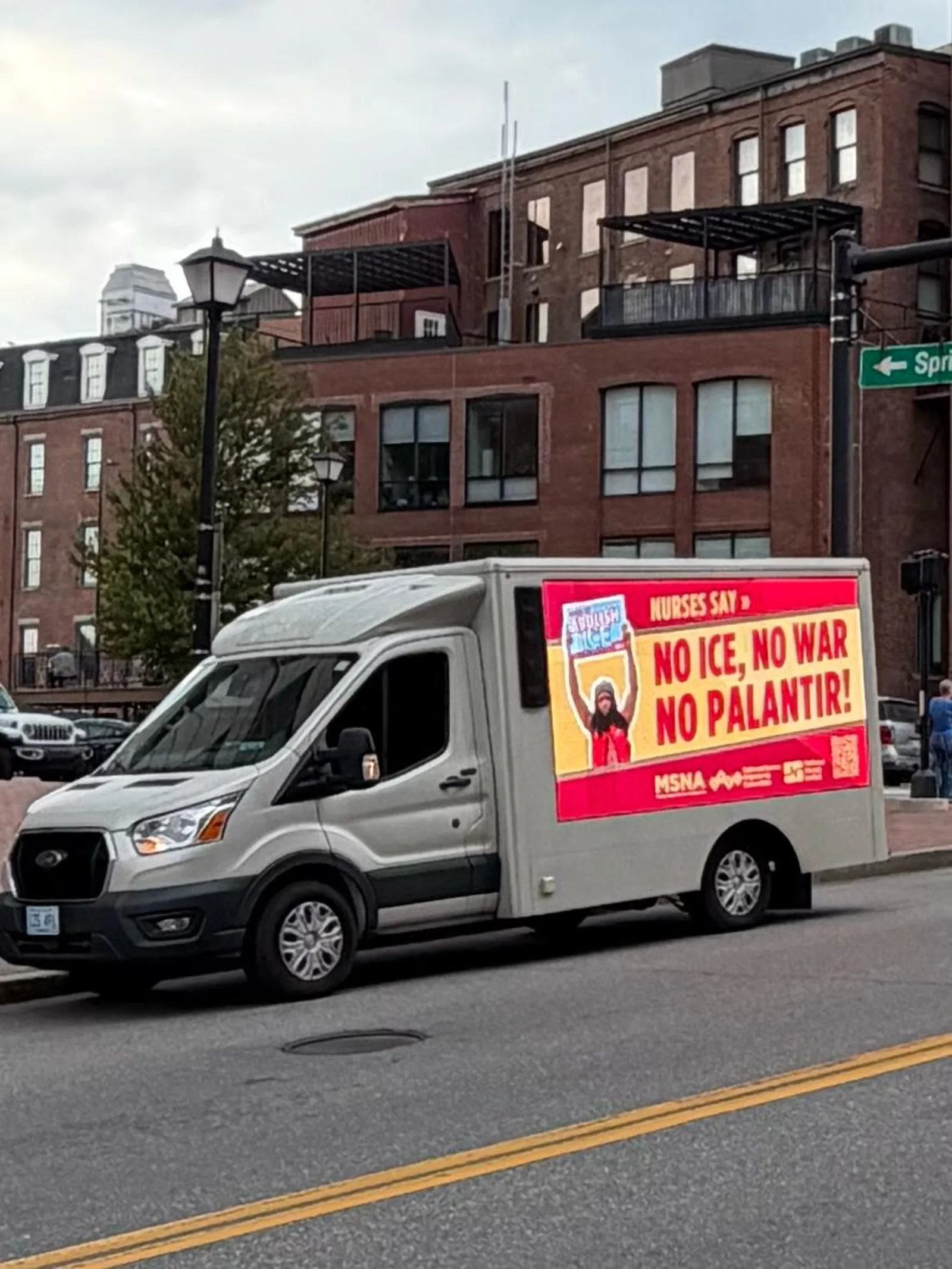
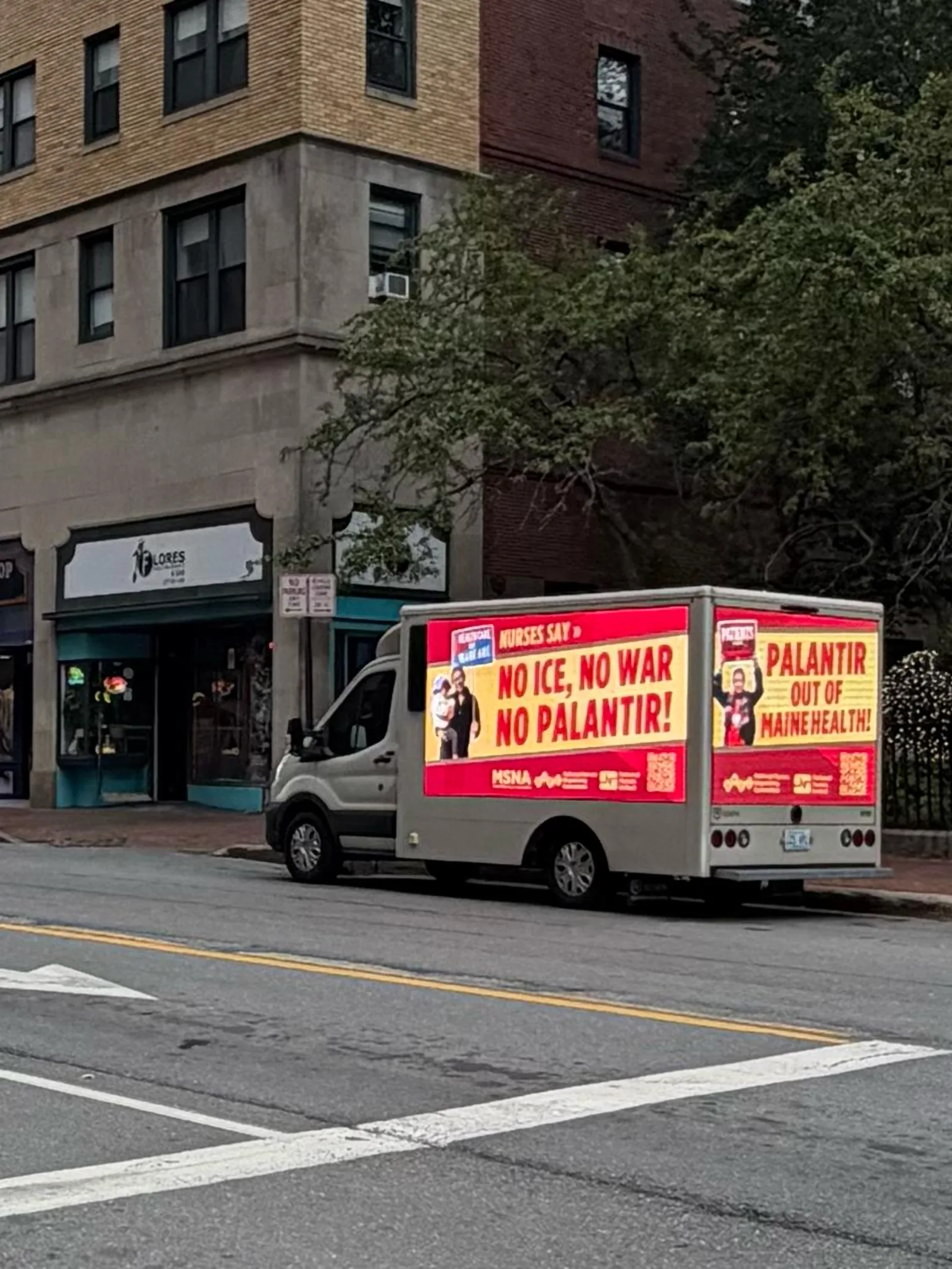
A mobile LED billboard truck working downtown Portland, Maine.
Downtown Portland, Maine is a compact, walkable market — which makes it one of the best places in New England to run a mobile LED billboard truck campaign. A single truck looping Congress Street, Monument Square, Commercial Street and the Old Port can put a full-motion message in front of office workers, hospital staff, shoppers and tourists dozens of times in one day.
This past campaign put a union advocacy message on the streets of Portland: nurses calling for "No ICE, No War, No Palantir" and "Palantir Out of MaineHealth." Here is how the run was built, where the truck went, and what makes Portland such a strong LED truck market.
Why a mobile LED billboard worked in Portland
Portland's downtown core is roughly one square mile. Traditional out-of-home in this market is limited — there is very little large-format inventory close to the buildings and institutions that matter. A mobile billboard truck solves that: the media moves to the audience instead of waiting for the audience to drive past it.
- Dense decision-maker audience. One Monument Square, the KeyBank and Camden National buildings, Verrill and R.M. Davis offices — a few blocks hold most of the market's corporate and legal foot traffic.
- Pedestrian-scale streets. Brick sidewalks, slow speeds and constant crosswalk traffic mean the screen is read at eye level, not glanced at from 60 mph.
- Health-system proximity. Maine Medical Center and MaineHealth facilities are minutes from downtown, so shift-change timing is easy to hit.
- Event and tourist overlay. Old Port evenings, cruise-ship days and the Eastern Prom waterfront add impressions at no extra media cost.
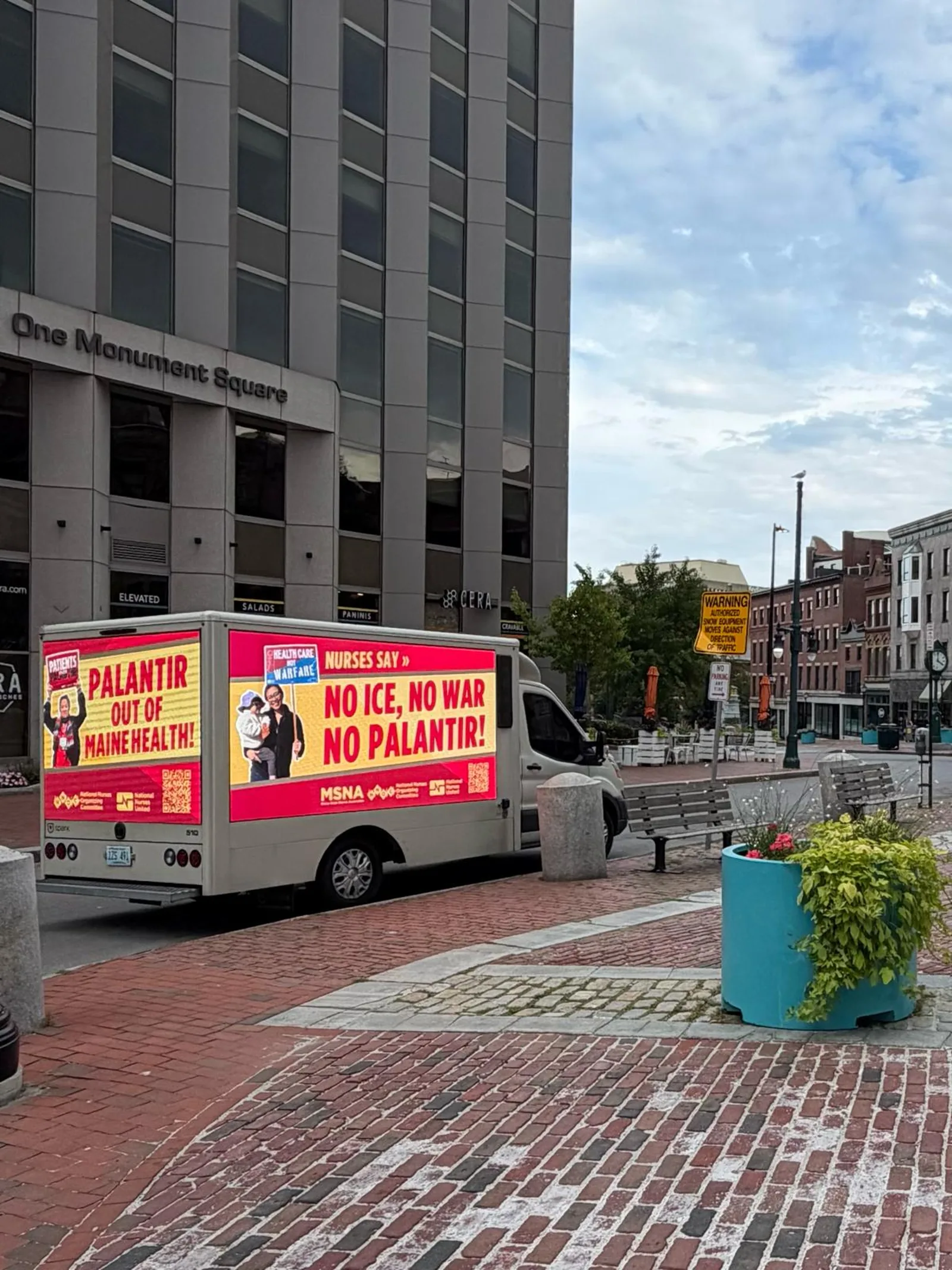
The route plan
The day was built around dwell, not mileage. Roughly 60% of the hours were spent parked or crawling in high-foot-traffic positions, and 40% moving between them so the truck stayed visible on arterials.
Shift: 10:00 AM – 6:00 PM. The truck staged at Union Street & Portland Square and ran a tight downtown loop all day: Congress Street through Monument Square, west past State Street and the West End, back through Park Avenue and Deering Oaks, and returning to Portland Square between passes. Because the loop is only a few minutes end to end, the same audience saw the message again and again — at the office at lunch, on the sidewalk in the afternoon, and on the drive home.
- 10:00 AM – 12:00 PM: Staging at Union St & Portland Sq, then Congress Street loops past offices, courts and the Monument Square lunch crowd.
- 12:00 PM – 2:00 PM: Peak dwell at Monument Square and Temple Street for the lunch rush; slow rolls through the West End.
- 2:00 PM – 4:00 PM: Park Avenue and Deering Oaks side of the loop, catching neighborhood and cross-town traffic back toward downtown.
- 4:00 PM – 6:00 PM: Return leg through Portland Square for outbound commuter volume, wrapping at the staging point by 6 PM.
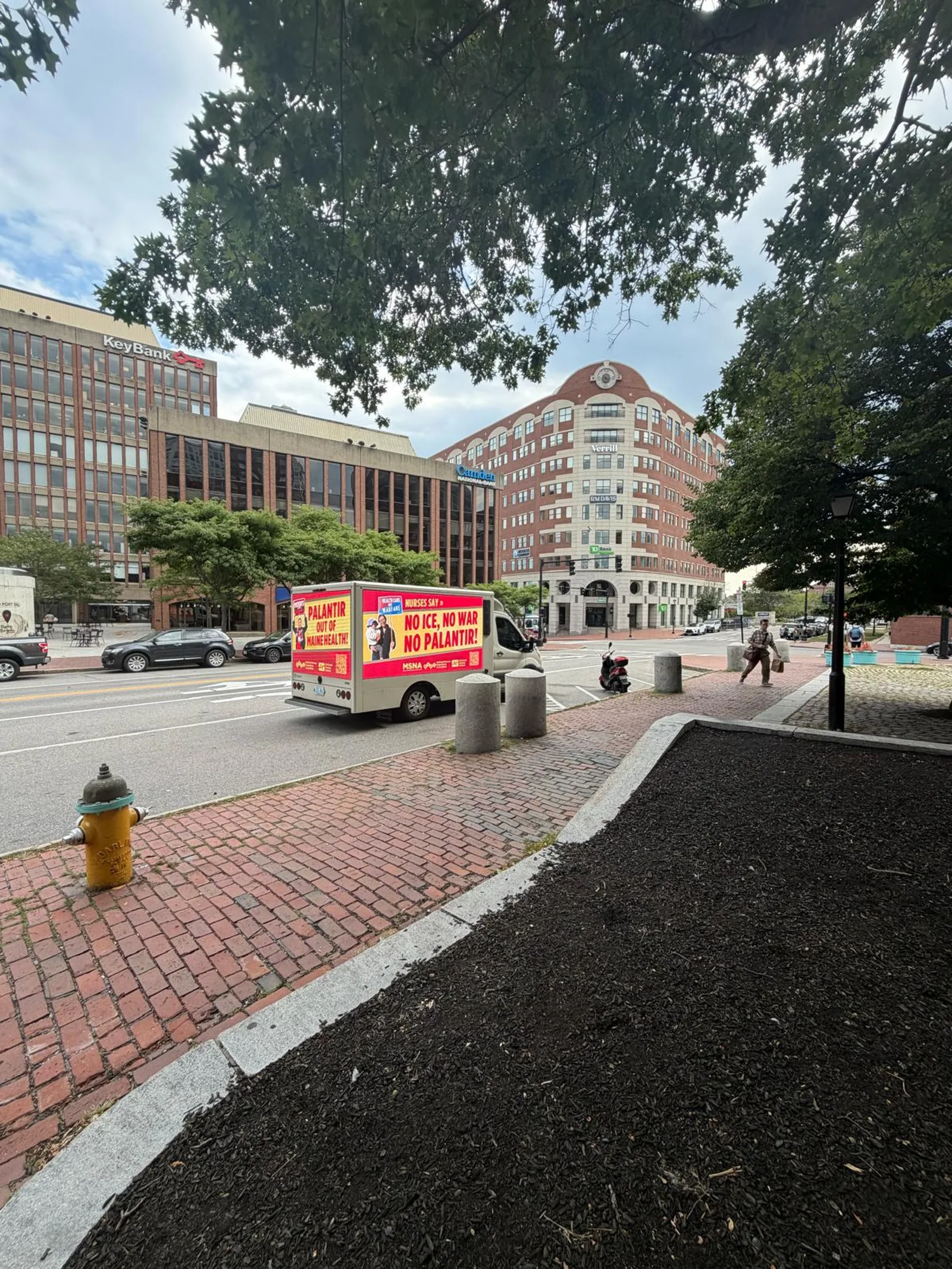
Creative that reads in three seconds
The winning ads in this market are short. The Portland creative used a single red-and-yellow headline, one photo, sponsor logos and a QR code — nothing else. On a 10x5 LED screen at 15–20 feet, that is the maximum a walking viewer can absorb.
- Headline under seven words, set at the largest size the screen allows.
- High-contrast color pairing so the message holds up in overcast coastal light.
- A second, localized message ("Palantir Out of MaineHealth") on the rear panel so repeat viewers see something new.
- QR code low on the panel for parked, pedestrian-level dwell moments.
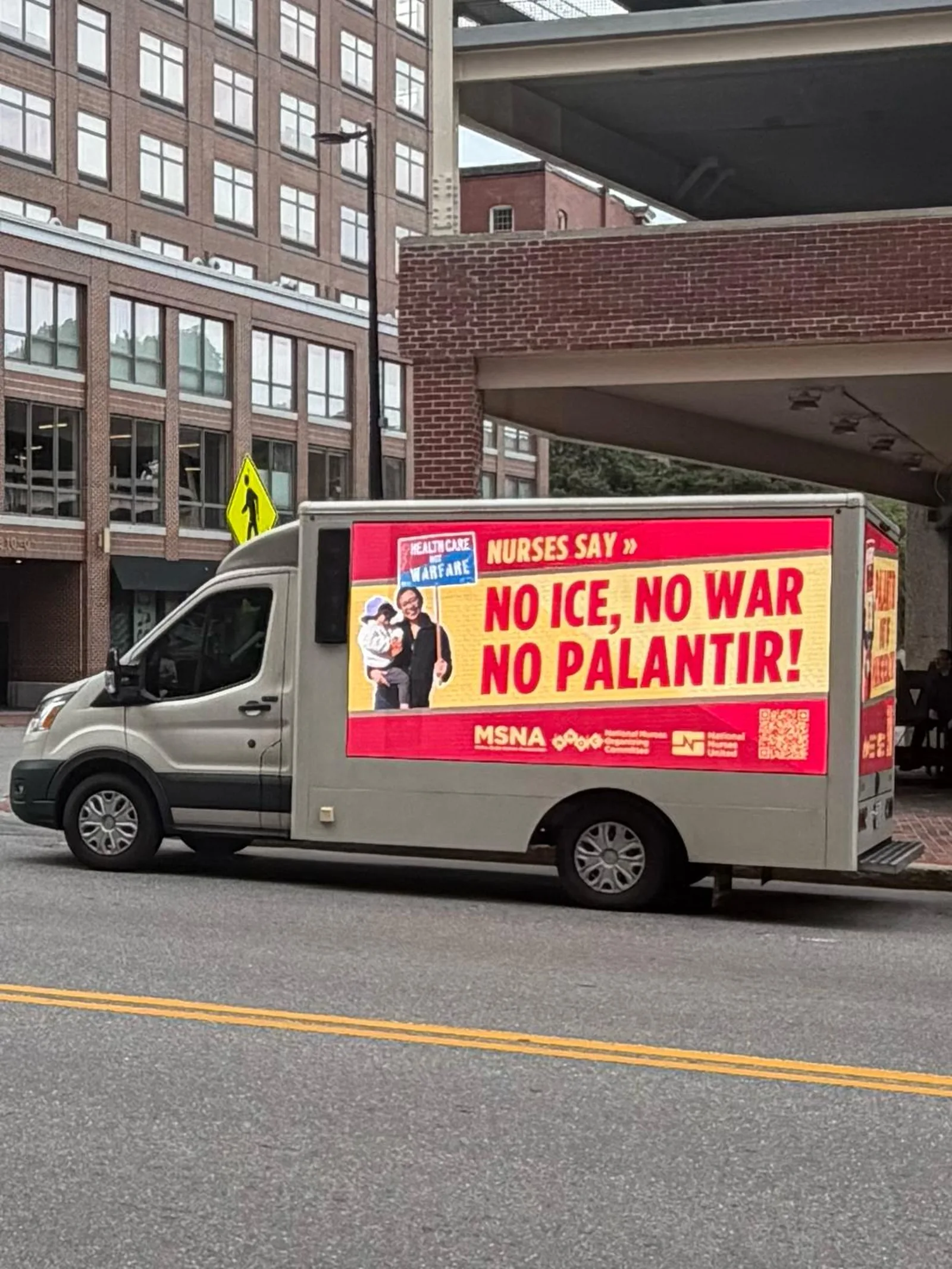
What advocacy and issue campaigns should copy
Union, nonprofit and issue-advocacy groups get outsized value from LED trucks because the message can be placed at the exact address that matters — a headquarters, a hospital campus, a legislative building — on the exact day it matters. Three things made this run effective:
- Geography as the message. Running the ad in the sponsor's own city makes coverage local and specific.
- Same-day creative flexibility. Digital screens mean copy can change between morning and evening without reprinting anything.
- Photo-ready positioning. Every stop was chosen so organizers could shoot usable images for press and social — earned media multiplies the paid buy.
What it costs to run an LED truck in Portland, Maine
Most Portland campaigns book as a daily package — typically an 8-hour day with a routed, GPS-tracked plan and a photo report. Multi-day and multi-market runs (Portland plus Manchester, Boston or Providence) lower the per-day rate. Rush programs can usually launch within a few business days once artwork is approved.
Planning your own Portland campaign
If you are advertising to Portland's downtown workforce, its health systems, its universities or its summer visitors, a mobile LED billboard is the fastest way to own the streets that matter. See our Portland, ME mobile billboard market page for routes and coverage, browse all markets we serve, or read the related advocacy campaign playbook and Providence nonprofit case study.
Request a quote and we will map a Portland route around your audience.
Frequently asked questions
How much does mobile LED billboard advertising cost in Portland, Maine?
Most Portland campaigns book as a daily package covering an 8-hour routed day with GPS tracking and a photo report. Multi-day bookings and multi-market runs that add Manchester, Boston or Providence lower the per-day rate. Contact Boost Outdoor Media for a route-specific quote.
Where do LED billboard trucks drive in Portland, ME?
Typical routes cover Congress Street, Monument Square, Commercial Street and the Old Port, Franklin Arterial, Marginal Way, the I-295 approaches, and the Maine Medical Center and MaineHealth areas, with dwell time scheduled at the highest foot-traffic stops.
Can a mobile billboard truck park outside a specific building?
Yes. Trucks can hold legal curbside or nearby public-street positions outside a targeted office, hospital or venue for scheduled dwell windows, which is why advocacy and issue campaigns use them for corporate accountability messaging.
How fast can a Portland LED truck campaign launch?
Most campaigns launch within a few business days of artwork approval. Because the screens are digital, creative can be swapped between morning and evening loops at no printing cost.
Is mobile billboard advertising good for unions and nonprofits?
It is one of the most efficient formats for advocacy. You control the exact location and timing, you can run different messages on each screen, and the truck itself generates photos and video that fuel press coverage and social sharing.
Last reviewed August 28, 2026