
What Is Mobile Billboard Advertising? Definition, Costs & How It Works
The complete plain-English guide to mobile billboard advertising — what it is, what it costs, and why it outperforms static billboards.
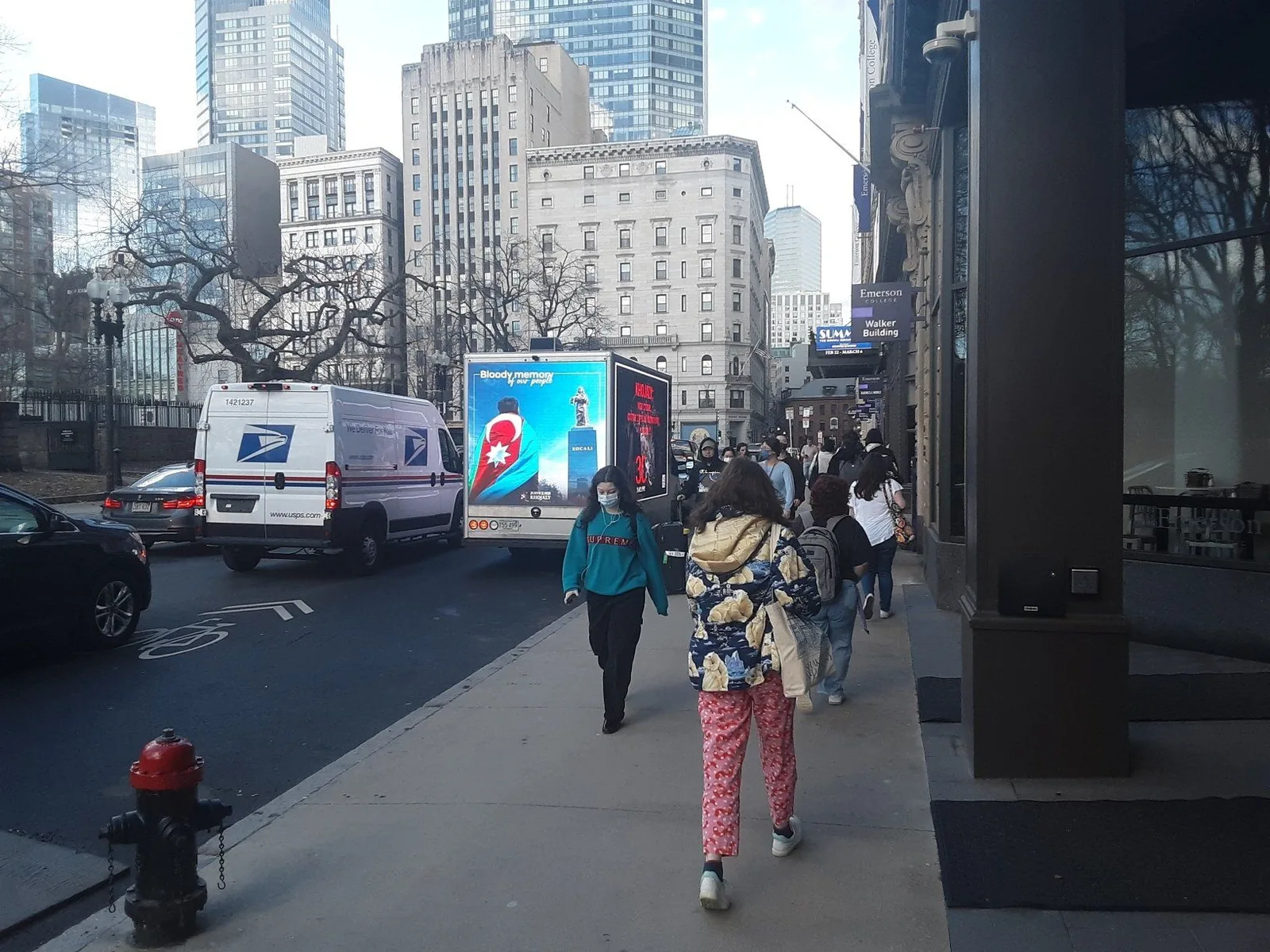
Mobile billboard advertising is a form of out-of-home (OOH) advertising where a large display — either a printed vinyl panel or a digital LED screen — is mounted on a truck that drives through targeted areas. Instead of waiting for your audience to pass a fixed sign, the billboard goes to them: down their commute routes, past their offices, around the events they attend, and through the neighborhoods where they live and shop.
It is one of the fastest-growing segments of outdoor advertising because it solves the two biggest weaknesses of traditional billboards: fixed location and long lead times. A mobile billboard campaign can be on the road within days, on exactly the streets you choose, for exactly the hours you want.
How Mobile Billboard Advertising Works
A campaign follows a simple process:
- You define the audience and goal. A product launch, a grand opening, a trade show, a hiring push, a political campaign — the goal shapes everything else.
- Routes are planned around your audience. Commuter corridors at rush hour, entertainment districts on weekends, convention centers during show hours, stadiums on game day.
- Creative is produced. Static vinyl boards or full-motion digital LED content — video, animation, rotating messages, even day-parted creative that changes by the hour.
- The truck runs the route. Typically 8–10 hours per day, with a professional driver, GPS tracking, and photo proof of performance.
- You get reporting. GPS logs, route photos, and impression estimates so you can see exactly where your message traveled.
The Two Main Types of Mobile Billboards
1. Static (vinyl) mobile billboards
Printed panels mounted on a truck frame — usually two side panels plus a rear panel. They are the lower-cost option and work well for simple, bold creative. The tradeoff: one message per print, and no visibility after dark unless the panels are backlit.
2. Digital LED billboard trucks
High-brightness LED screens on the sides and rear of the truck. This is the format we run at Boost Outdoor Media, and it is where the format gets genuinely powerful:
- Full-motion video and animation — motion is what stops people on a sidewalk
- Multiple messages in rotation — run several creatives in one campaign
- Day-parting — breakfast offer in the morning, event promo at night
- Visible day and night — brightness adjusts automatically
- Same-day creative swaps — change the message mid-campaign at no print cost
What Does Mobile Billboard Advertising Cost?
Pricing depends on the market, the number of trucks, the hours per day, and whether creative production is included. As a working benchmark:
- Standard LED billboard truck campaigns: typically $1,200–$1,400 per truck per day for a full day on the road with driver, fuel, routing, and GPS reporting included
- Trade show and convention campaigns: usually $1,200–$1,800 per day, reflecting the compressed, high-value scheduling around show hours
- Static vinyl trucks: generally cheaper per day, but add printing costs and lose the flexibility of digital
Compare that to a static billboard in a major metro — often $1,500 to $15,000+ per month for a single fixed location — and the economics of going mobile become clear: you pay for the audience, not the real estate. For a deeper breakdown, see our mobile billboard costs and rates guide.
Why Mobile Billboards Outperform Static Billboards
The research on mobile billboard effectiveness is remarkably consistent:
- 97% recall rate — people remember seeing mobile billboard ads (RYP and Becker Group)
- 2.5x more attention than a static billboard (Perception Research)
- 15x greater name recognition than other advertising forms (European Outdoor Advertising Association)
- 96% of respondents say mobile advertising is more effective than traditional static outdoor (Outdoor Advertising Magazine / TACA Research)
The reasons are structural, not magical. A moving, illuminated display in traffic is novel — and novelty gets noticed. The truck sits at eye level in the same traffic as your audience, not 40 feet above it. And because the route is chosen, every impression lands in a geography you actually care about. We break the numbers down further in how effective is billboard advertising?
When Mobile Billboards Are the Right Choice
Mobile billboard trucks shine in situations where static media simply cannot deliver:
- Events and trade shows — own the streets around the convention center while every attendee is in a three-block radius. See our trade show advertising guide for the playbook.
- Grand openings and retail launches — saturate the trade area in the exact week it matters
- Political and advocacy campaigns — reach specific districts, deliver a message directly to a building or office
- Recruitment campaigns — drive hiring messages past competitor facilities and through worker corridors
- Markets with no billboard inventory — many cities restrict or ban new static billboards; a mobile truck is often the only large-format outdoor option
- Personal celebrations — weddings, proposals, birthdays, and graduations, like the Fifth Avenue wedding celebration we ran in New York
What a Campaign Looks Like in Practice
A typical day: the truck stages near your target area, runs its route through morning rush, works lunch districts midday, covers the evening commute, then parks at a high-visibility location or continues through nightlife zones. Throughout the day the LED screens rotate your creative, the GPS log records every mile, and the driver captures photos at key locations.
Campaigns run from a single day — a product launch or event — to multi-week saturals across several cities. Because we operate nationwide, a brand can run the same creative in Boston, Chicago, and Dallas in the same week, with one point of contact. Browse our markets to see where campaigns run.
Mobile Billboard Advertising FAQ
Is mobile billboard advertising legal?
Yes. Mobile billboard trucks are street-legal vehicles operating on public roads. Some cities regulate where they can park or idle, which is why working with an experienced operator matters — route planning accounts for local rules.
How many people see a mobile billboard in a day?
A truck working dense urban corridors typically generates tens of thousands of impressions per day. Exact numbers depend on the market and route, and are estimated from traffic-count data for the roads covered.
How fast can a campaign start?
Digital LED campaigns can often launch within days once creative is approved — there is no printing or installation lead time. Rush turnarounds are possible when trucks are available in your market.
Can I choose the exact route?
Yes. Routes are built around your audience: specific neighborhoods, venues, commute corridors, or even a single event. GPS tracking confirms the truck ran the planned route.
What is the difference between a mobile billboard and a digital billboard?
A digital billboard is a fixed LED sign in one location. A mobile LED billboard truck carries digital screens on a vehicle, so the same full-motion content travels to your audience instead of waiting for traffic to pass one spot.
Do mobile billboards work for small businesses?
Yes — often better than for big brands. A local business can saturate its exact trade area for a day or a week at a fraction of the cost of a monthly static board, with no long-term contract.
The Bottom Line
Mobile billboard advertising is outdoor advertising without the compromises: your message, in motion, in the exact places your customers are, with reporting that proves it happened. If you want to see what a campaign would look like in your market, request a free quote or call us at 978-288-1616 — we will map a route and pricing for your goals.
Frequently asked questions
Is mobile billboard advertising legal?
Yes. Mobile billboard trucks are street-legal vehicles on public roads. Some cities regulate parking or idling, so experienced operators plan routes around local rules.
How many people see a mobile billboard in a day?
A truck working dense urban corridors typically generates tens of thousands of impressions per day, estimated from traffic-count data for the roads covered.
How fast can a mobile billboard campaign start?
Digital LED campaigns can often launch within days once creative is approved, since there is no printing or installation lead time.
Can I choose the exact route?
Yes. Routes are built around your audience — specific neighborhoods, venues, commute corridors, or a single event — and GPS tracking confirms the route was run.
What is the difference between a mobile billboard and a digital billboard?
A digital billboard is a fixed LED sign in one location; a mobile LED billboard truck carries digital screens on a vehicle, bringing full-motion content directly to your audience.
Do mobile billboards work for small businesses?
Yes. A local business can saturate its exact trade area for a day or week at a fraction of the cost of a monthly static board, with no long-term contract.