
Mobile Billboard Advertising for Pennsylvania's 2026 Senate and Governor Races
Philadelphia, Pittsburgh, the collar counties and the T — how to route LED billboard trucks across a state that decides national elections
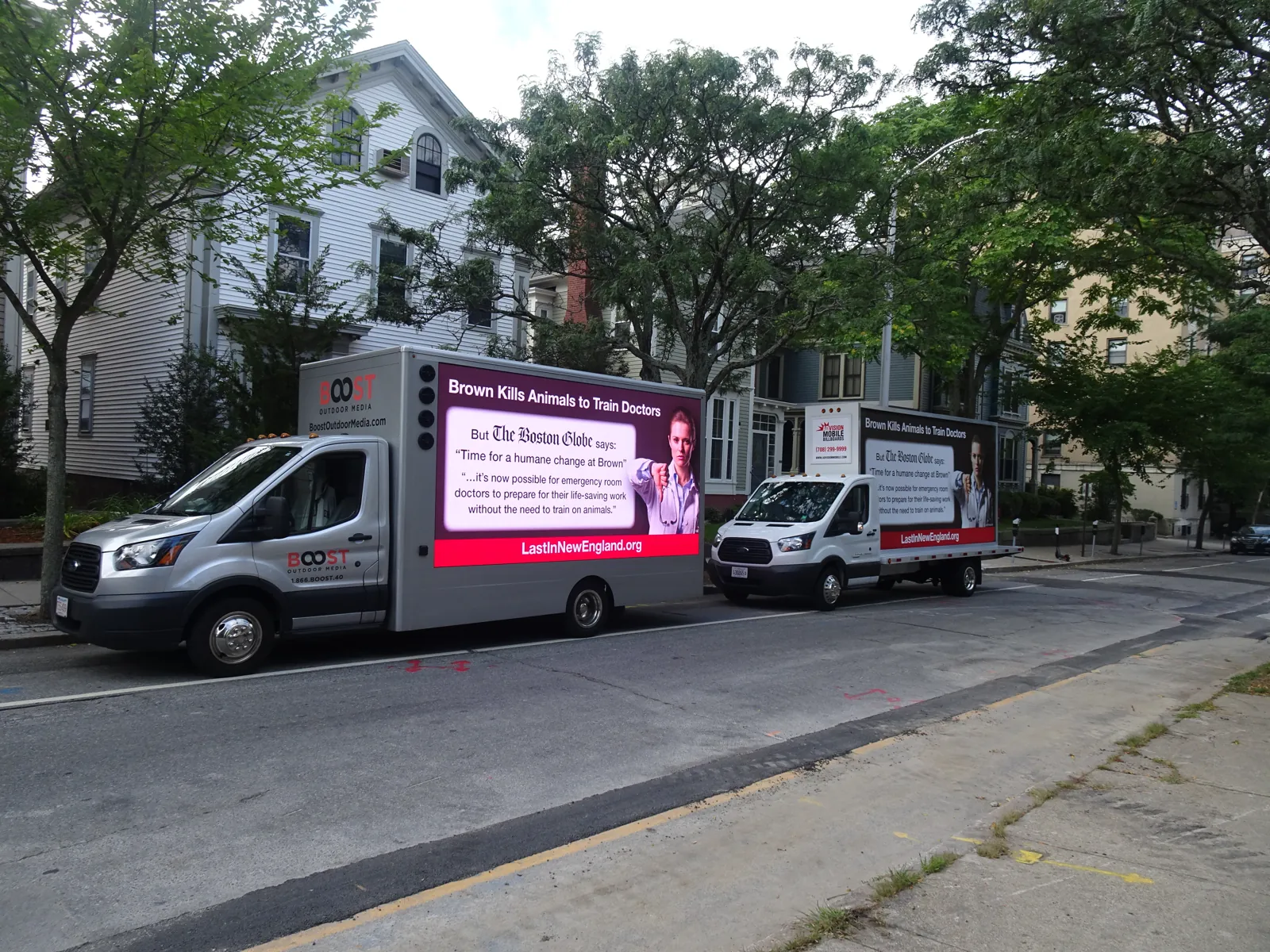
A two-truck LED billboard convoy covering a downtown political campaign route.
Short answer: Pennsylvania has 67 counties, two expensive major media markets and roughly 8.9 million registered voters, so campaigns use mobile LED billboard trucks to buy precision instead of statewide waste. A Pennsylvania truck day runs about $1,200–$1,400, and Boost Outdoor Media routes trucks through Philadelphia, the collar counties, the Lehigh Valley, Harrisburg, Erie and Pittsburgh.
Why Pennsylvania punishes broad media buys
Philadelphia is the fourth-largest television market in the country and Pittsburgh is in the top 25. Buying both at persuasion weight in a Senate and Governor year is brutally expensive, and much of that spend lands on households outside the precincts that will actually decide the race. Pennsylvania campaigns therefore live and die on targeting: which suburbs, which small cities, which turnout pockets.
Mobile billboard advertising is the outdoor version of that targeting. Instead of renting a fixed board on I-76 and hoping the right people drive past, you assign a truck to King of Prussia on Saturday, Bethlehem on Sunday and Erie on Monday. You pay for routes, not for a market.
A two-truck LED billboard convoy — in a state as large as Pennsylvania, campaigns commonly run one truck east of the Susquehanna and one west on the same day.
The Pennsylvania route map
Philadelphia
Philadelphia drives Democratic base turnout for the whole state. Broad Street, Market East, Center City, Temple''s campus, and the neighborhood commercial corridors in North and West Philly deliver dense pedestrian audiences and short traffic-light dwell that makes a moving board readable. Truck time here is turnout work, not persuasion.
The collar counties: Montgomery, Bucks, Delaware and Chester
This is where Pennsylvania statewide races are won. King of Prussia, Doylestown, Media, West Chester, Norristown and the Route 202 corridor are full of the suburban swing voters both parties spend the most to reach. Weekend routes through retail centers and youth-sports complexes outperform weekday highway loops here.
The Lehigh Valley and Scranton/Wilkes-Barre
Allentown, Bethlehem, Easton, Scranton and Wilkes-Barre are the classic bellwether cities of the northeast corridor. They are compact enough for repeated downtown loops and are usually under-served by outdoor inventory, so a truck stands out more than it would in Philadelphia.
Harrisburg and the Capitol
Harrisburg is the issue-advocacy stop. A loop around the Capitol complex on North Third Street and State Street reaches legislators, staff and the Capitol press corps, which is why unions and advocacy groups buy Harrisburg days around specific votes rather than around Election Day.
Pittsburgh and the west
Downtown Pittsburgh, the Strip District, Oakland''s university corridor and the Route 19 suburbs form the western anchor. Add Erie for a separate day: Erie County flips between parties more reliably than almost any county in the country and is small enough that a single truck day genuinely saturates it.

Issue advocacy on an LED billboard truck — Harrisburg Capitol loops put a message in front of legislators and the statehouse press corps on session days.
What a Pennsylvania mobile billboard campaign costs
| Deployment | Coverage | Typical daily cost |
|---|---|---|
| One truck, Philadelphia | Center City + neighborhood corridors | $1,500-$2,000 |
| One truck, collar counties | Montgomery, Bucks, Chester, Delaware | $1,200–$1,400 |
| One truck, Pittsburgh | Downtown, Strip, Oakland, Route 19 | $1,200–$1,400 |
| Two trucks, east + west | Philadelphia and Pittsburgh same day | $2,900-$3,800 |
| Statewide GOTV week | Rotating counties, 5 days | $7,500-$11,000 |
Creative that works in a two-market state
Run different boards east and west. A cost-of-living message that lands in Bucks County reads differently in Beaver County, and because the screens are digital there is no printing cost to running four regional versions. Keep every board to seven words or fewer, put the candidate name at maximum legible size, and burn the paid-for disclaimer into the artwork so it travels with every creative swap.
For Senate and Governor tickets running together, alternate boards rather than crowding both names onto one screen. Two clear impressions beat one cluttered one.
Rules and logistics in Pennsylvania
Pennsylvania permits mobile billboard advertising statewide. A handful of municipalities, Philadelphia included, regulate vehicle signage and staging, so routes are built around legal parking and moving loops rather than long stationary parking in restricted zones. Political creative must carry the required disclaimer, and on Election Day trucks stay outside the 10-foot polling-place perimeter and work commuter approach roads instead.
How to fit trucks into a 2026 Pennsylvania plan
Use trucks for three jobs: presence at owned events like rallies and canvass launches, pressure at opponent or institutional events, and saturation in the specific counties your model says decide the race. That is a few thousand dollars a day producing visible, photographable presence in places where a TV point costs far more.
Pennsylvania pairs well with the other 2026 battlegrounds — see Georgia, New Hampshire and Maine. To scope a route, read our political advertising service page and the mobile billboard advertising cost guide, or contact Boost Outdoor Media.
Frequently asked questions
How much does mobile billboard advertising cost in Pennsylvania?
Expect $1,400 to $2,000 per LED billboard truck day in Pennsylvania for a 6-8 hour shift, with Philadelphia at the top of that range and mid-size markets like Allentown or Erie at the lower end. Running one truck east and one west on the same day costs roughly $2,900 to $3,800, and a statewide five-day GOTV week typically lands between $7,500 and $11,000.
Which Pennsylvania counties should a statewide campaign target with trucks?
Start with the Philadelphia collar counties — Montgomery, Bucks, Chester and Delaware — because they hold the suburban swing voters who decide most statewide races. Add Philadelphia for base turnout, Allentown and Bethlehem in the Lehigh Valley, Scranton and Wilkes-Barre in the northeast, Erie as a genuine swing county, and Allegheny County for the western anchor.
Are mobile billboards legal in Philadelphia?
Mobile billboard advertising operates legally in Pennsylvania, but Philadelphia and some other municipalities regulate vehicle signage and where trucks may stage. Routes are therefore built around moving loops and legal parking rather than long stationary parking in restricted zones, and all political creative must carry the required paid-for disclaimer.
Should a Senate and Governor ticket share one billboard?
No. Alternate the boards instead. A moving LED screen is read in about three seconds, so two names, two logos and two slogans on one board reduces recall for both. Running separate creative on alternating loops delivers two clean impressions rather than one cluttered one.
Can mobile billboards park at polling places on Election Day?
No. Trucks stay outside the polling-place perimeter where electioneering is prohibited. The productive Election Day play is working commuter approach roads, transit hubs and major intersections near high-turnout precincts, which reaches the same voters on their way to vote without violating buffer-zone rules.
How many truck days does a Pennsylvania campaign need?
For a statewide race, most campaigns that use mobile billboards seriously run somewhere between 15 and 40 truck days across the cycle, concentrated in the final six weeks and around anchor events like debates, rallies and canvass launches. That is a fraction of a single week of Philadelphia broadcast and produces content the digital team can reuse all cycle.