
Reaching NH Voters Ahead of the 2026 Senate Race: Mobile Billboard Advertising for Campaigns
How New Hampshire campaigns use LED billboard trucks to cover Manchester, Nashua, Concord and the Seacoast in a single day
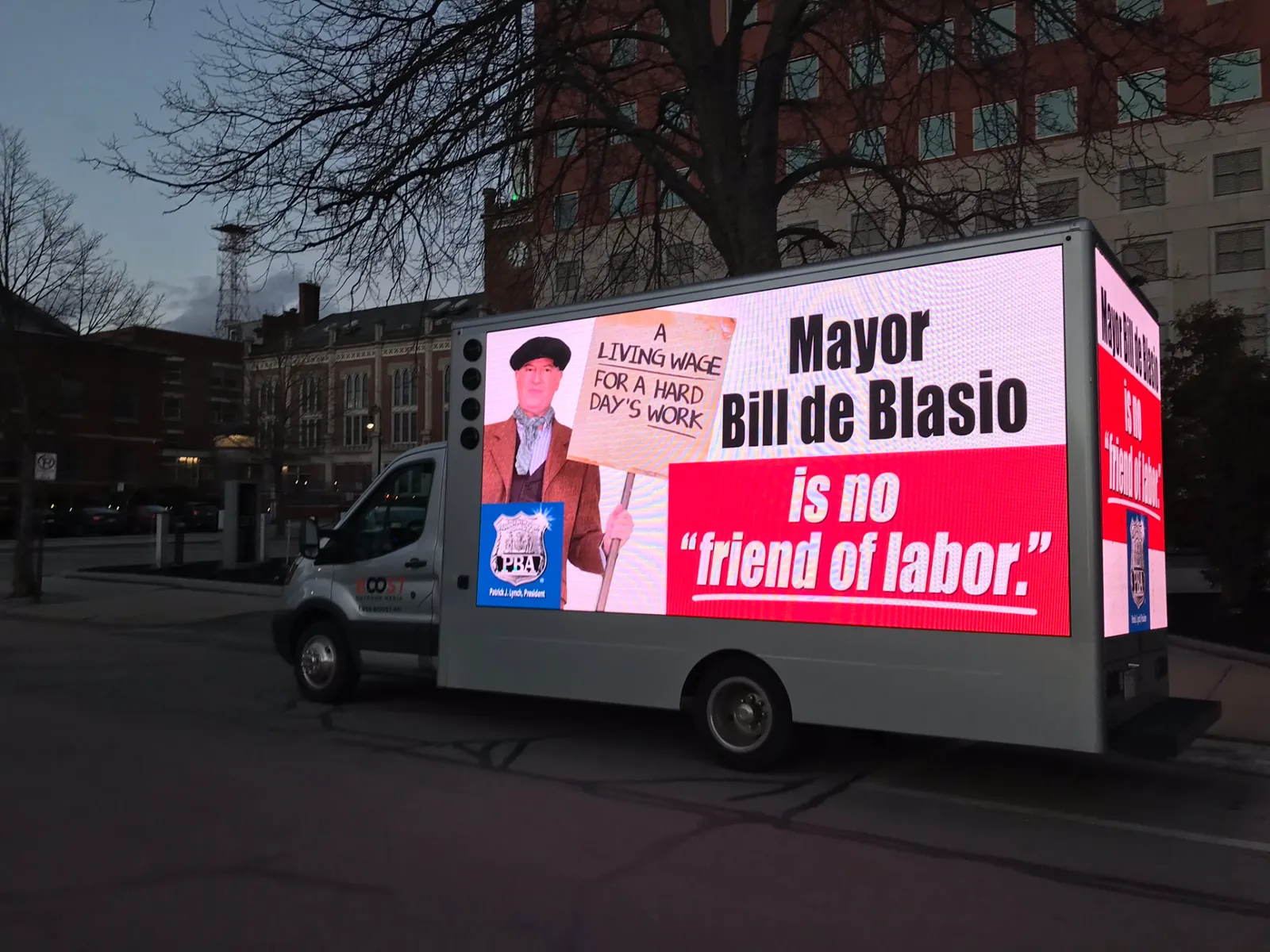
Mobile billboard advertising in Manchester, NH ahead of a statewide race.
Short answer: Mobile billboard advertising works unusually well in New Hampshire because the state''s voters are concentrated along a 60-mile corridor from Nashua to Concord, and a single LED billboard truck can cover Manchester, Nashua, Concord and the Seacoast in one operating day. Boost Outdoor Media runs LED billboard trucks across New Hampshire for campaigns, unions and advocacy groups, typically at $1,200–$1,400 per truck day.
Why New Hampshire is built for mobile billboard advertising
New Hampshire has roughly 1.1 million residents and about 900,000 registered voters, and the large majority of them live in Hillsborough, Rockingham and Merrimack counties. That is a three-county footprint you can physically drive in an afternoon. Static billboard inventory in the state is thin and heavily restricted, and broadcast TV buys spill into Boston and Vermont markets you are paying for but cannot vote. An LED billboard truck flips that math: you pay only for the roads and towns you actually want.
The second factor is undeclared voters. Roughly a third of the New Hampshire electorate is registered undeclared, which means persuasion windows stay open far later than in most states. A digital board that can change its message the same afternoon is worth more in a late-deciding electorate than a static board locked for four weeks.
A Boost Outdoor Media LED billboard truck running an advocacy message at dusk in downtown Manchester, NH — evening routes catch commuters, restaurant crowds and local news cameras.
The New Hampshire route: Nashua to Manchester to Concord to the Seacoast
A one-day statewide route in New Hampshire realistically covers four population centers. Here is how we sequence them.
Nashua and the southern tier
Start south. Nashua is the second-largest city in the state and sits on the Massachusetts border, so morning traffic on Route 3 and Daniel Webster Highway is dense and slow — ideal dwell time. The Pheasant Lane Mall corridor and downtown Main Street cover both retail and civic foot traffic before 11 a.m.
Manchester and the Queen City core
Manchester is the single highest-value stop in the state. Elm Street, the Verizon-era arena district, the SNHU Arena block and the Millyard concentrate voters, reporters and campaign staff in a few walkable blocks. Manchester is also where visiting national press stages, which is why advocacy groups repeatedly buy truck time here during primary season.
Concord and the State House
Concord is small but symbolically loaded. A loop past the State House on North Main Street and the Legislative Office Building puts your message in front of legislators, staff and the statehouse press corps. For issue advocacy aimed at a floor vote, Concord alone can justify the day rate.
Portsmouth, Dover and the Seacoast
Finish east. Portsmouth''s Market Square, the Route 1 Bypass and Dover''s downtown carry heavy evening foot traffic, and the Seacoast breaks differently from Manchester politically, so it is worth its own creative.
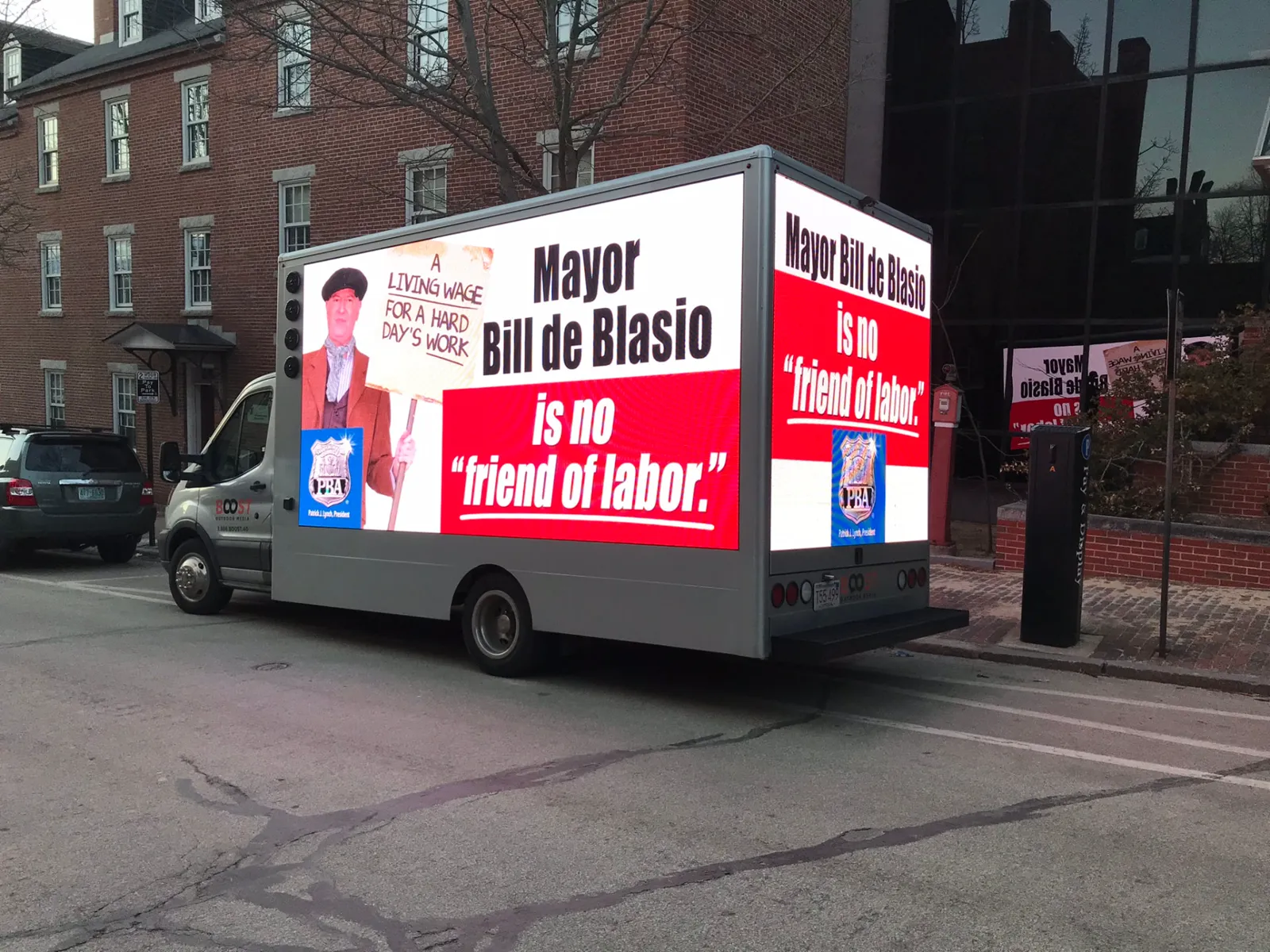
The same LED billboard truck working a daytime Manchester route — mobile billboard advertising lets a New Hampshire campaign hit downtown, the Millyard and the arena district on one shift.
What a New Hampshire mobile billboard campaign costs
Pricing in New Hampshire is straightforward. A single LED billboard truck runs about $1,200–$1,400 per day for a standard 6-8 hour shift, with multi-day and multi-truck weeks discounted. A two-truck day covering Nashua/Manchester and Concord/Seacoast simultaneously lands around $2,400-$3,200. Creative production for a digital board is inexpensive because there is no printing — you send artwork or a short video loop and it is on screen the same day.
| Deployment | Coverage | Typical daily cost |
|---|---|---|
| One truck, single city | Manchester or Nashua core | $1,200-$1,500 |
| One truck, statewide loop | Nashua → Manchester → Concord | $1,500-$1,800 |
| Two trucks, split coverage | South + Seacoast same day | $2,400-$3,200 |
| GOTV week (5 days) | Rotating high-turnout precincts | $6,000-$8,500 |
Creative rules for New Hampshire political boards
A moving board is read in under three seconds at 30 mph. The campaigns that get results follow the same four rules: seven words or fewer in the headline, one idea per board, high contrast between text and background, and the disclaimer legible but small. Include the candidate name in type large enough to read from the next lane over — name ID is usually the job you are actually buying.
Because the screen is digital, you can run different creative by geography on the same day: an energy-cost message in Berlin and Claremont, a housing message in Nashua, a Seacoast-specific message in Portsmouth. Print cannot do that.
Rules to know before you roll
New Hampshire has no statewide ban on mobile billboards, but three practical rules govern every route we run. First, all political creative must carry the required paid-for disclaimer. Second, trucks stage on public streets and legally parked spaces, not on private lots without permission. Third, campaigns should keep trucks outside the electioneering buffer at polling places on Election Day — we route around them and work the approach roads and commuter corridors instead.
Where mobile billboards fit in a 2026 NH Senate plan
Mobile billboard advertising is not a replacement for digital or mail. It is the layer that makes the rest of the plan feel bigger. A truck parked outside a rally, a debate hall, a state party dinner or a high-turnout early-vote site turns a modest budget into visible momentum, and it produces photo and video content your digital team can run all week. For statewide plans, pair New Hampshire with neighboring Maine, or scale into Pennsylvania and Georgia where the same routing logic applies at a larger scale.
To plan a New Hampshire route, see our political advertising service and the mobile billboard advertising cost guide, or request a quote from Boost Outdoor Media.
Frequently asked questions
How much does mobile billboard advertising cost in New Hampshire?
A single LED billboard truck in New Hampshire typically costs $1,200 to $1,800 per day for a 6-8 hour shift, including the driver, route planning and creative display. Two trucks covering the southern tier and the Seacoast on the same day run roughly $2,400 to $3,200. Multi-day GOTV weeks are discounted, with five-day runs commonly landing between $6,000 and $8,500.
Can one truck really cover the whole state of New Hampshire in a day?
Effectively yes, for the populated part of it. Nashua, Manchester and Concord sit within about 40 miles of each other along I-93 and Route 3, and Portsmouth is roughly an hour east of Manchester. A standard 8-hour shift can hit all four with meaningful dwell time in each downtown, which is why New Hampshire is one of the most efficient mobile billboard states in the country.
Are mobile billboards legal for political campaigns in New Hampshire?
Yes. New Hampshire has no statewide ban on mobile billboard advertising. Political creative must carry the required paid-for disclaimer, trucks must use public streets and legal parking, and campaigns should stay outside the electioneering buffer zone at polling places on Election Day. Boost Outdoor Media routes around polling locations and works the commuter approach roads instead.
When should a 2026 NH Senate campaign book truck days?
Book the anchor dates as early as possible — debate nights, state party dinners, major rallies and the final GOTV week sell out first because there is a finite number of trucks in the region. For persuasion, the highest-value window is the final four to six weeks, when New Hampshire's large undeclared bloc is actually deciding.
What should a political LED billboard say?
Seven words or fewer in the headline, one idea per board, the candidate name large enough to read from the next lane, and high contrast between text and background. A moving board is read in under three seconds at 30 mph, so anything longer is wasted. Because the screen is digital you can swap messages by town on the same day.
Which New Hampshire cities matter most for a statewide campaign?
Manchester first, because it is the largest city and where visiting national press stages. Nashua second for raw population and border commuter traffic. Concord matters for legislative and statehouse audiences, and Portsmouth and Dover cover a Seacoast electorate that votes differently from the Merrimack Valley and deserves its own creative.