
How to Promote a Music Festival with LED Billboard Trucks in Boston
Downtown, the Theater District, and Red Sox game crowds — putting the lineup where the fans already are
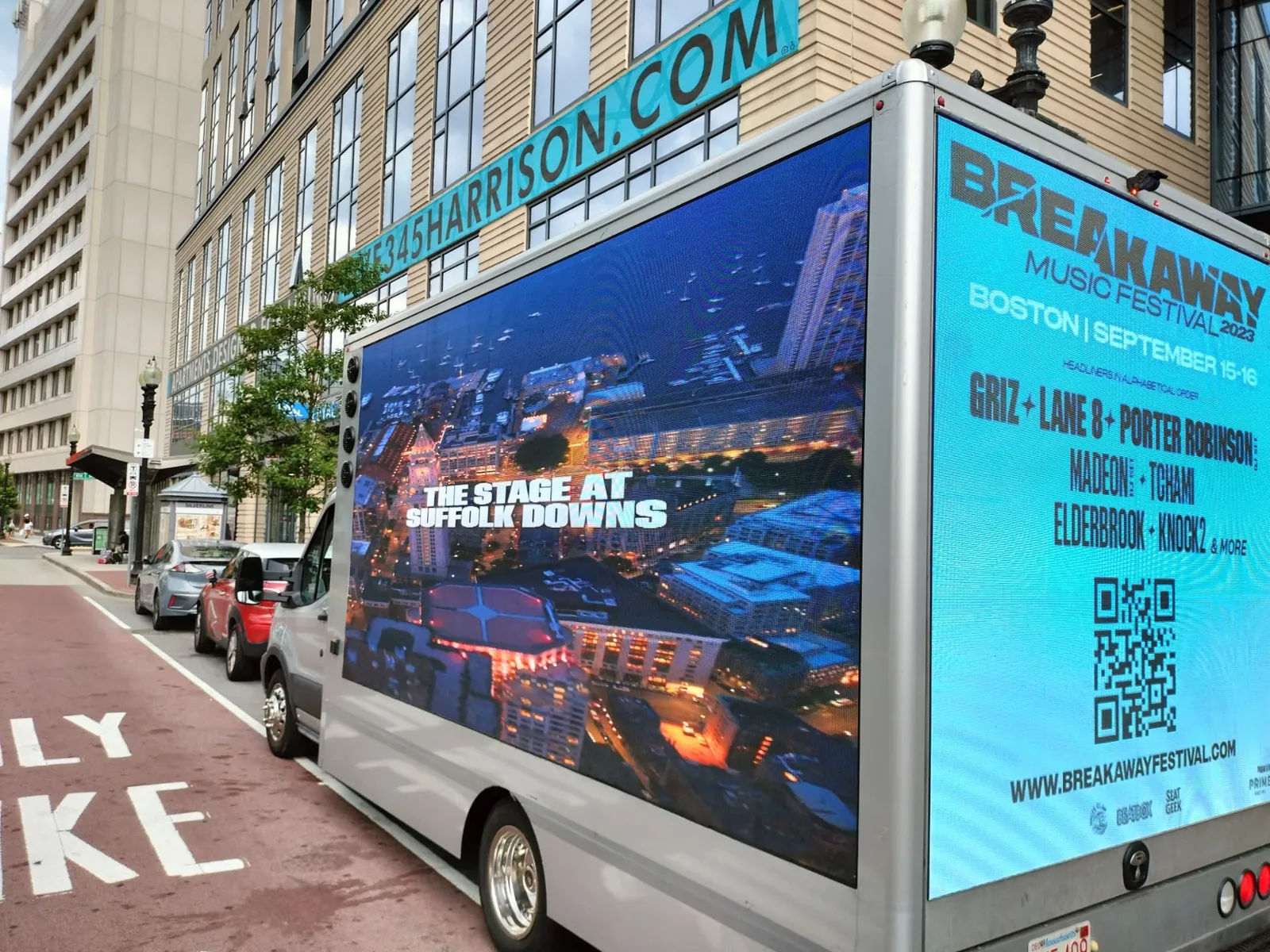
Festival marketing lives and dies on one thing: how many of the right people see the lineup before tickets sell out. Digital ads reach people scrolling. Mobile LED billboard trucks reach people who are already out — walking downtown, leaving a show, or streaming toward a ballpark with friends. That is exactly where festival tickets get talked about and bought.
This is a look at how we promoted a two-day Boston music festival using LED billboard trucks, and how any promoter, venue, or event marketer can run the same play.
Why LED trucks work for music festival promotion
- Full-motion creative. Lineup cards, artist footage, and venue B-roll rotate on a bright screen — far more attention-grabbing than a static poster.
- You choose the crowd. Instead of buying an audience, you drive to it: downtown lunch traffic, Theater District nightlife, ballpark gates.
- Scannable calls to action. A large QR code on screen turns a sidewalk glance into a ticket page visit.
- No wall space to lease, no long lead times. Creative can change the same day if a headliner is added or a tier sells out.
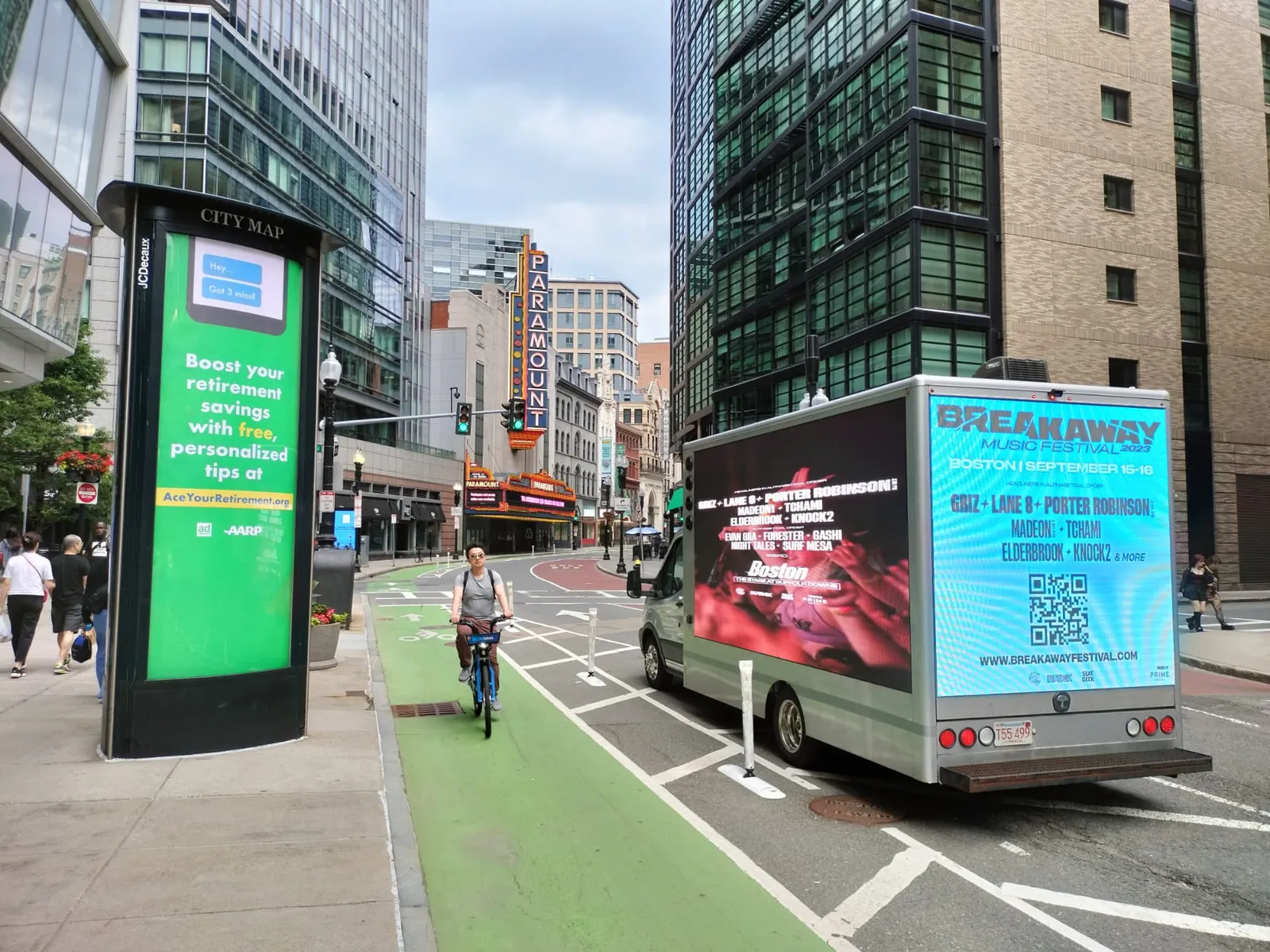
The Boston route: three high-density zones
1. Downtown Crossing and the Financial District
Weekday daytime hours put the truck alongside office workers, students, and shoppers. Slow-moving traffic and long crosswalk waits mean the screen holds attention for 20–40 seconds at a time — long enough to read the lineup and scan the code.
2. The Theater District and Washington Street
People near the Paramount and the surrounding venues are, by definition, live-music buyers. Circling this corridor in the late afternoon and evening puts a festival lineup in front of an audience already spending money on shows.
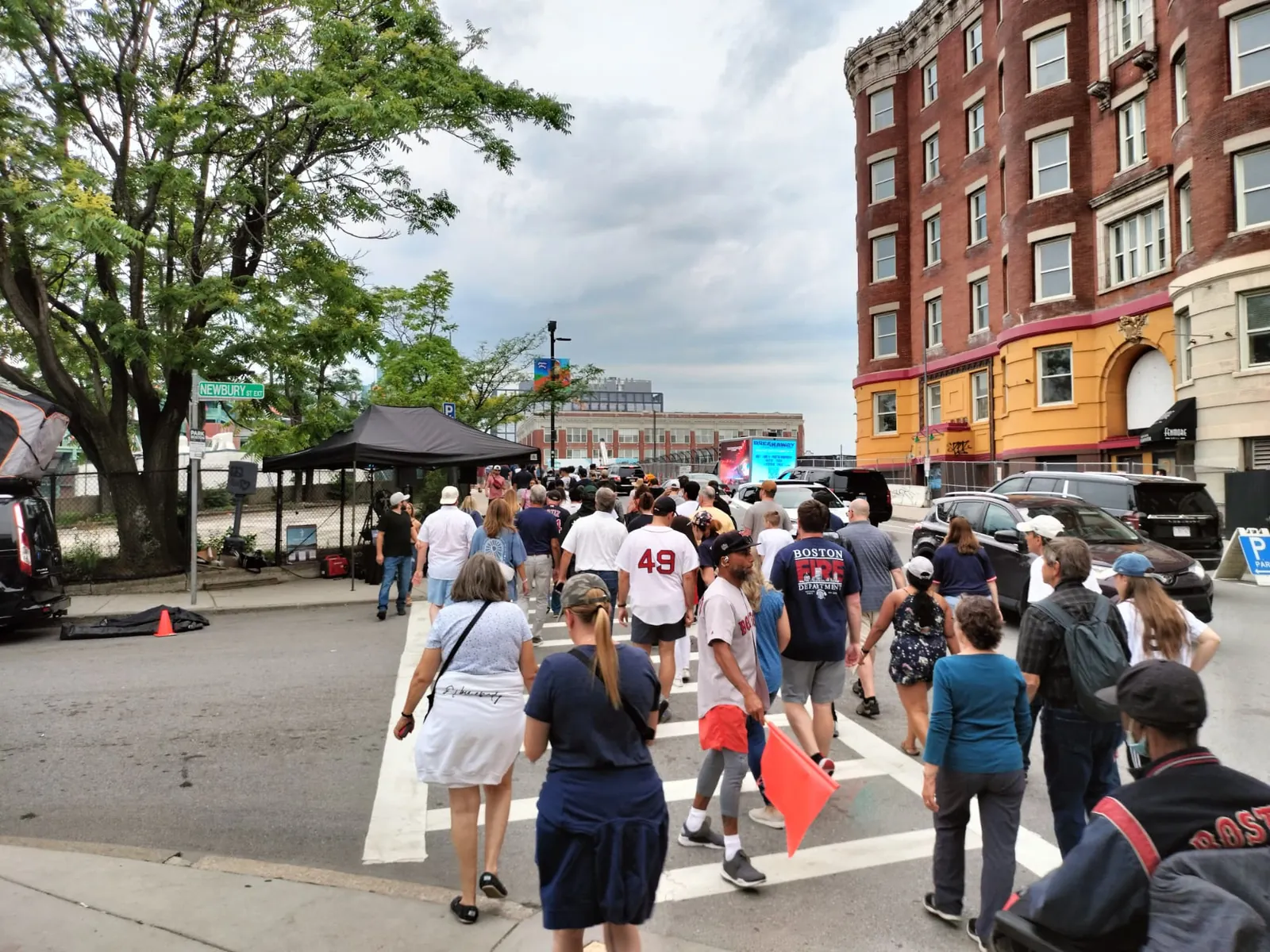
3. Fenway on Red Sox game day
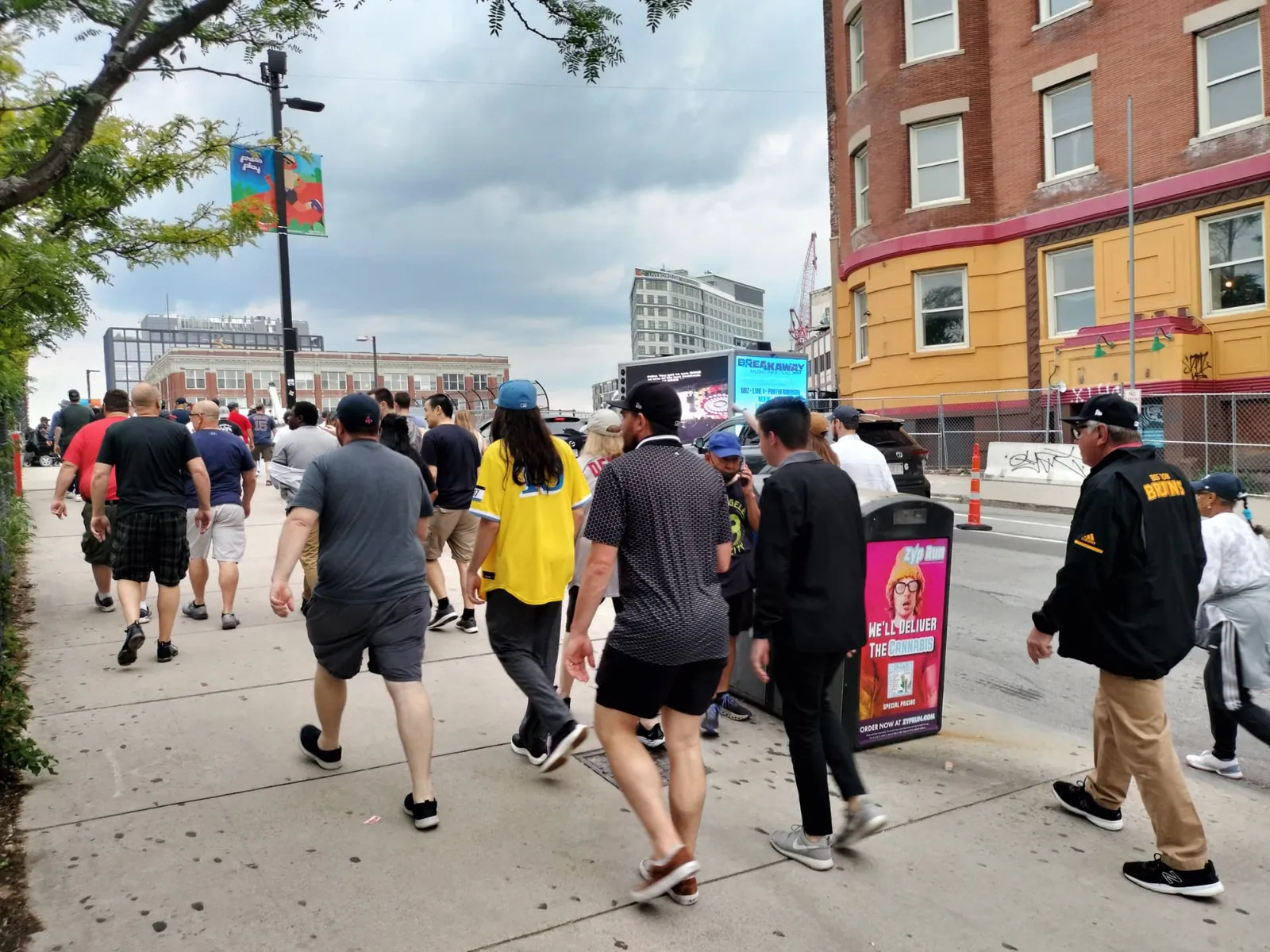
This is the highest-value block of the whole campaign. Tens of thousands of people walk the same few streets in a 90-minute window before first pitch, and again after the last out. They are in groups, they are in a going-out mindset, and they are on foot with phones in hand. Parking a bright LED screen on the walking route to the park delivers festival-ready eyeballs at a density no static board matches.
Creative rules that worked
- Festival name huge, everything else secondary. Brand recognition first, details second.
- Headliners in big, readable type. Three to five names max per frame — a wall of small text reads as noise from 40 feet.
- City and dates on every frame. A passerby should never have to wait for a rotation to learn where and when.
- One QR code, oversized, high contrast. Phones scan it from across a sidewalk.
- Alternate a lineup card with motion. Crowd and stage footage stops people; the lineup card converts them.
Who else should be running this
The same route logic works for concert promoters, venue season announcements, comedy tours, sports and playoff pushes, food and beer festivals, college orientation events, and brand activations timed to game days. If your audience gathers in a predictable place at a predictable time, an LED truck can be there.
Planning your own festival campaign
- Start 3–6 weeks out for awareness, then add a heavy final-week push for urgency.
- Stack event days. Home games, parades, and other festivals are free crowd generators — schedule around them.
- Track it. Use a dedicated QR destination or promo code so you can attribute ticket sales to the truck.
- Combine day and night hours. Daytime reaches commuters; the screen is at its brightest advantage after dark.
Ready to put your lineup in front of the crowd? See how our mobile LED billboards work, browse the markets we cover, or request a quote for your event.
Frequently asked questions
How much does it cost to promote a music festival with an LED billboard truck?
Pricing is based on hours of operation, number of trucks, and market. Most event campaigns run a multi-day schedule in a single city; request a quote and we will scope a route and budget for your on-sale timeline.
Can an LED truck park near a stadium or arena on game day?
Yes. We route along the public streets and approach corridors fans walk to reach the venue, staying compliant with local parking and traffic rules while capturing pre-game and post-game foot traffic.
How quickly can creative be changed mid-campaign?
Same day. If a headliner is added, a tier sells out, or weather shifts your messaging, we can swap the on-screen creative without reprinting anything.
What creative format works best for festival lineups?
Full-motion video mixed with a static lineup card. Motion stops people; the lineup card and QR code convert them. Keep text large and limit each frame to a few headliners.
Does mobile billboard advertising work for events outside Boston?
Yes. We operate across major U.S. markets and can build a multi-city route for touring events and regional festivals.