
How Maine Campaigns Are Using Mobile Billboards in One of the Tightest Senate Races in Years
Maine bans traditional billboards — which is exactly why LED billboard trucks work here
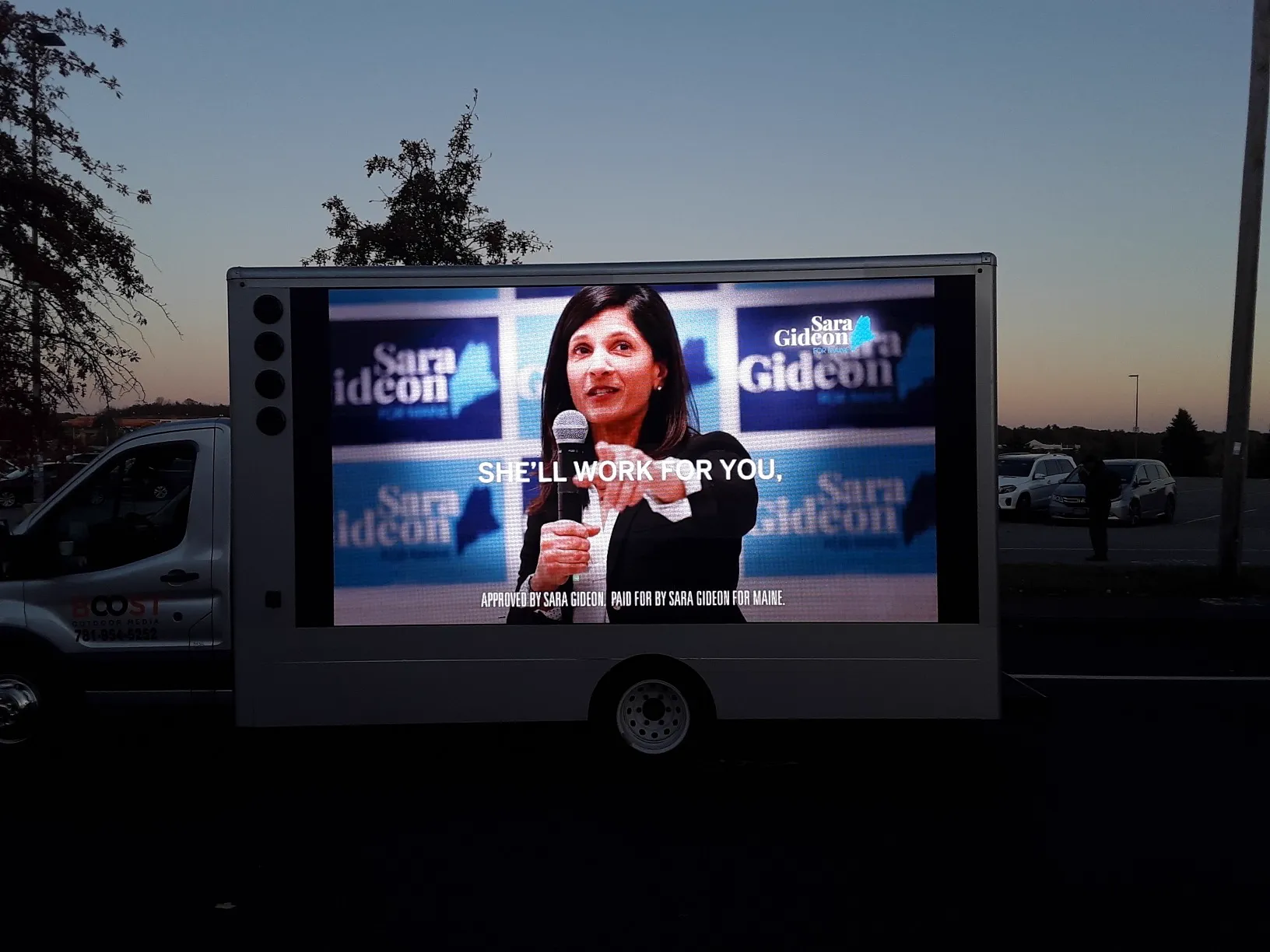
A Boost Outdoor Media LED billboard truck running Senate campaign video in Maine.
Short answer: Maine outlaws traditional roadside billboards, so campaigns in the 2026 Senate race have almost no large-format outdoor option except mobile LED billboard trucks. Boost Outdoor Media has run political and union LED truck campaigns in Portland, Lewiston and Augusta, and a Maine truck day typically costs $1,200–$1,400.
Maine has no billboards — and that changes the whole outdoor plan
Maine is one of only four states in the country, alongside Vermont, Alaska and Hawaii, that prohibit off-premise roadside billboards. The law has been on the books since 1977. For a statewide campaign that means the entire category of 14x48 bulletins and highway posters simply does not exist. Digital and mail get crowded and expensive fast, broadcast splits awkwardly between the Portland and Bangor markets, and there is no way to buy scale on the road.
A mobile LED billboard truck is the workaround, and it is a legal one: the truck is a vehicle carrying an advertisement, not a fixed off-premise structure. That single distinction is why mobile billboard advertising has become a standard line item for Maine campaigns, unions and advocacy groups.
A Boost Outdoor Media LED billboard truck running full-motion Senate campaign video in Maine — the digital screen plays broadcast spots outdoors, which no static billboard can do.
The Maine route: Portland, Lewiston-Auburn, Augusta and Bangor
Maine''s population is strung along I-95 and the coast, so routing is a straight-line problem rather than a grid problem.
Greater Portland
Portland and its suburbs hold the largest concentration of voters in the state. Congress Street, the Old Port, Marginal Way and the Maine Mall area in South Portland deliver the densest mix of foot traffic, commuters and press. Most Maine campaigns spend the majority of their truck hours inside a 15-mile radius of Portland because that is where the votes are.
Lewiston-Auburn
Lewiston-Auburn is the state''s second market and its most persuadable. Lisbon Street, the Auburn Mall corridor and the Bates College area cover working-class, immigrant and student voters in a compact downtown that a truck can loop repeatedly in an hour.
Augusta and the State House
Augusta is the legislative stop. A loop past the Maine State House on State Street and the Augusta Civic Center puts issue advocacy directly in front of lawmakers and the statehouse press corps during session days.
Bangor and the north
Bangor anchors Maine''s Second Congressional District, which has split from the First District in recent presidential and Senate cycles. If your race turns on CD-2, Bangor, Brewer and the Broadway retail corridor need their own truck day and their own creative — the message that lands in the Old Port often does not land in Penobscot County.
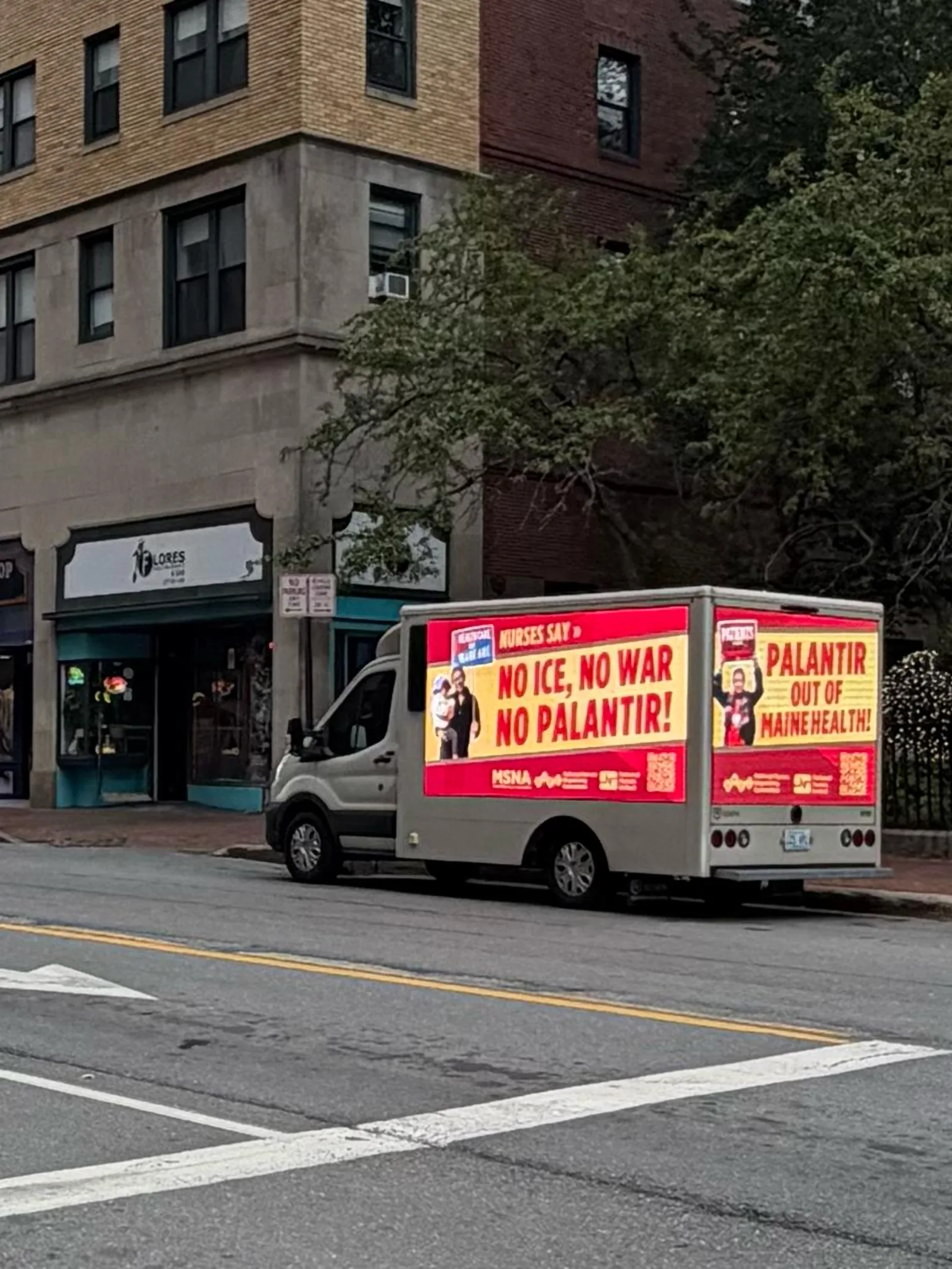
Union advocacy on Congress Street in Portland — mobile billboard advertising is the only large-format outdoor medium available in a state that bans roadside billboards.
Video is the Maine advantage
Because the board is a full LED screen, Maine campaigns run their actual television creative outdoors. A 15- or 30-second spot that already tested well on broadcast plays on the truck with no reshoot — the campaign in the photo above is running its candidate video with the required paid-for disclaimer burned into the frame. In a state with no billboards, a moving 10x5 video screen in Monument Square is the largest piece of outdoor advertising anyone will see that day.
What it costs in Maine
| Deployment | Coverage | Typical daily cost |
|---|---|---|
| One truck, Portland metro | Old Port, Congress St, South Portland | $1,200-$1,500 |
| One truck, I-95 corridor | Portland → Lewiston → Augusta | $1,500-$1,800 |
| CD-2 day | Bangor, Brewer, Waterville | $1,500-$1,900 |
| GOTV week (5 days) | Rotating high-turnout precincts | $6,000-$8,500 |
Rules Maine campaigns should know
Maine''s billboard ban targets fixed off-premise signs, not vehicles used in the ordinary course of business, which is why mobile LED billboard trucks operate legally statewide. Practically, that means the truck must keep working as a vehicle: it stages on public streets and in legal parking, it does not park in one spot indefinitely as a de facto sign, and it carries proper campaign disclaimers. On Election Day, trucks stay outside the electioneering buffer at polling places and work the approach roads.
Building a Maine plan for 2026
In a race decided by a couple of points, the job of a mobile billboard is name ID plus momentum: it makes a campaign look present in towns where it cannot afford a field office, and it produces the photo that runs on local news and social all week. Maine pairs naturally with New Hampshire for a regional New England buy, and the same routing logic scales to Pennsylvania and Georgia.
See our political advertising service and the mobile billboard advertising cost guide, or request a Maine route from Boost Outdoor Media.
Frequently asked questions
Are billboards illegal in Maine?
Yes. Maine has banned off-premise roadside billboards since 1977 and is one of only four states with such a ban, along with Vermont, Alaska and Hawaii. That means large-format static outdoor advertising is unavailable statewide, which is why campaigns turn to mobile LED billboard trucks instead.
If Maine bans billboards, how are mobile billboard trucks legal?
The ban applies to fixed off-premise signs and structures, not to advertising carried on a vehicle used in the ordinary course of business. A mobile LED billboard truck drives an assigned route and stages in legal public parking rather than sitting permanently in one spot as a de facto sign, which keeps it on the correct side of the law.
How much does a mobile billboard truck cost in Maine?
A Maine LED billboard truck day typically costs $1,200 to $1,800 for a 6-8 hour shift including driver, routing and display. Portland-only days sit at the lower end, and multi-market runs down the I-95 corridor at the higher end. A five-day GOTV week generally lands between $6,000 and $8,500.
Which Maine cities should a Senate campaign target?
Greater Portland first, because it holds the largest voter concentration in the state. Lewiston-Auburn second for persuadable working-class and student voters along Lisbon Street. Augusta for legislative and statehouse audiences, and Bangor plus Brewer if the race turns on the Second Congressional District, which votes differently from coastal southern Maine.
Can we run our TV ad on the truck?
Yes. The truck carries a full-motion LED video screen, so a campaign can play its existing 15- or 30-second broadcast spot outdoors with no reshoot, as long as the required paid-for disclaimer is legible in the frame. Motion is a significant advantage over static outdoor and is the main reason video-first campaigns choose LED trucks.
How far in advance should a Maine campaign book?
Book anchor dates such as debates, rallies, party conventions and the final GOTV week as early as possible, since truck supply in northern New England is limited during election season. For general persuasion and name ID, the final four to six weeks before Election Day deliver the most value per truck day.