
UNBOUND 2026 Boston: Multi-Truck Conference Advertising for Lovable and Ahoy
A multi-client case study — four LED trucks, two brands — plus a nationwide playbook for conference advertising
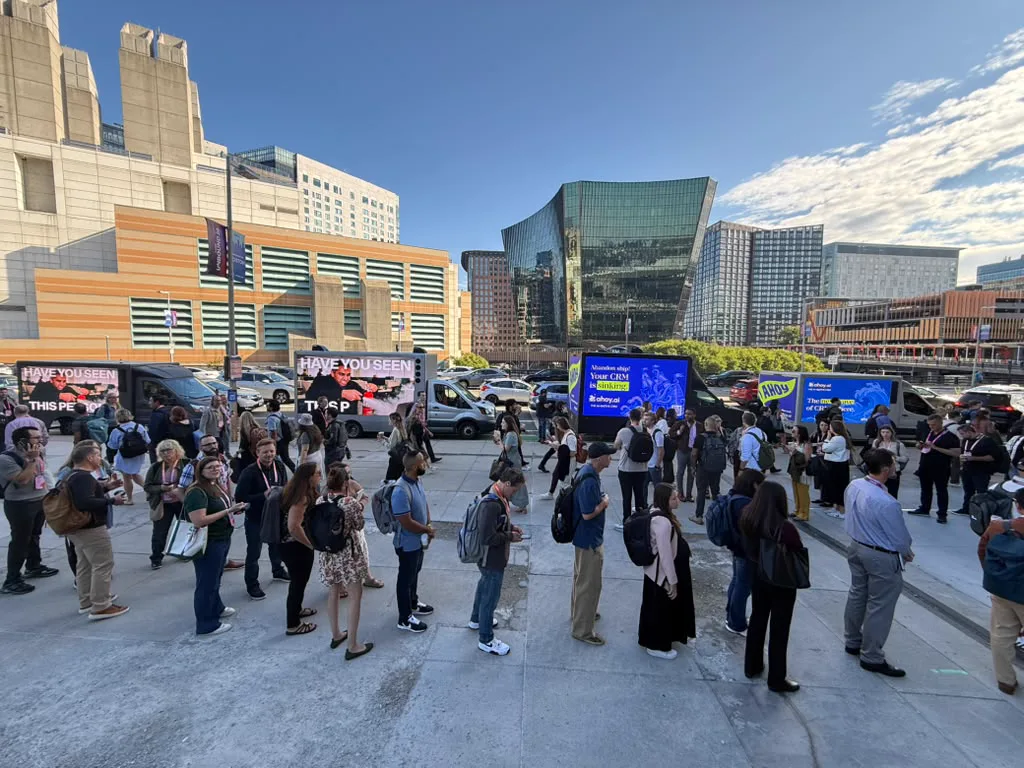
Lovable used two mobile LED billboard trucks to reach a concentrated UNBOUND 2026 audience outside Boston’s convention center.
Boost Outdoor Media ran four mobile LED billboard trucks outside UNBOUND 2026 in Boston — two for Lovable and two for Ahoy — proving that multiple brands can share one high-value conference audience without competing for attention. The trucks reached attendees as they arrived, gathered, and moved between entrances beside the Thomas M. Menino Convention and Exhibition Center.
The activation shows why conference advertising works best when the media follows the attendee journey. Rather than competing only inside a crowded exhibit hall, Lovable carried its message into the streets where attendees queued, walked, waited for rides, and returned throughout the day.
What did Lovable do at UNBOUND 2026 in Boston?
Lovable placed two full-color LED billboard trucks beside the Thomas M. Menino Convention and Exhibition Center during UNBOUND 2026, HubSpot’s annual conference. The event ran September 16–18, 2026, and brought together professionals focused on marketing, sales, service, operations, artificial intelligence, and business growth.
The trucks displayed Lovable’s recognizable pink, red, and blue branding alongside message-led creative such as “Have you seen this person?” and “Last seen: manually personalizing 26 versions of the same pitch deck.” The campaign connected Lovable’s product story to problems familiar to the conference audience without asking viewers to stop and read a long explanation.
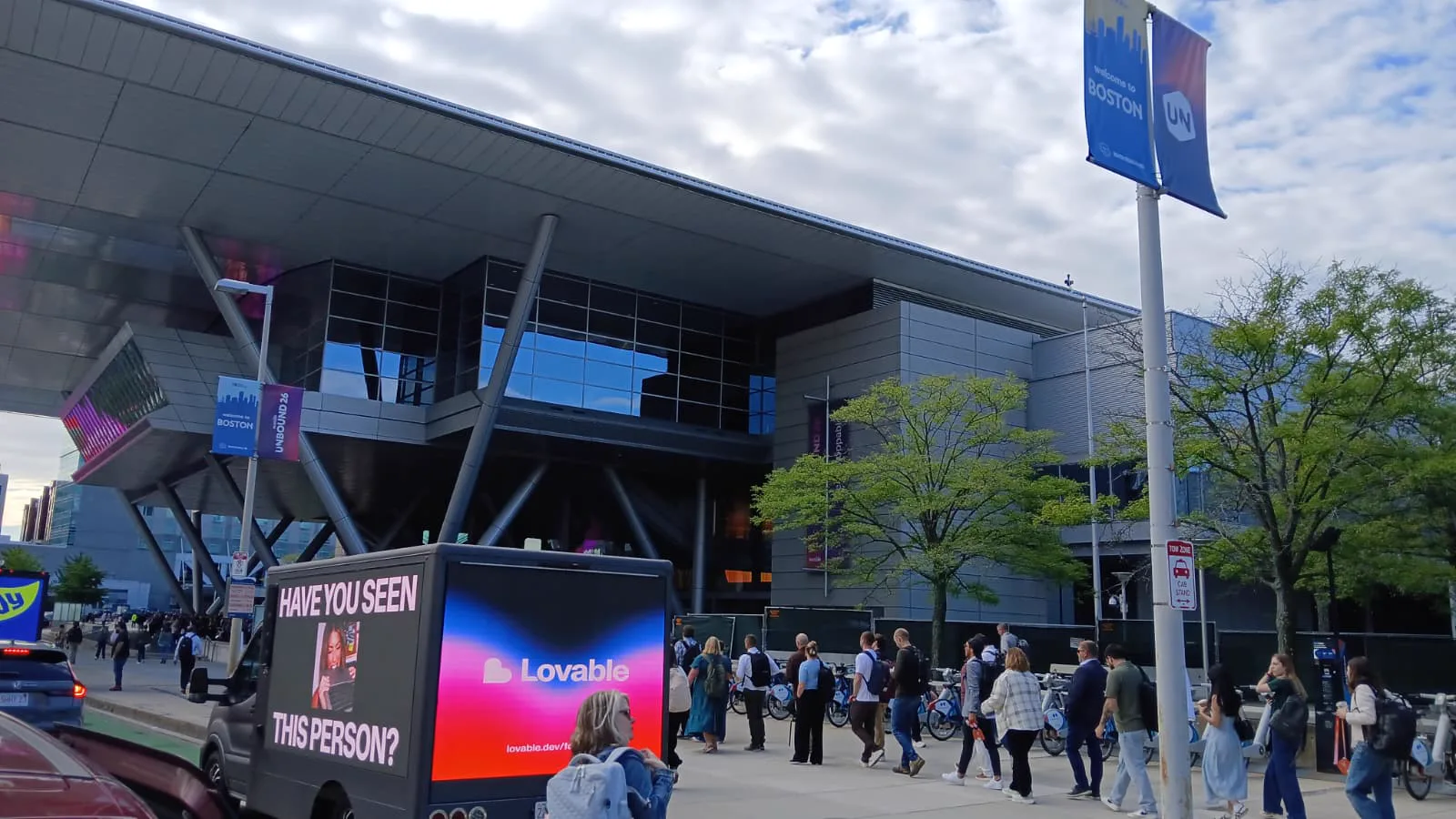
A Lovable LED billboard truck meets attendees beside the main UNBOUND 2026 entrance at Boston’s convention center.
Why did the two-truck campaign captivate a targeted audience?
The campaign matched a visible message with a concentrated audience already interested in AI, software, marketing, sales, and growth. That combination made the trucks relevant to the people around them, not simply noticeable.
- The audience was already gathered. Attendees moved through predictable arrival lines, curb zones, crosswalks, hotels, restaurants, and transit corridors around the venue.
- Two trucks expanded the visual footprint. They could hold multiple positions near the entrance, cover more than one traffic direction, and create repeated exposure as people entered and exited.
- The creative spoke to conference pain points. Short messages about repetitive work and sales materials were easy to understand at walking speed.
- Digital screens supported multiple messages. Lovable could rotate brand and problem-focused creative without printing new materials.
- The trucks became part of the scene. The supplied campaign photos show attendees standing and walking directly beside the screens, placing the brand inside the event-day experience.
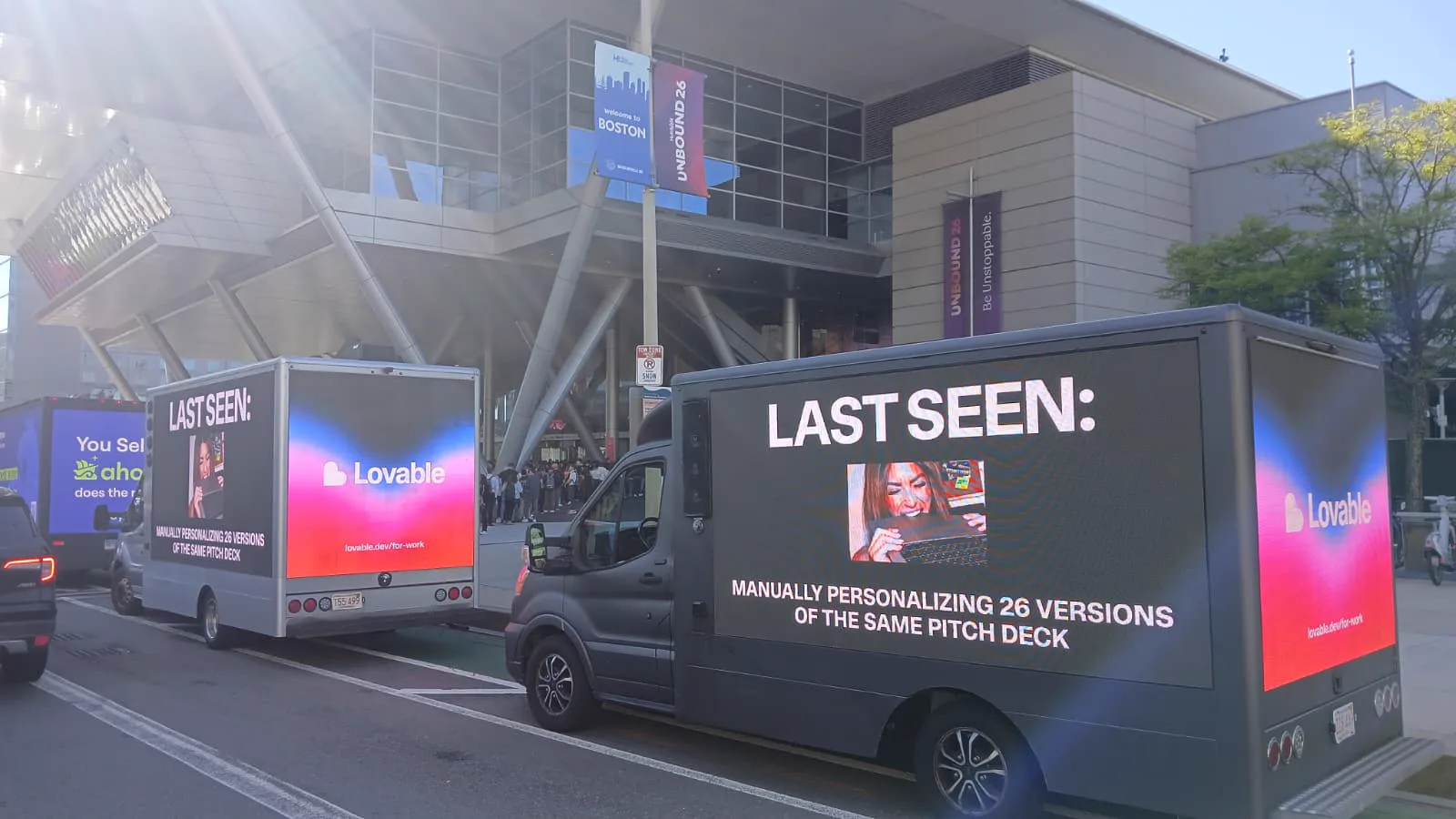
Two Lovable mobile LED billboard trucks created a larger street-level presence beside UNBOUND 2026 in Boston.
One event, two brands: how multi-truck, multi-client campaigns work
UNBOUND 2026 showed that a single conference can support more than one brand at street level — as long as each brand gets its own trucks, its own message, and its own positioning. Boost Outdoor Media operated four LED billboard trucks at the event: two running Lovable’s bold creative and two carrying Ahoy’s blue “Wondering why your CRM isn’t firing?” campaign, each working a different part of the attendee flow around the Boston convention center.
The two brands never blurred together. Lovable’s screens made its audience-focused teaser impossible to miss in the arrival crowds, while Ahoy’s bright blue trucks delivered a completely different promise to the same attendees. Because each client had dedicated trucks, the campaigns ran simultaneously without splitting attention or diluting either message.
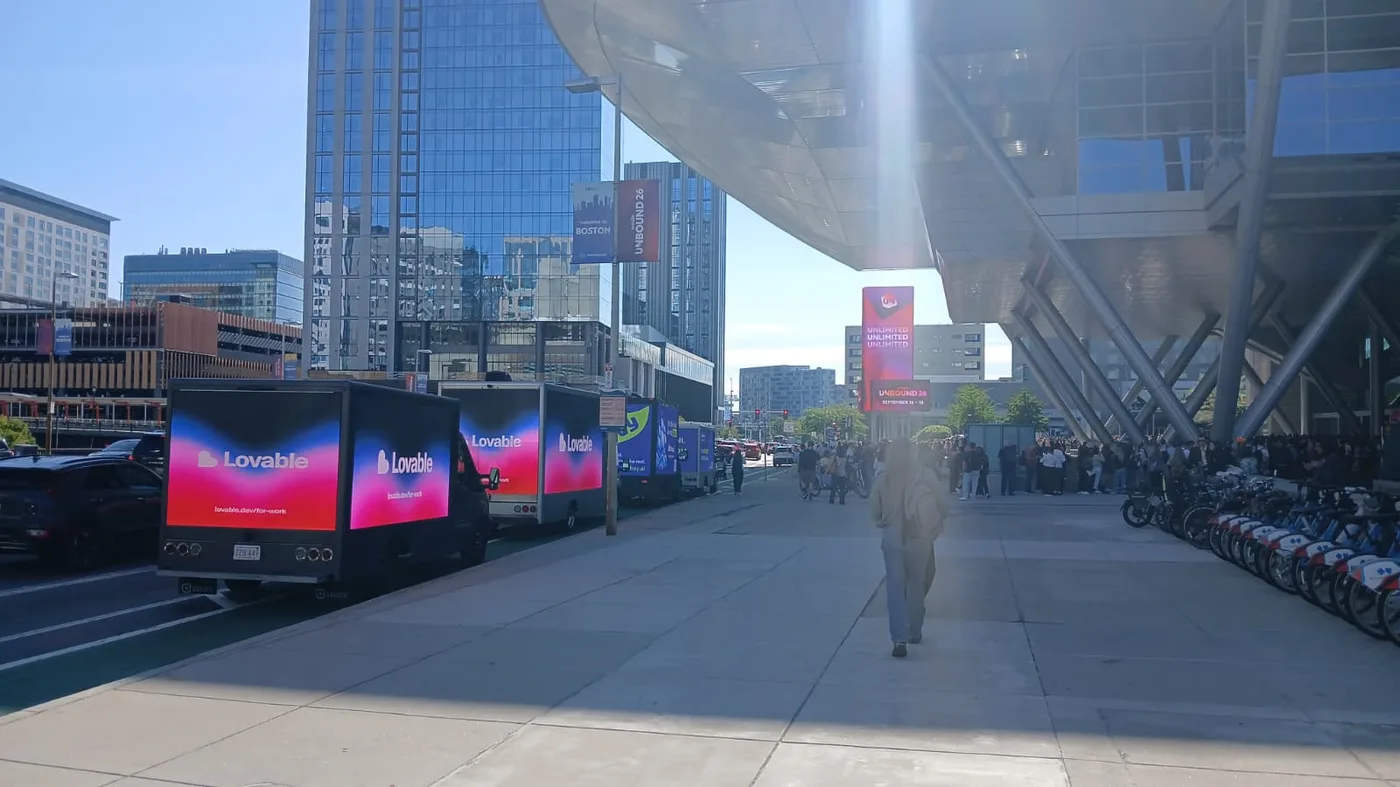
Four LED trucks, two brands: Lovable’s trucks and Ahoy’s blue CRM trucks working the UNBOUND 2026 crowd in Boston at the same time.
Watch the trucks working the crowd outside the venue:
Lovable’s LED billboard trucks in motion among the UNBOUND 2026 crowds in Boston.
For marketers, the takeaway is that a major event does not force a choice between shared media and exclusivity. Dedicated trucks per brand give each campaign full control of its screens and routes while keeping every impression inside the audience that is already on site.
Why is Boston convention advertising so effective?
Boston concentrates major conventions, hotels, restaurants, transit, and pedestrian traffic into compact districts where carefully routed mobile billboards can reach attendees repeatedly. The Seaport is especially valuable because the convention center, hotel blocks, rideshare zones, and evening destinations create a connected attendee journey.
For an event at the Thomas M. Menino Convention and Exhibition Center, formerly the Boston Convention and Exhibition Center, a campaign can plan around Summer Street, D Street, nearby hotel entrances, South Boston Waterfront transit points, and approved curb or private-property positions. The goal is not to drive aimlessly through Boston. It is to meet the right people during registration, morning arrivals, lunch, session changes, evening receptions, and final departures.
Conference campaigns can also extend beyond one building. Depending on the event schedule and approved route, trucks may connect the convention center with Logan Airport approaches, Back Bay hotels, the Financial District, South Station, restaurant corridors, and sponsored after-parties.
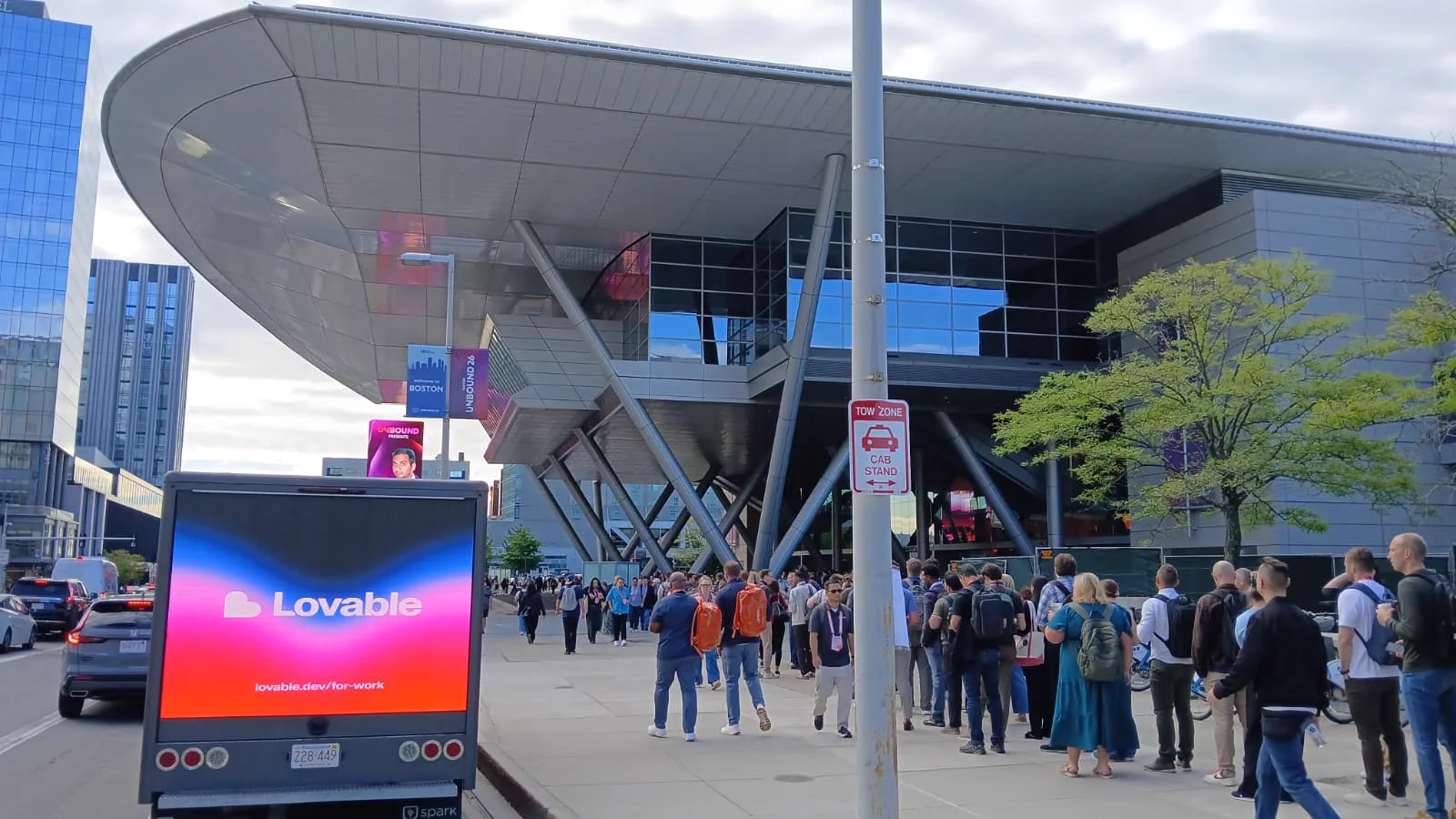
Lovable’s conference advertising was positioned at the convention center entrance where attendees arrived on foot.
How should brands plan advertising around a major conference?
A strong conference advertising plan begins with the attendee schedule, not a generic city route. The media should be positioned around the moments and places where the desired audience naturally concentrates.
- Define the exact audience. Decide whether the priority is buyers, exhibitors, investors, job candidates, channel partners, or the full attendee base.
- Map the attendee journey. Identify entrances, registration periods, official hotels, transit stops, rideshare areas, lunch routes, and evening events.
- Choose the right number of trucks. One truck can run a focused loop. Two or more trucks can cover separate entrances, hotel corridors, or simultaneous events.
- Write for walking speed. Use a short headline, strong contrast, a recognizable brand mark, and one clear next step.
- Rotate creative by moment. Introduce the brand during morning arrivals, promote a booth or meeting during the day, and advertise a reception or follow-up action in the evening.
- Document the activation. Route records and campaign photography help teams report what ran and reuse the content after the conference.
Can this conference advertising strategy run nationwide?
Yes. Boost Outdoor Media can build mobile LED billboard campaigns around major conferences and convention districts across the United States. The same audience-first approach used in Boston can be adapted to each city’s venue entrances, hotel clusters, transportation patterns, and event schedule.
| Conference market | Major venue or district | Useful campaign focus |
|---|---|---|
| Boston, Massachusetts | Thomas M. Menino Convention and Exhibition Center | Seaport entrances, official hotels, transit, receptions |
| Las Vegas, Nevada | Las Vegas Convention Center | Convention entrances, resort corridor, exhibitor events |
| Chicago, Illinois | McCormick Place | Venue approaches, downtown hotels, evening functions |
| Orlando, Florida | Orange County Convention Center | Convention complex, International Drive, resort hotels |
| Nashville, Tennessee | Music City Center | Downtown arrivals, hotel blocks, sponsored nightlife |
| Washington, D.C. | Walter E. Washington Convention Center | Venue entrances, association hotels, policy events |
Other strong conference destinations include New York City, Atlanta, Philadelphia, Los Angeles, San Diego, Dallas, Houston, New Orleans, and Miami. Each market needs its own route and operating plan. The strategy stays consistent: identify who matters, learn where they move, and place the message in that path.
What can other conference exhibitors learn from Lovable?
The biggest lesson is that an event sponsorship or booth does not have to stop at the convention center doors. A mobile LED campaign can build awareness before attendees enter, reinforce the brand during the day, and carry the message into the surrounding city after sessions end.
Lovable’s Boston activation also demonstrates the value of a creative idea that feels native to the audience. The screens did not rely on a generic corporate slogan. They used clear, recognizable work problems that could start a conversation among attendees who understood them.
For exhibitors, sponsors, software companies, healthcare brands, financial services firms, associations, recruiters, and product launches, that combination of precise location and audience-specific creative can make the campaign feel integrated with the conference rather than placed near it.
Conference attendees gathered among multiple mobile LED screens outside UNBOUND 2026, showing the value of high-traffic event positioning.
Plan a Boston or nationwide conference campaign
Boost Outdoor Media plans mobile LED billboard advertising around convention venues, attendee routes, official hotels, and event schedules in Boston and major conference cities nationwide. We can coordinate a focused one-truck route or a multi-truck presence built around entrances, dayparts, and audience movement.
Explore our trade show and convention marketing service, review Boston billboard advertising, see how mobile LED billboard advertising works, or browse more campaign photography. When you know the conference, dates, and audience you want to reach, request a conference advertising quote.
Frequently asked questions
How did Lovable advertise at UNBOUND 2026 in Boston?
Lovable used two mobile LED billboard trucks beside the Thomas M. Menino Convention and Exhibition Center during UNBOUND 2026. The trucks displayed Lovable branding and short problem-focused messages where conference attendees arrived, queued, and walked around the venue.
Why use two LED billboard trucks at a conference?
Two trucks can cover separate entrances or traffic directions and create a stronger visual presence than one vehicle. The exact plan depends on the venue, schedule, target audience, and approved operating locations.
Where should a mobile billboard run during a Boston convention?
A Boston convention route can be planned around Seaport venue entrances, official hotels, transit points, rideshare areas, lunch routes, and evening receptions. The best route follows the event schedule and attendee movement.
Can Boost Outdoor Media advertise at conferences outside Boston?
Yes. Boost Outdoor Media plans conference and trade show campaigns in major markets nationwide, including Las Vegas, Chicago, Orlando, Nashville, Washington, D.C., New York City, Atlanta, Philadelphia, Los Angeles, and other convention destinations.
What should a conference billboard ad say?
Use one short audience-relevant idea, a clear brand mark, strong contrast, and one action such as visiting a booth, scanning a QR code, attending a reception, or booking a meeting.
How far ahead should a conference LED truck campaign be booked?
Two to four weeks is a practical planning window for routes, scheduling, creative, and location coordination. Major national conferences and multi-truck activations benefit from earlier planning.
Can two brands run LED billboard truck campaigns at the same conference?
Yes. Boost Outdoor Media ran four trucks for two brands — Lovable and Ahoy — simultaneously outside UNBOUND 2026 in Boston. Each brand had dedicated trucks, creative, and routing, so the campaigns reinforced each other instead of competing.
Last reviewed September 19, 2026