
Why Georgia Campaigns Should Consider Mobile LED Billboards for the 2026 Senate Race
Metro Atlanta's traffic is the media buy — plus Savannah, Augusta, Macon and Columbus
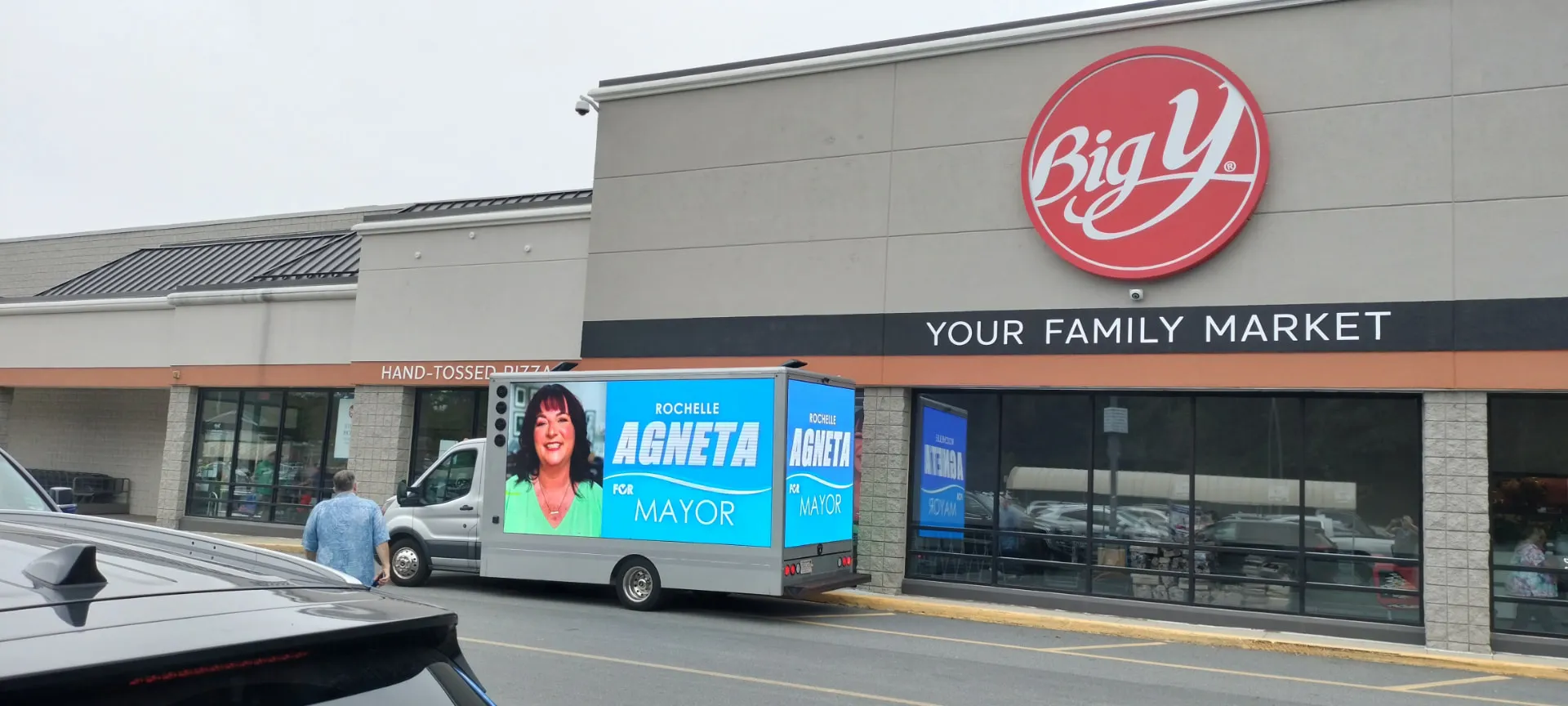
Candidate advertising on an LED billboard truck staged at a grocery anchor.
Short answer: Georgia''s recent Senate races have been decided by roughly one to two points, and metro Atlanta commuters average close to an hour a day in the car. That combination makes mobile LED billboards unusually efficient: a truck day in Georgia costs about $1,200–$1,400 and puts a full-motion screen directly into the I-285, I-75 and I-20 traffic where persuadable voters already sit.
Traffic is Georgia''s biggest media property
Metro Atlanta holds more than 6 million people — well over half the state — and consistently ranks among the most congested metros in the United States. Congestion is a problem for drivers and an asset for advertisers: stop-and-go traffic on the Connector, the Perimeter or Ga-400 gives a moving LED billboard 20 to 60 seconds of readable dwell time instead of the three seconds you get at highway speed.
Georgia''s statewide races have also been close enough that marginal name ID matters. When outcomes land inside a couple of points, a few thousand additional impressions per day in Gwinnett or Cobb are not decorative.
A candidate LED billboard truck staged at a grocery store entrance — in Georgia the same play works at Kroger and Publix anchors across Gwinnett, Cobb and DeKalb, where suburban voters shop on weekends.
The Georgia route map
Metro Atlanta core
Downtown, Midtown, Peachtree Street, the Georgia State and Georgia Tech campuses, and the Mercedes-Benz Stadium and State Farm Arena event blocks concentrate pedestrians, students and press. This is turnout territory and event territory at the same time.
The suburban arc: Gwinnett, Cobb, DeKalb, Henry, Forsyth
The counties along and outside I-285 have driven Georgia''s political shift, and they are where trucks earn their keep. Route through Buford Drive in Gwinnett, Cumberland and Town Center in Cobb, Stonecrest and Decatur in DeKalb, and the retail centers off I-75 South in Henry County. Weekend grocery and shopping-center staging reaches suburban households that no longer watch broadcast television.
Savannah and the coast
Savannah is compact, walkable and heavy with pedestrian traffic around Broughton Street, the riverfront and Savannah State. A single truck day saturates the downtown core, and Chatham County turnout is a real factor in a close statewide race.
Augusta, Macon and Columbus
The mid-size cities are under-served by outdoor inventory, which means a truck is disproportionately visible. Augusta''s Broad Street and the Medical District, Macon''s downtown and Mercer campus, and Columbus''s Broadway and Fort Benning-adjacent corridors each merit a dedicated day in a statewide plan.
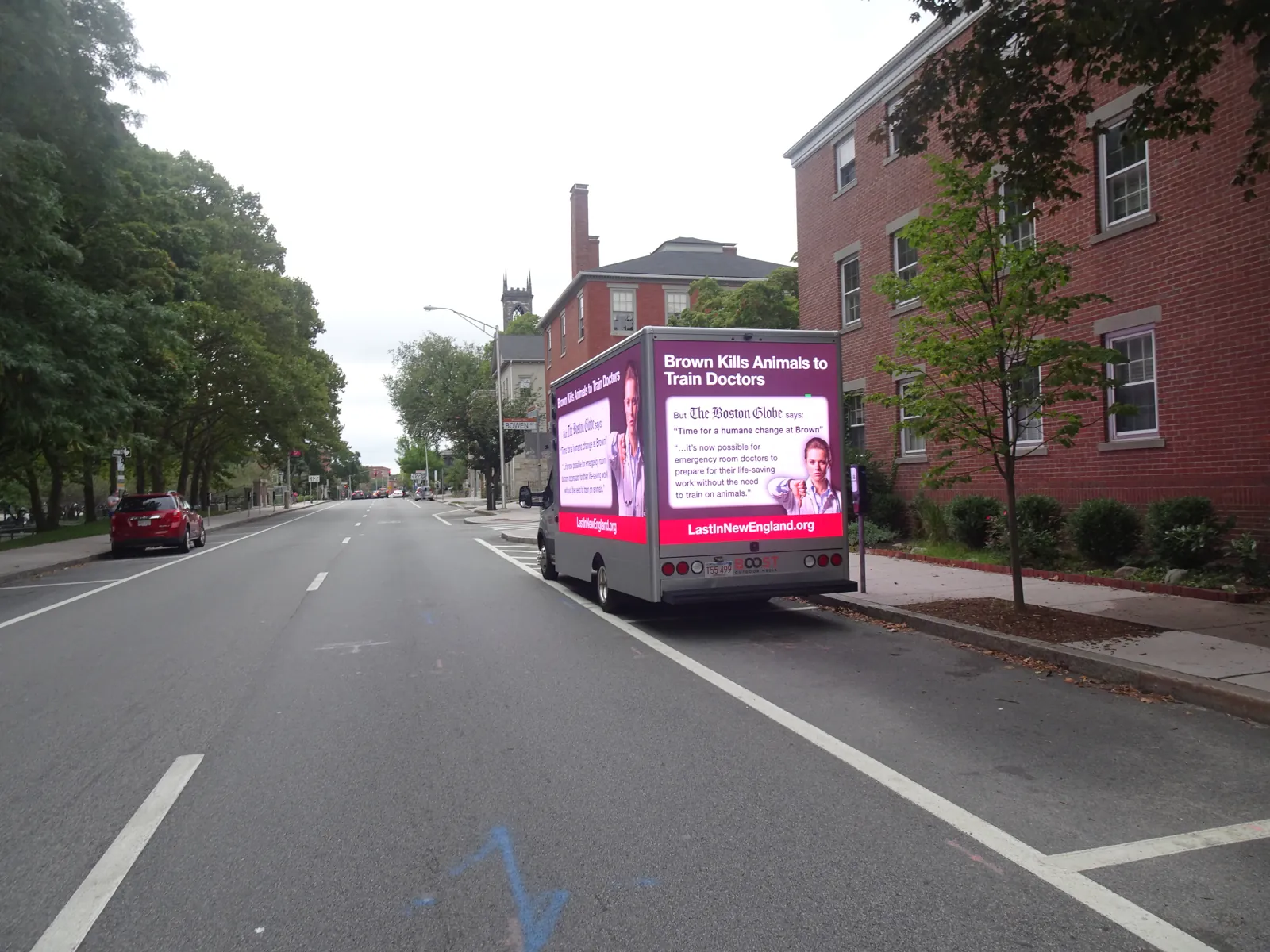
Campus routing on an LED billboard truck — Georgia State, Georgia Tech, UGA in Athens, Mercer and Savannah State put young voters within a few blocks of a single loop.
Georgia mobile billboard costs
| Deployment | Coverage | Typical daily cost |
|---|---|---|
| One truck, Atlanta core | Downtown, Midtown, Peachtree | $1,500-$1,900 |
| One truck, suburban arc | Gwinnett, Cobb or DeKalb | $1,200–$1,400 |
| One truck, Savannah | Broughton St, riverfront, Chatham Co. | $1,400-$1,700 |
| Two trucks, metro saturation | Inside and outside I-285 same day | $2,900-$3,600 |
| Statewide GOTV week | Atlanta + 3 secondary cities, 5 days | $7,000-$10,000 |
Runoffs make Georgia different
Georgia requires a majority to win statewide, so runoffs are a live possibility in nearly every competitive cycle. Runoff windows are short, and every campaign floods the same digital and broadcast inventory at once, driving rates up fast. Mobile billboard trucks are one of the few channels whose price does not spike with auction demand, and whose creative can change the same afternoon — critical when the entire message becomes "vote again by December."
Creative rules for Georgia boards
Seven words or fewer, one idea, candidate name at maximum legible size, disclaimer burned into the artwork. In slow traffic you can afford slightly more motion than usual: a short looping video holds attention through a light cycle better than a static frame. Vary creative by county — an economy message in Macon and a suburban-services message in Alpharetta cost nothing extra to run on the same screen on different days.
Rules and logistics
Georgia permits mobile billboard advertising statewide. Atlanta and some other municipalities regulate where commercial vehicles may stage, so routes rely on moving loops and legal parking. Political creative must carry the required paid-for disclaimer, and trucks stay outside the 150-foot buffer around polling place entrances during voting, working nearby commuter roads and shopping centers instead.
Putting it together for 2026
A serious Georgia mobile billboard plan looks like this: weekend suburban arc routes for persuasion, weekday Atlanta core routes for base and press, dedicated days in Savannah, Augusta, Macon and Columbus, and reserved truck capacity in case of a runoff. Boost Outdoor Media builds those routes from turnout data and land use, not just traffic counts.
Georgia sits alongside the other 2026 battlegrounds — see Pennsylvania, New Hampshire and Maine. For scoping and pricing, read our political advertising service page and the mobile billboard advertising cost guide, or request a Georgia route.
Frequently asked questions
How much do mobile LED billboards cost in Georgia?
A Georgia LED billboard truck day typically costs $1,400 to $1,900 for a 6-8 hour shift including driver, routing and display. Atlanta core routes sit at the top of that range, while Savannah, Augusta, Macon and Columbus run slightly lower. Two trucks saturating metro Atlanta inside and outside I-285 on the same day cost roughly $2,900 to $3,600.
Why does Atlanta traffic help mobile billboard advertising?
Stop-and-go congestion increases dwell time. On a free-flowing highway a driver sees a board for about three seconds, but in slow traffic on the Downtown Connector, I-285 or Ga-400 the same board is visible for 20 to 60 seconds. That is long enough for a short looping video, which makes metro Atlanta one of the strongest mobile billboard markets in the country.
Which Georgia counties matter most for a 2026 Senate campaign?
Gwinnett, Cobb, DeKalb, Fulton, Henry and Forsyth carry the bulk of the persuadable and high-turnout suburban vote and have driven Georgia's recent political shifts. Chatham County around Savannah, Richmond around Augusta, Bibb around Macon and Muscogee around Columbus are the secondary targets worth a dedicated truck day each.
How do Georgia runoffs affect an advertising plan?
Georgia requires a majority to win statewide, so competitive races frequently go to a runoff on a compressed timeline. Digital and broadcast rates spike during that window as every campaign bids for the same inventory, while mobile billboard truck day rates stay flat. Reserving truck capacity in advance protects a campaign against runoff price surges.
Are mobile billboards allowed near polling places in Georgia?
No. Trucks stay outside the buffer zone around polling place entrances where campaign activity is restricted, generally 150 feet in Georgia. The effective approach is routing nearby commuter roads, transit stops and shopping-center entrances that voters pass on the way to vote, which reaches the same people without any buffer-zone issue.
Can we reach young and campus voters with LED trucks in Georgia?
Yes, and it is one of the strongest use cases. Georgia State and Georgia Tech in downtown Atlanta, UGA in Athens, Mercer in Macon and Savannah State all have compact campus corridors a truck can loop repeatedly. Campus routing reaches students who no longer watch broadcast television and often block digital ads.