
Do Digital Billboards Track Mobile Devices?
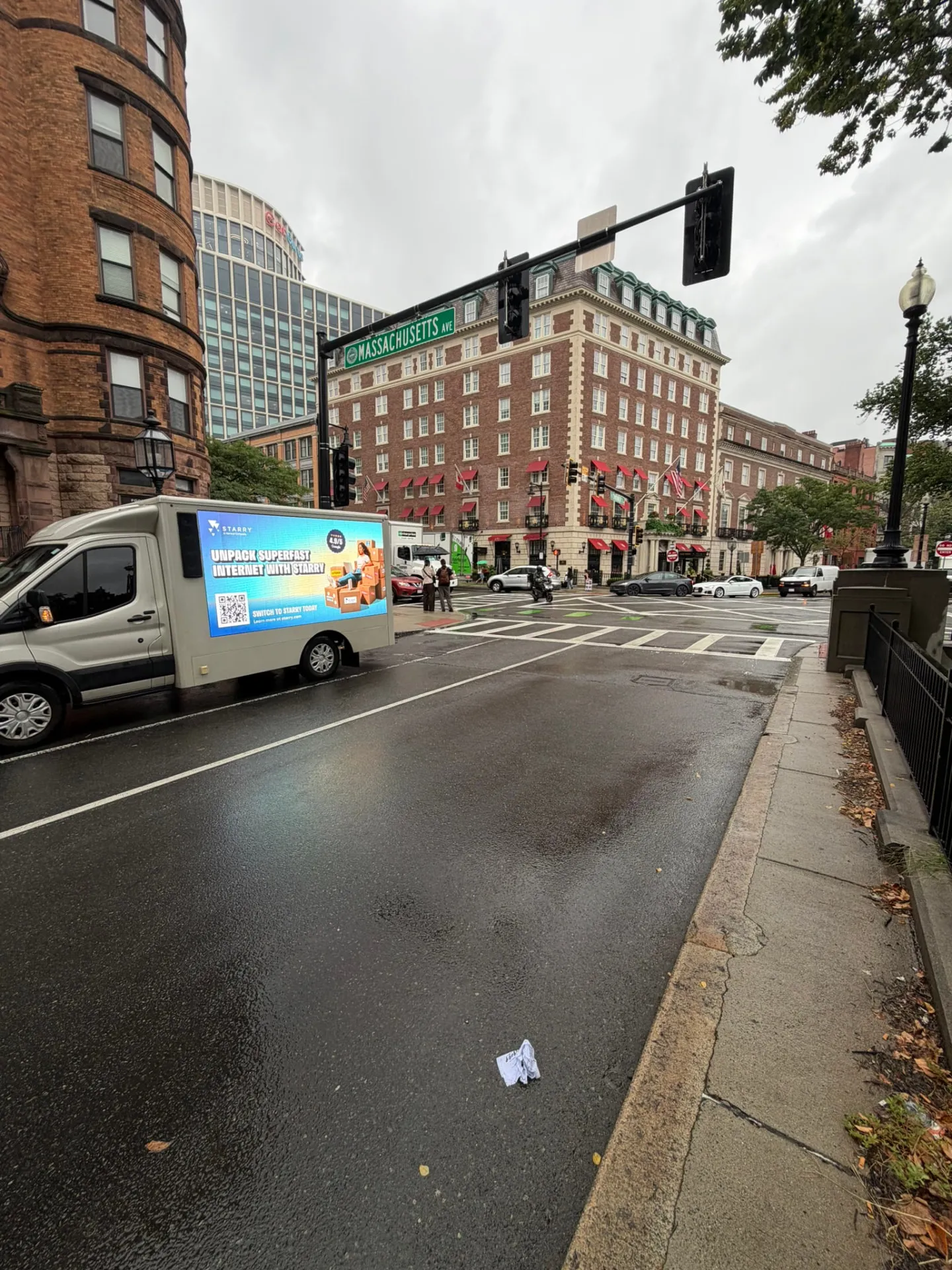
No. Digital billboards, including LED billboard trucks, do not track individual mobile devices. The screens have no sensors, cameras, or Bluetooth beacons collecting data from passers-by. Some advertisers layer on anonymized, aggregated location data licensed from opted-in mobile apps to estimate how many people were near a screen, but that data never identifies a person or a phone.
What the screen itself does
An LED billboard is a display. On a mobile billboard truck it is a set of LED panels, a media player, and a generator. There is no receiver listening for phones, no Wi-Fi probe capture, and no facial recognition. The truck knows where it is because it carries a GPS unit for routing and reporting - that tracks the truck, not the audience.
Where the "tracking" idea comes from
Out-of-home measurement companies sell audience estimates built from mobile location panels: anonymized, aggregated GPS pings that apps collect with user consent. A measurement provider counts how many devices in that panel passed through a geographic area during a campaign window, then projects that sample up to a population estimate. Advertisers see numbers like "42,000 estimated impressions" - never names, numbers, or device IDs.
Separately, some campaigns run geofenced retargeting: serving mobile ads to devices that entered a defined area. That is an ad-network product working from opted-in app data, and it happens entirely off the billboard. The screen plays no part in it.
How Boost Outdoor Media measures campaigns
| Signal | Source | Identifies a person? |
|---|---|---|
| GPS route log | Truck telematics | No |
| Impression estimate | Traffic counts + route dwell time | No |
| Photo proof of play | Driver photos on route | No |
| Response tracking | Campaign QR code, vanity URL, or call-tracking number | Only if someone chooses to respond |
The honest version: we report where the truck went, how long it was there, how much traffic that area carries, and what responses your call-tracking number or QR code produced. That is measurable without touching anyone's phone.
What this means for advertisers
You get the privacy advantage of outdoor advertising - no cookies, no consent banners, no data-deletion requests - with route-level accountability. As privacy rules tighten around digital advertising, that is increasingly a feature, not a limitation.
Want a campaign with GPS route reporting and response tracking? Call Boost Outdoor Media at 978-288-1616 or see mobile LED billboard advertising.
Frequently asked questions
Do digital billboards track your phone?
No. A digital billboard is a display with no sensors, cameras, or receivers collecting data from nearby phones. Nothing on the screen detects or identifies a device passing by.
How do billboard companies estimate audience numbers then?
They use anonymized, aggregated location panels licensed from apps whose users opted in, combined with traffic counts. A sample of devices passing through an area is projected up to a population estimate. No individual is identified.
Can a mobile billboard truck retarget people who saw it?
Geofenced mobile retargeting is possible, but it is run by an ad network using opted-in app location data, not by the truck or the screen. The billboard itself plays no part in collecting that data.
Is mobile billboard advertising subject to privacy laws like GDPR or CCPA?
The advertising display itself collects no personal data, so it falls outside those rules. If you add geofenced retargeting or a call-tracking number, those services have their own privacy obligations.
How does Boost Outdoor Media prove a campaign ran?
Every campaign includes GPS route logs showing where and when the truck traveled, photo proof of play from the route, and estimated impressions based on traffic counts and dwell time. Response tracking through a QR code, vanity URL, or call-tracking number is optional.
Are mobile billboards more private than online ads?
Yes. There are no cookies, device identifiers, consent banners, or personal data collected by the display. That makes outdoor advertising simpler to run as digital privacy rules tighten.