
Cannabis Marketing with LED Billboard Trucks: What Works and What's Restricted
How dispensaries use mobile LED billboards — and the state rules on buffer zones, audience thresholds and ad content
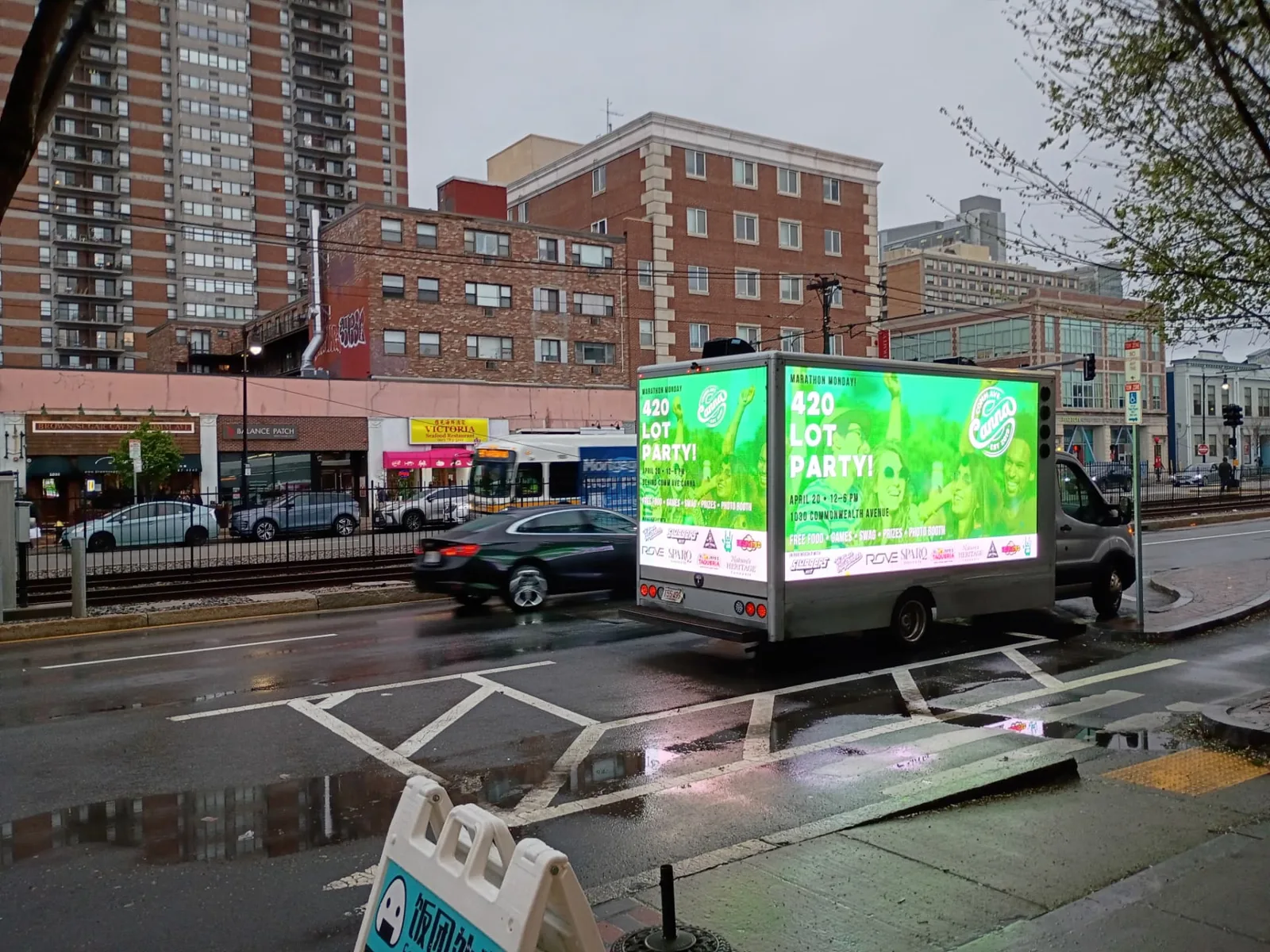
Cannabis is one of the hardest products in America to advertise. Google Ads, Meta, TikTok and most programmatic exchanges reject licensed dispensaries outright. That leaves out-of-home as one of the few scalable channels left — and mobile LED billboard trucks as the most flexible form of it. But cannabis OOH is heavily regulated, and the rules vary by state, right down to how far the truck must stay from a school.
Why dispensaries turn to LED billboard trucks
A mobile billboard truck puts a 10'x5' illuminated screen exactly where your customers already are: dispensary corridors, event parking lots, downtown nightlife districts, festival perimeters. You control the route, the hours and the creative, and you can change any of them the same day.
- No platform ban. OOH is not governed by Google or Meta policy — only by state cannabis regulations and local sign ordinances.
- Grand openings and relocations. A truck circling a two-mile radius for a launch weekend outperforms a static board that nobody drives past.
- Event marketing. 4/20 lot parties, harvest festivals, concerts and cannabis expos — the truck parks legally on the street and becomes the landmark.
- Competitive corridors. In dense markets like Boston, Denver or Detroit, route timing lets you own the drive home past three competitors.
- Measurable. GPS route logs, impression estimates, geofenced retargeting and unique landing pages or promo codes tie spend to foot traffic.
The restrictions you have to plan around
Cannabis advertising law is state-by-state, and the constraints below are the ones that most often reshape a mobile billboard route. Always confirm current rules with your state regulator and your compliance counsel before a campaign runs — these change frequently.
1. Audience composition thresholds (the 71.6% rule)
Many states — including Massachusetts, California, Colorado, Nevada and others — only allow cannabis advertising where reliable audience data shows at least 71.6% of the audience is 21 or older. For OOH this means the media owner needs demographic data supporting the placement. Reputable mobile billboard operators route around schools, playgrounds and youth-heavy zones and document it.
2. Distance and buffer zones
Several states set minimum distances between cannabis advertising and schools, daycares, playgrounds and youth centers — commonly in the 500 to 1,000 foot range. A parked truck inside that buffer is a violation even if it was legal a block earlier. Routes have to be mapped against those exclusion zones, not just drawn for traffic volume.
3. States that ban mobile or vehicle cannabis advertising outright
Some states specifically prohibit advertising cannabis on or from a vehicle, or ban mobile billboards generally. Others allow the truck but restrict illuminated or animated copy in certain municipalities. A few cities ban mobile billboards for every advertiser regardless of category. This is why "can we run in that market?" is a two-part question: state cannabis rules and local sign ordinances.
4. Content restrictions on the creative itself
Even in permissive states, the ad usually cannot:
- Appeal to minors — no cartoons, mascots, characters or youth-culture imagery
- Depict consumption or show product being used
- Make health, medical or curative claims without qualification
- Encourage overconsumption or transport across state lines
- Omit required license numbers and state warning language, where mandated
Many states require the license number and a warning statement on the creative, sized legibly. Build these into the artwork template before design starts, not after a rejection.
5. Medical-only and newly legal markets
Medical-only states are typically far stricter — some limit advertising to the dispensary premises or to patients who opted in. Newly legalized markets often launch with a conservative ad rule set that loosens over time. Treat each launch market as its own compliance review.
How we run a compliant cannabis campaign
- Market review. Confirm the state permits vehicle-based cannabis advertising and check the municipality's mobile billboard ordinance.
- Creative compliance pass. License number, warning text, no youth-appeal elements, no consumption imagery.
- Route mapping with exclusion zones. Schools, daycares, playgrounds and youth facilities buffered out; routes weighted to adult-heavy corridors and dayparts.
- Documentation. GPS logs and route maps retained so you can demonstrate compliance if a regulator asks.
- Measurement. Impression estimates, geofenced mobile retargeting of people exposed to the truck, and a campaign-specific landing page or code.
Where it works best
Dispensary grand openings, delivery-service launches, 4/20 and Green Wednesday promotions, cannabis expos and festivals, brand launches for a new product line, and multi-store operators defending share in a crowded metro. In every one of those cases the value is the same: you reach adults at street level in a channel your competitors' digital budgets cannot buy into.
This article is general information, not legal advice. Cannabis advertising rules change often and vary by state and municipality — verify current requirements with your regulator and counsel before launching.
Frequently asked questions
Can cannabis dispensaries legally use mobile billboard trucks?
In many legal-cannabis states, yes — provided the campaign meets the state adult-audience threshold, stays outside school and youth-facility buffer zones, and the creative carries required license and warning language. A few states prohibit cannabis advertising on vehicles outright, and some cities ban mobile billboards for all advertisers, so each market needs its own review.
What is the 71.6% rule in cannabis advertising?
Several states allow cannabis advertising only where reliable audience data shows at least 71.6% of the audience is 21 or older. For out-of-home, that means placements and routes must be supported by demographic data and kept away from youth-heavy areas.
How far does a cannabis billboard have to stay from a school?
It varies by state, but buffers commonly fall between 500 and 1,000 feet from schools, daycares, playgrounds and youth centers. Mobile routes are mapped with those zones excluded, including parking positions.
What can a cannabis LED truck ad not say?
Most states prohibit content appealing to minors, depictions of consumption, unqualified health or medical claims, and messaging that encourages overconsumption or interstate transport. Required license numbers and warning statements usually must appear on the creative.
Is a mobile billboard better than a static board for a dispensary?
For launches, events and competitive corridors, usually yes — you choose the exact streets, hours and creative, and can change any of them the same day. Static boards are better for long-run always-on presence at a single high-traffic point.
Can you retarget people who saw the truck?
Yes. Geofenced mobile retargeting can serve follow-up ads to devices present along the route, subject to the same state cannabis advertising rules and platform policies.