
Can I Park My Mobile Billboard to Advertise?
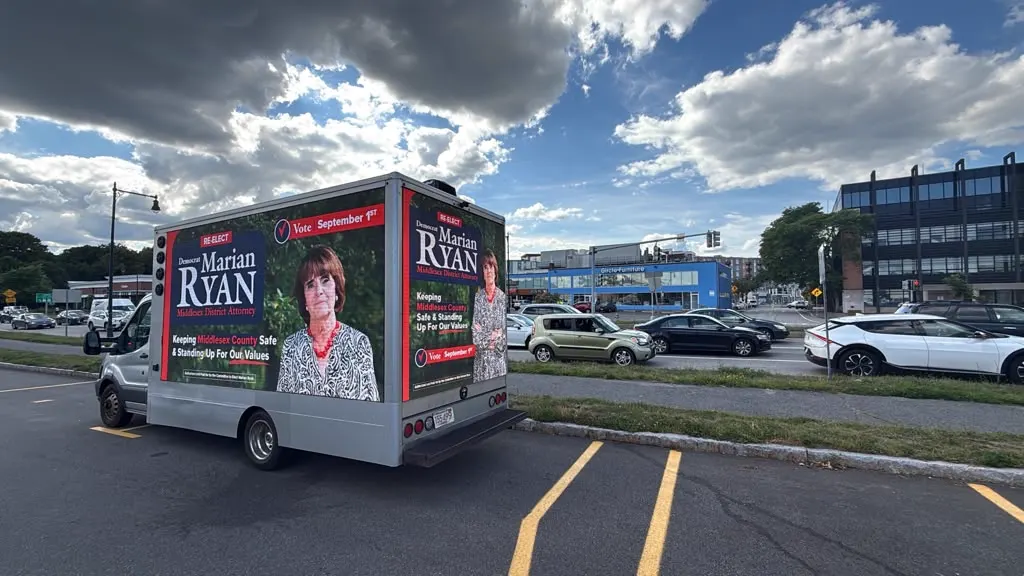
Yes — you can park a mobile billboard to advertise, and it is one of the most effective ways to run one. The key is where you park: display the truck on private property with the property owner''s permission, positioned where your audience naturally passes or dwells. A well-placed stationary LED billboard truck delivers 30–60+ minutes of repeated exposure per viewer — far longer than the 2–4 seconds a driver gets from a truck circulating in traffic. Public streets are best used for driving routes; stationary display belongs on retail plazas, event lots, and commuter parking areas where you have a yes from the owner.
Why a parked LED billboard truck often beats a moving one
A moving truck reaches more eyes, but a parked truck reaches the same eyes longer and more memorably. When a Boost Outdoor Media LED billboard truck parks at a busy retail plaza entrance or a commuter lot exit, every person walking or idling past sees the message three, five, ten times. Repetition in one location is what turns a glance into recall — and recall is what drives store visits, event ticket sales, and applications.
The best places to position a parked mobile billboard
Positioning is 80% of the outcome. The highest-performing placements share three traits: heavy foot or vehicle traffic, slow movement, and a clear sightline to the screen.
- Retail plaza and shopping center entrances — cars idle at exits and stop signs; shoppers cross the lot on foot.
- Commuter and transit parking lots — thousands of drivers pass the same spot twice a day at low speed.
- Event and stadium lots — pre-game and post-game crowds dwell for an hour or more within sight of the screen.
- Dealership and franchise lots — the truck sits next to the product it promotes, at the exact point of purchase.
- Long signalized intersections — 60–90 second red lights mean full-message reads, every cycle.
- Sports complexes and school event lots — parents arriving and departing in waves, all passing one choke point.
An LED billboard truck parked at a commuter parking lot — one of the highest-dwell placements, with every driver passing the screen at low speed.
How to get property owner permission (it''s easier than you think)
Most property owners say yes quickly, because a clean, professional truck adds energy to their lot — and often promotes their own center, tenants, or events. The playbook Boost Outdoor Media uses on every campaign:
- Ask the right person. For shopping centers, that''s the property manager or leasing office (the name is usually on the plaza signage). For single businesses, the owner or store manager.
- Lead with their benefit. "We''d like to run a screen truck in your lot Saturday promoting X — happy to display your center''s name or a tenant message on it too." A free co-promotion slot is the single most effective opener.
- Keep it low-commitment. A specific date, specific hours (e.g. 10am–2pm), specific spot near the entrance, and a promise to leave no trash or blocking.
- Get it in writing — a text is fine. A simple "Confirmed for Saturday 10–2, park by the entrance sign" from the manager protects everyone.
- Be the tenant they''d invite back. Professional crew, no noise, no blocking fire lanes or cart returns. Owners who host once usually host again.
Positioning tips once you''re on site
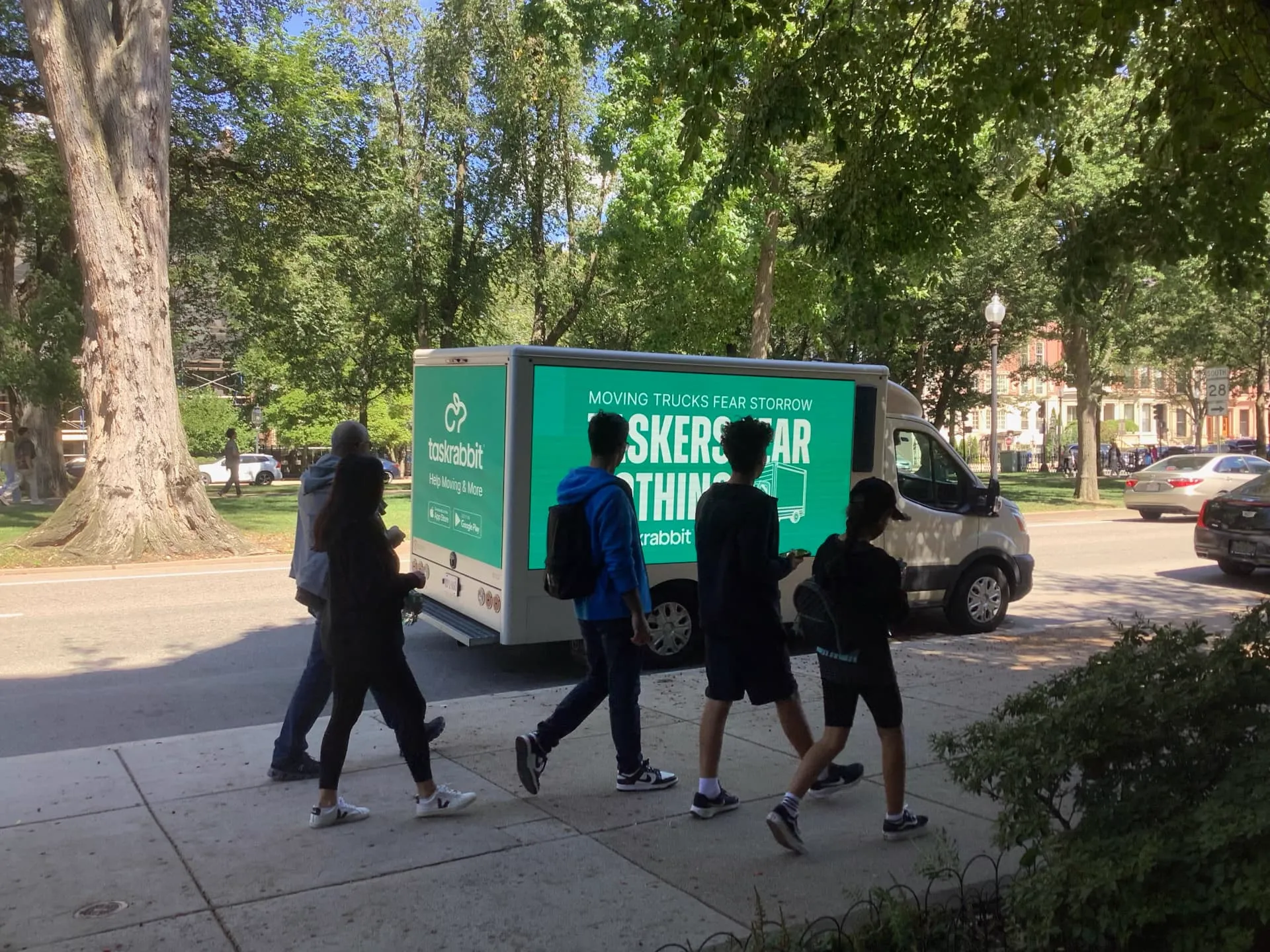
Two LED billboard trucks staged along Commonwealth Avenue in Boston — trucks angled toward oncoming traffic so the full screen is readable from a distance.
- Angle the screen toward approaching traffic, not parallel to it. Drivers read a screen they''re driving toward for 5–10x longer.
- Face foot-traffic flows at pedestrian-heavy sites — turn the screen toward crosswalks and store entrances, not the parking rows.
- Check sightlines from 100+ feet out. Move the truck until trees, signage, and parked cars stop blocking the screen.
- Match the schedule to the audience. Lunch rush for restaurants, 6–9am and 4–7pm for commuter lots, doors-open and lets-out for events.
- Use both screens. Double-sided trucks show one message to traffic on each side — effectively two placements in one spot.
Circulating route vs. parked placement: which should you choose?
| Circulating route | Parked placement | |
|---|---|---|
| Reach | Thousands of unique impressions across miles | Fewer people, but seen repeatedly |
| Dwell time | 2–4 seconds per viewer | 30–60+ minutes of repeat exposure |
| Best for | Brand awareness, launches, city-wide coverage | Retail traffic, events, hiring, grand openings |
| Where | Public roads, driven routes | Private lots with owner permission |
The strongest campaigns combine both: a morning driving route through the target market, then a midday parked placement at the highest-traffic lot in the trade area.
What does a parked mobile billboard campaign cost?
Boost Outdoor Media runs LED billboard truck campaigns at $1,200–$1,400 per day, which includes the truck, driver, creative support, and both circulating and parked placements within the day. A parked placement costs nothing extra — it''s simply part of how a well-planned day is structured, and property-owner permission is handled by our team.
Want a truck positioned outside your store, event, or hiring site? Request a quote or explore our mobile LED billboard services, billboard truck rental, and advertising cost guide.
Frequently asked questions
Can I park my mobile billboard to advertise?
Yes — on private property with the owner's permission. Retail plazas, event lots, commuter parking areas, and dealership lots are all standard placements, and most property managers agree quickly, especially when offered a free co-promotion slot on the screen. Public streets are best saved for driving routes.
Where is the best place to park a LED billboard truck?
The highest-impact spots are retail plaza entrances, commuter parking lot exits, event and stadium lots, dealership lots, and long signalized intersections. Look for heavy traffic moving slowly with a clear sightline to the screen from 100+ feet.
How do I get permission to park a billboard truck in a shopping center lot?
Contact the property manager or leasing office named on the plaza signage. Offer a specific date, hours, and spot, and lead with their benefit — a free message for their center or tenants on your screen. Confirm in writing, even by text.
Is a parked mobile billboard more effective than a moving one?
They do different jobs. A circulating route builds broad awareness across a whole market with 2–4 seconds per viewer; a parked placement gives a smaller audience 30–60+ minutes of repeat exposure. The strongest campaigns combine a morning route with a midday parked placement.
How much does a mobile billboard campaign with parked placement cost?
Boost Outdoor Media runs LED billboard truck campaigns at $1,200–$1,400 per day, including the truck, driver, creative support, and both driving routes and parked placements. Parked placement is part of the day's plan at no extra cost.
How long do people look at a parked LED billboard truck?
Viewers passing a parked truck typically see it multiple times over 30–60 minutes or more, versus 2–4 seconds for a truck driving past in traffic. That repetition is what converts a glance into brand recall.