
Back-to-College Advertising in Boston: How Starry Used LED Billboard Trucks to Own Move-In Week
Targeting BU, Northeastern, BC, Fenway, and the Target and Amazon corridor on Commonwealth Ave
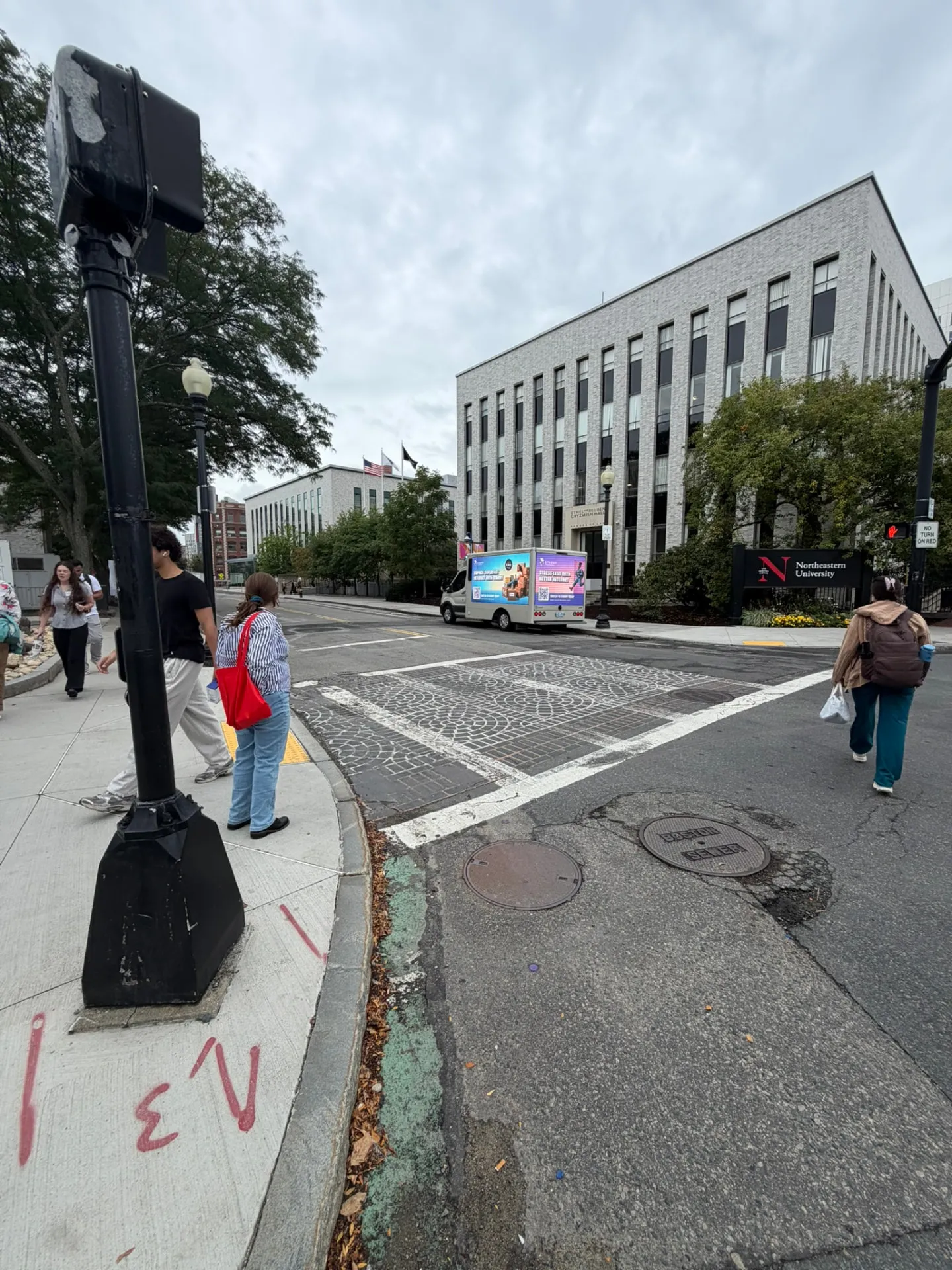
The Starry LED billboard truck at Northeastern University on Huntington Avenue during Boston back-to-college week.
Back-to-college advertising works in Boston because roughly 150,000 students arrive in the same two weeks and every one of them needs internet on day one. For Starry, Boost Outdoor Media ran an LED billboard truck through Boston University, Northeastern University, Boston College, Fenway, and the Target and Amazon corridor on Commonwealth Avenue — the exact places students walk between signing a lease and unpacking a box.
Why move-in week is the highest-intent window of the year
Internet, furniture, phone plans, gym memberships, and food delivery all get decided in the first 10 days of the semester. After that, students are locked in for the year. A mobile LED billboard truck lets a brand like Starry be physically present at that decision point instead of hoping a social ad lands at the right moment.
The Starry LED billboard truck holding the crosswalk at Northeastern University on Huntington Avenue — students crossing to Gryzmish Hall see the QR code at eye level.
The Boston campus route we ran for Starry
The route was built around class-change times and pedestrian density, not raw traffic counts. Each stop below is a separate audience with its own dwell pattern.
Boston University — Commonwealth Avenue
Comm Ave between the BU Bridge and Packard's Corner is the densest student walking corridor in the city. The truck ran slow laps past the 870 Commonwealth Ave block and the Green Line B stops, where students wait 3 to 6 minutes for a train with nothing to look at.
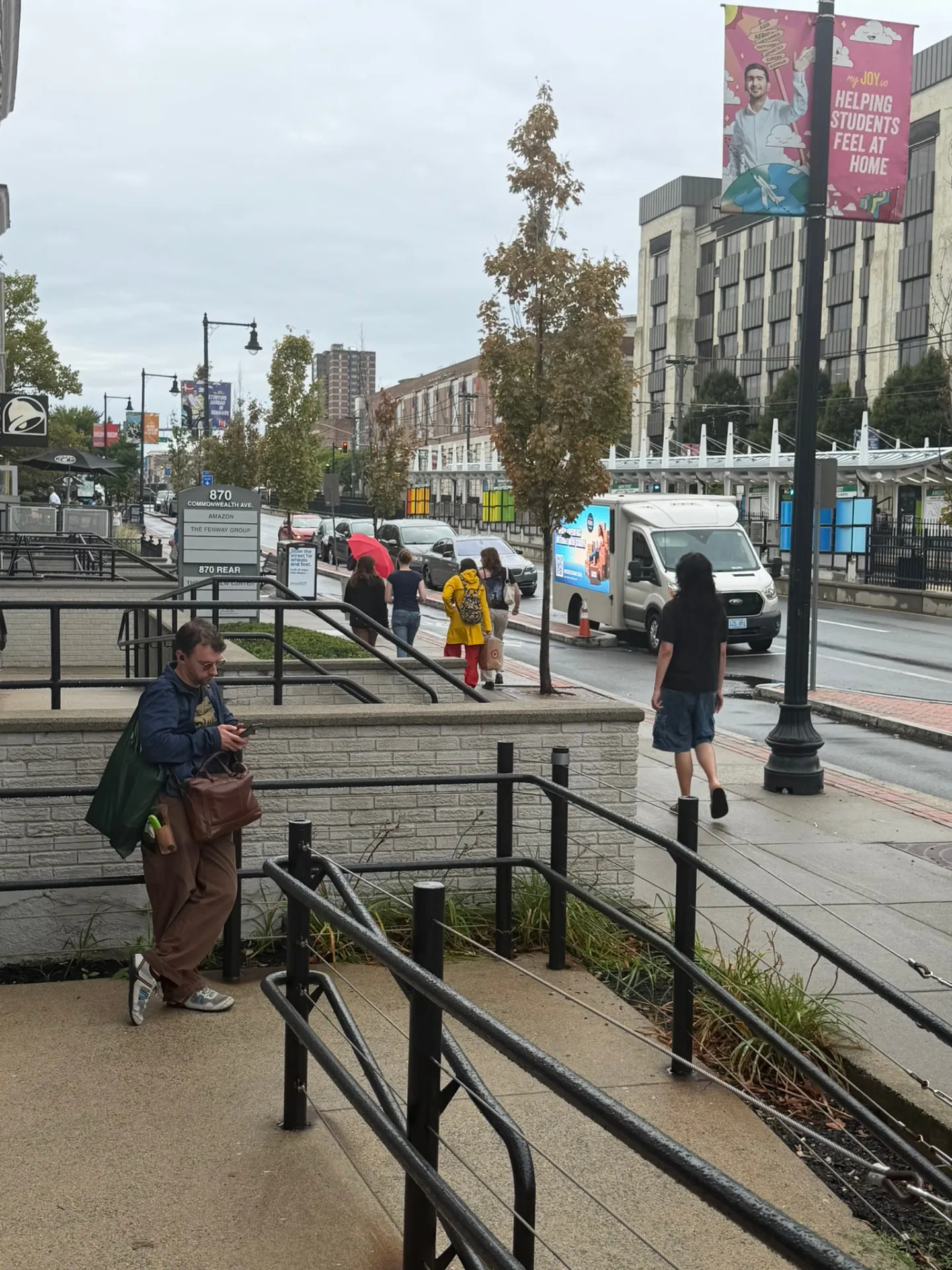
Commonwealth Avenue outside Boston University — the mobile LED billboard truck sits in the curb lane while foot traffic queues for the B Line.
Northeastern University — Huntington Avenue
Northeastern's Huntington Ave frontage puts the truck in front of dorms, the Ruggles corridor, and heavy crosswalk traffic. This is the best stop in Boston for QR scans because pedestrians are stopped at a light with their phone already out.

The rear screen parked beside the Northeastern University marker — "Stress less with better internet" plus a scannable QR code.
Boston College and the Chestnut Hill run
BC sits at the end of the Green Line B branch, so the truck took Commonwealth Ave west through Brighton and Chestnut Hill, catching off-campus apartment blocks along the way. Off-campus renters are the highest-value audience for an internet provider because they are the ones actually signing service.
Fenway, Target, and Amazon on the Fenway retail block
Move-in shopping happens at the Target and Amazon storefronts on Brookline Ave and Boylston Street. Students leave those stores with a cart of dorm supplies and an open wallet. Parking the LED billboard truck across from that block puts the brand in front of a buying mindset, not a browsing one.
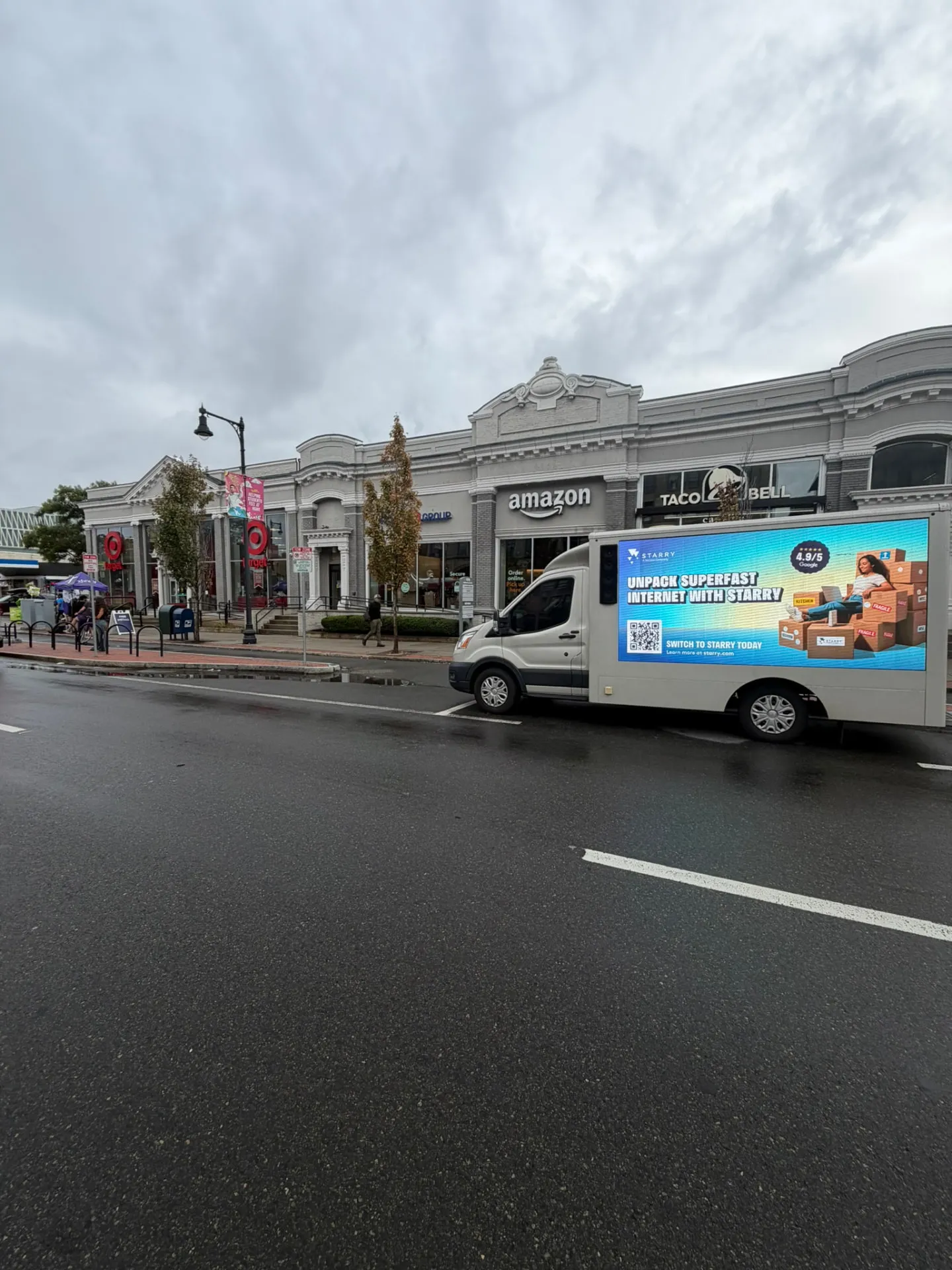
Mobile LED billboard advertising in front of Target and Amazon in Fenway — the move-in shopping block for BU and Northeastern students.
MGM Music Hall and Lansdowne Street at night
After 6 p.m. the audience shifts from move-in to nightlife. The truck finished the day around MGM Music Hall at Fenway and Lansdowne Street, where concert and Red Sox crowds create the densest evening pedestrian mass in the city.
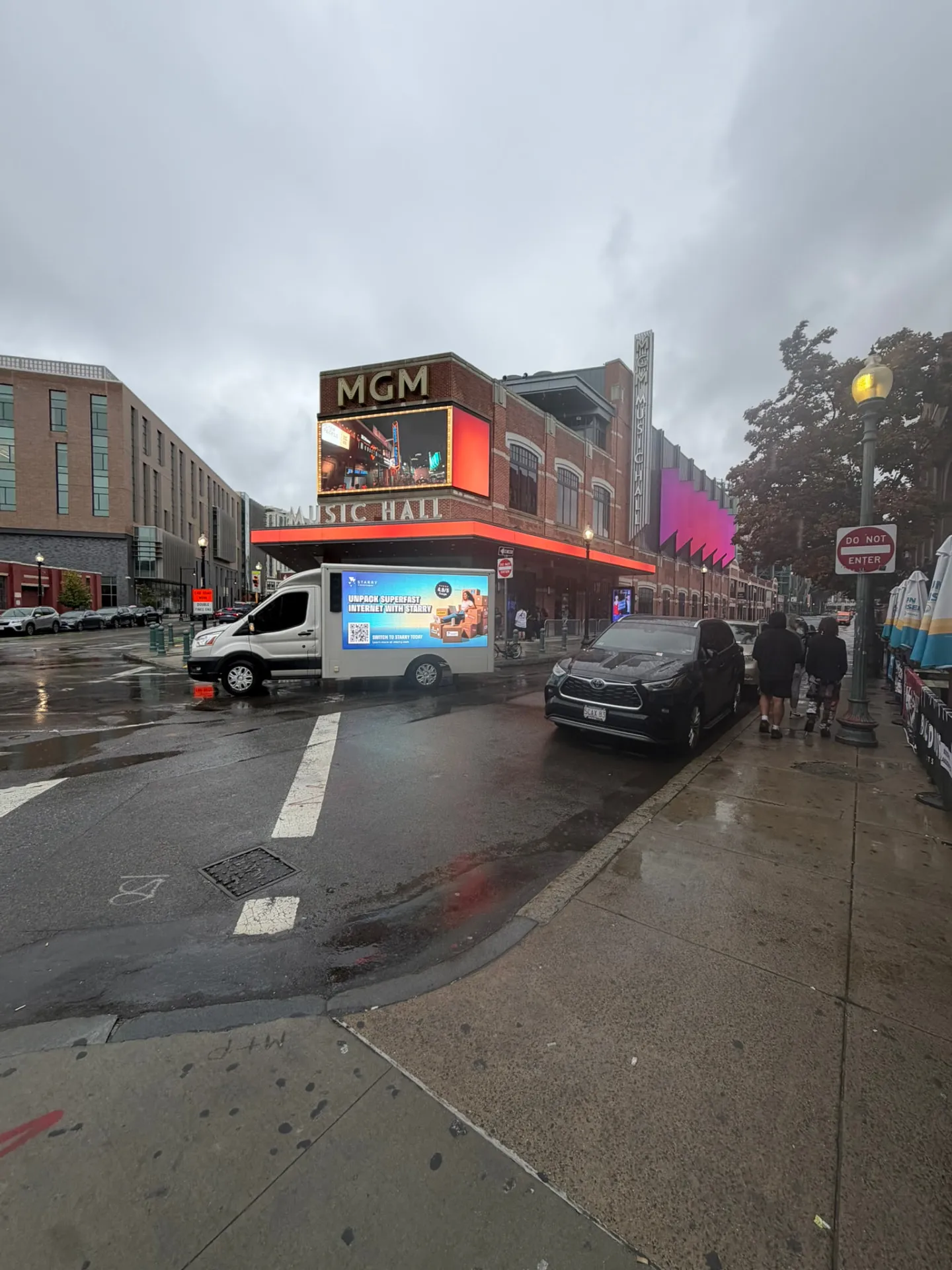
Evening rotation outside MGM Music Hall at Fenway, catching the Lansdowne Street crowd after the campus routes wind down.
Massachusetts Avenue and Back Bay connector
Mass Ave links Northeastern, Berklee, and Back Bay, and it carries steady stop-and-go traffic all day. It is the connective tissue between campus stops, so no drive time is wasted — the screen is earning impressions between destinations.
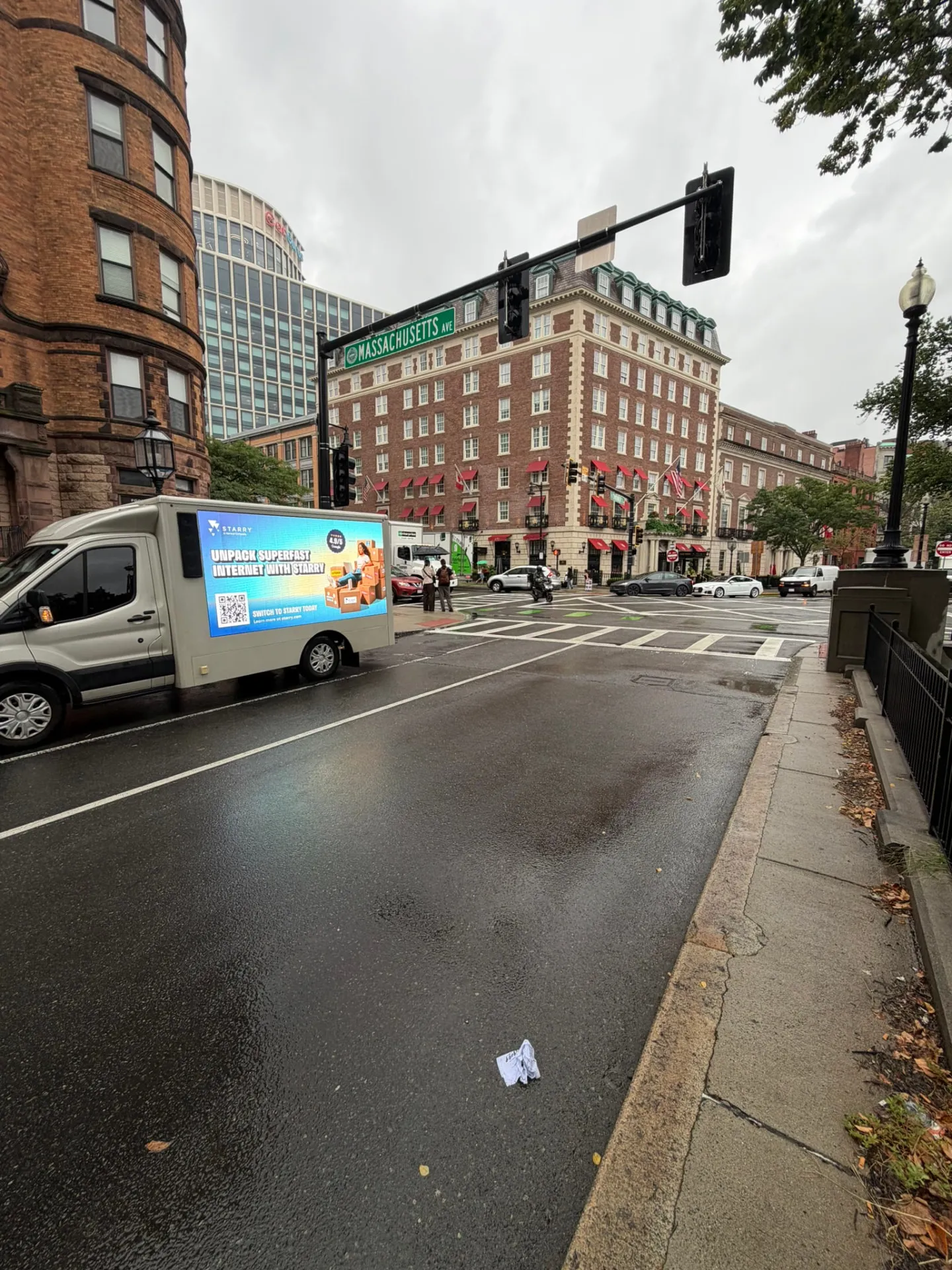
Massachusetts Avenue in Boston — the connector route between Northeastern, Berklee, and Back Bay keeps the LED billboard truck earning impressions in transit.
What made the Starry creative work
The board carried one benefit line, one action, and one code. "Unpack superfast internet with Starry" and "Stress less with better internet" both land in under two seconds, and the QR code sends the scan straight to sign-up.
| Creative element | Why it worked on a moving screen |
|---|---|
| One benefit line | Readable at 40 feet in under 2 seconds |
| Large QR code | Scannable at crosswalks and transit stops where people are stopped |
| 4.9/5 Google rating badge | Instant trust for a brand students have never heard of |
| Move-in imagery (boxes) | Matches the exact moment the audience is living in |
| Day/night creative swap | Campus message by day, nightlife-friendly board after 6 p.m. |
Pairing the truck with a street team
Mobile LED billboard advertising gets much stronger when a tabling team works the same block. The truck creates awareness for a hundred people at once; the table converts the handful who are ready. On this campaign, the retail block by Target in Fenway hosted the ground team while the truck circled.
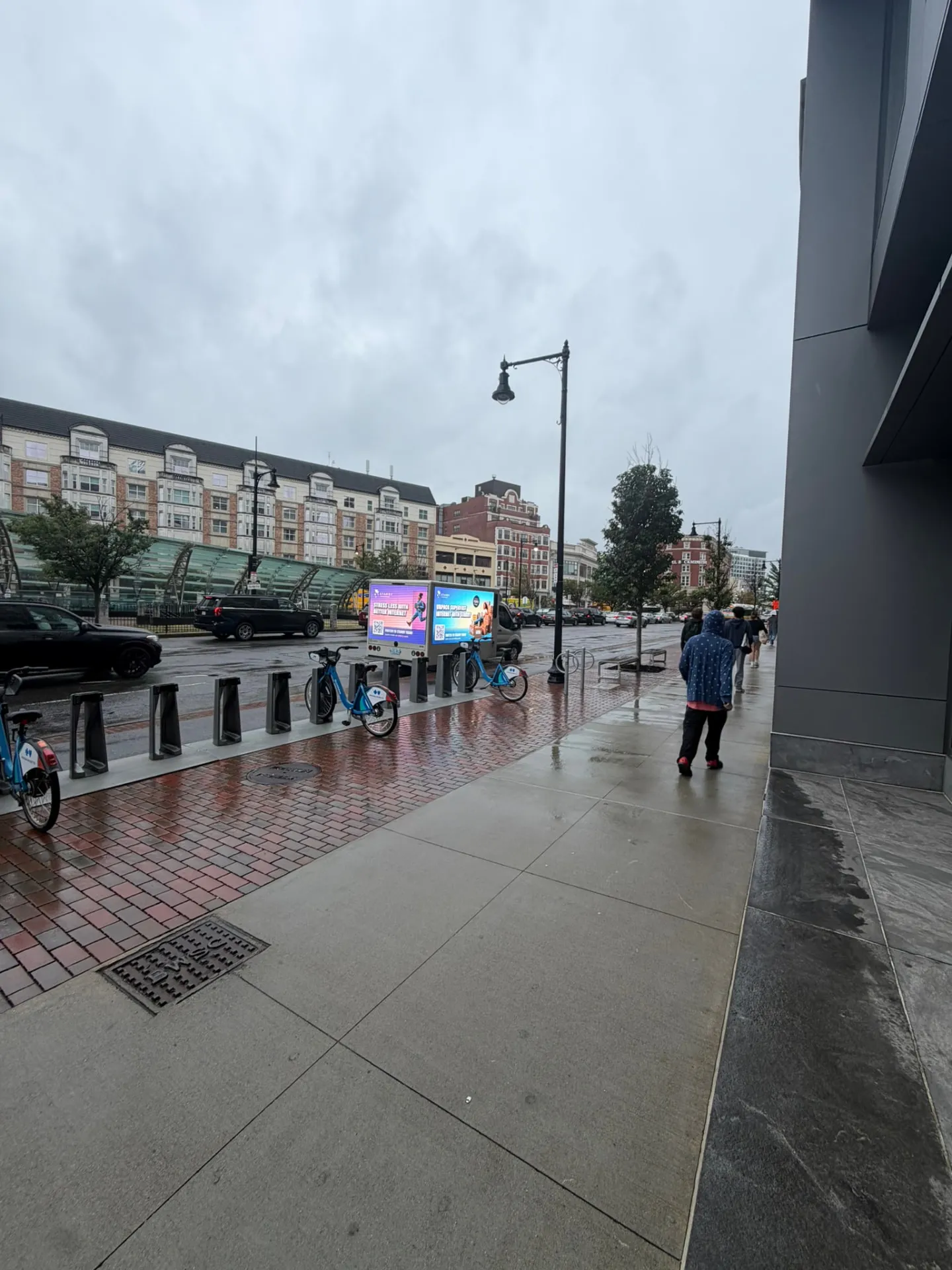
Both screens lit near a Bluebikes station in Fenway — rain does not stop an LED billboard truck, which is a real advantage over static poster media.
What this costs and who else should run it
A single-truck Boston campus day typically runs in the $1,200–$1,400 range depending on hours and creative production, with multi-day move-in packages priced lower per day. See the full breakdown in our mobile billboard advertising cost guide.
Back-to-college works for internet and mobile providers, banks and credit unions, gyms and fitness studios, furniture and mattress retailers, food delivery apps, storage companies, and off-campus housing. Any brand whose customer makes a one-time choice in the first two weeks of the semester belongs on this route.
Boost Outdoor Media runs mobile LED billboard truck campaigns in Boston and across the country. If you want a move-in week route built around your target campuses, request a quote and we will map it street by street.
Frequently asked questions
When should a brand start back-to-college advertising in Boston?
Start the week before classes begin and run through the first 10 days of the semester. Boston move-in for BU, Northeastern, and Boston College is concentrated in late August and the first days of September, and most student purchase decisions on internet, gyms, and furniture are locked in within that window.
How much does an LED billboard truck cost for a college campaign in Boston?
A single-truck day in Boston generally runs about $1,200 to $1,800 depending on hours, route length, and whether creative production is included. Multi-day move-in week packages lower the per-day rate. Boost Outdoor Media quotes by route and hours, not by impression estimate.
Can an LED billboard truck drive on campus at BU, Northeastern, or BC?
The truck stays on public streets such as Commonwealth Avenue, Huntington Avenue, and Brookline Avenue, which run directly through those campuses. That is where the pedestrian density is anyway, so private campus roads are not needed to reach students.
Do QR codes on mobile billboards actually get scanned?
Yes, when the truck is parked or stopped at a light next to pedestrians. Crosswalks, transit stops, and retail entrances are the highest-scan positions because people are already standing still with a phone in hand. Starry ran a large QR code on both screens for that reason.
What areas of Boston work best for student advertising?
Commonwealth Avenue through Boston University, Huntington Avenue at Northeastern, Chestnut Hill toward Boston College, and the Fenway retail block around Target and Amazon on Brookline Avenue. Lansdowne Street and MGM Music Hall add a strong evening audience.
What kinds of businesses should run back-to-college mobile billboard campaigns?
Internet and mobile providers, banks and credit unions, gyms, furniture and mattress stores, food delivery apps, self storage, and off-campus housing. Any category where a student makes a single choice in the first two weeks and keeps it all year.